
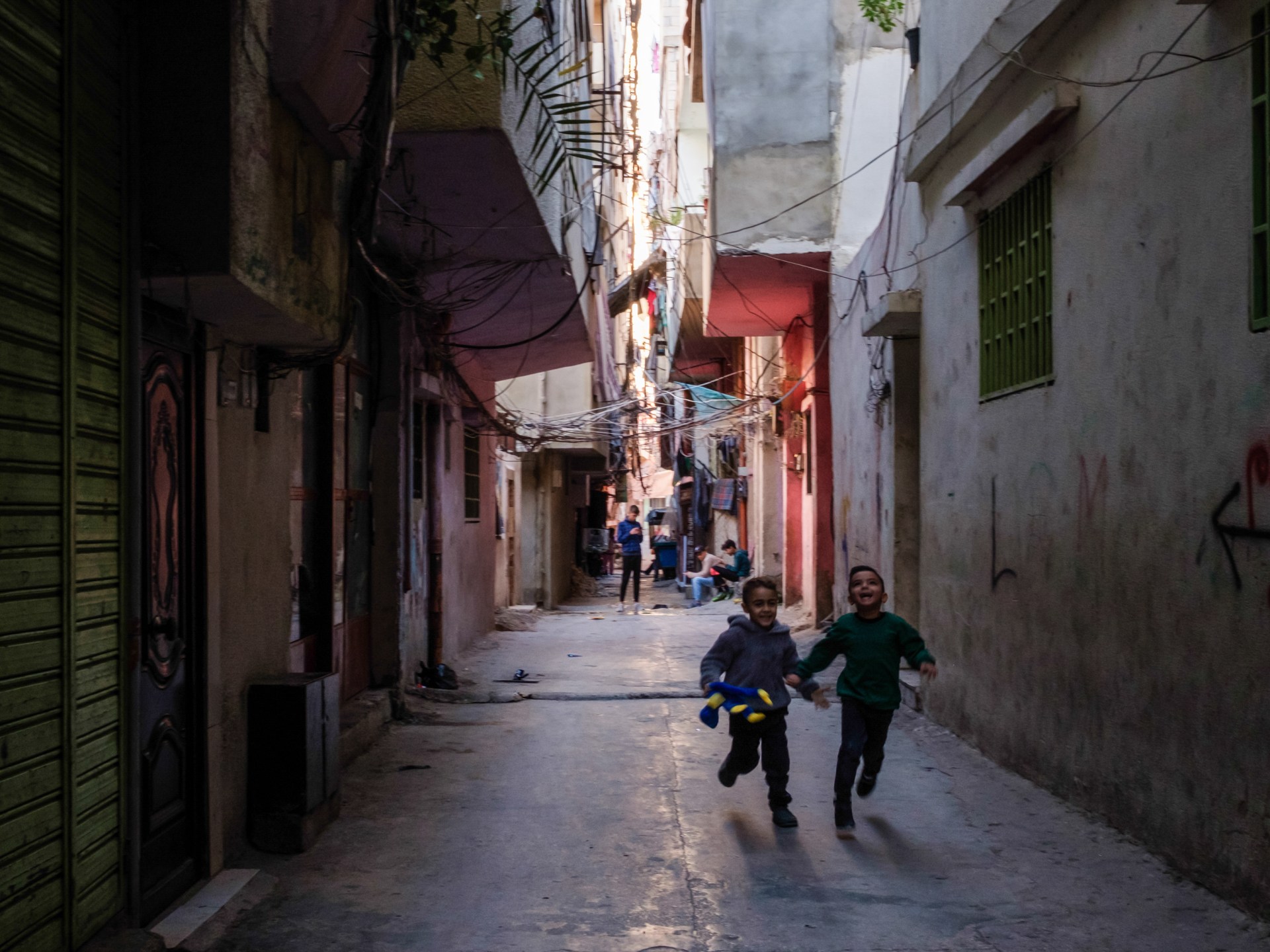
Beirut, Lebanon — Osama Najjar is a Palestinian refugee living in the Beddawi refugee camp in Tripoli, Lebanon’s second-largest city, where he used to have a shop selling aluminium.Palestinians are barred from working in specific professions in Lebanon, including medicine, law, engineering and pharmacy, meaning that owning a shop is a crucial economic lifeline for many, regardless of their education levels.Recommended Stories list of 3 itemslist 1 of 3Hezbollah funding plan indicates a new challenge to Lebanon’s governmentlist 2 of 3Lebanese sceptical Israeli polls will bring change, end occupation of southlist 3 of 3How to stop the US-Israel war on Iranend of listBut Najjar, like other Palestinians in Lebanon, says the situation has grown increasingly difficult, as rising inflation and energy costs hit one of Lebanon’s most vulnerable communities particularly hard. With business stuttering and unable to keep up with his bills, he was forced to close his shop in early 2024. Since then, he has found work hard to come by.“The whole Palestinian situation in the camps is tragic,” he said, citing high prices and rising electricity bills as two of his most recent concerns.Palestinian discriminationPalestinians first became refugees in Lebanon during the 1948 Nakba, when Zionist forces established the state of Israel. In the process, they destroyed more than 500 Palestinian towns, killed about 13,000 Palestinians, and turned 750,000 more into refugees who fled to camps in the occupied West Bank and neighbouring countries.Of those, about 100,000 people went north to Lebanon, many of them promising themselves that they would return home one day. Many slept in informal settlements and tents at first, but as the years passed and hopes of an immediate return to their hometowns and villages faded, tents gave way to informal and often unregulated concrete structures.In 1964, Lebanon passed a decree on foreign workers that required non-Lebanese nationals to obtain work permits. During the country’s civil war, which lasted from 1975 to 1990, a wide range of Palestinian political groups took part in the fighting. This legacy left behind ill will towards Palestinians from some segments of the Lebanese population.In 2010, amendments were made to the Lebanese labour law that reduced certain permit fees and eased other restrictions for Palestinian labourers, but experts say implementation was limited. In 2021, the Ministry of Labour issued a decree that was supposed to ease restrictions on some professions, which led to political backlash.In February 2026, the Lebanese government introduced an administrative mechanism that allows Palestinian nursing students to apply for employment sponsorship. However, experts say many of these legal changes do not alter the structural exclusion of Palestinians from the Lebanese labour force.Today, UNRWA, the United Nations agency for Palestinian refugees, recognises 12 Palestinian refugee camps in Lebanon. According to its Lebanon office, about 222,000 Palestinians resided in the country as of February 2025.“Palestinians in Lebanon have been treated very differently in a very discriminatory way,” Elia Ayoub, a United Kingdom-based Palestinian-Lebanese researcher and podcaster, told Al Jazeera.He pointed to the fact that Palestinians can study for but cannot work in many top professions in Lebanon. They are not allowed to own land, and are not politically represented in the country’s parliament.“Lebanon has an ethno-sectarian system, but Palestinians are not [recognised] one of them,” he said.A Palestinian man, who was displaced from the Yarmouk refugee camp in Damascus, sits in front of his tent at the UNRWA office in Beirut, Lebanon, May 15, 2013 [Nabil Mounzer/EPA]Funding cutsDespite long-running institutional and social discrimination, the situation for Palestinians in Lebanon has become particularly acute in recent months.The country is yet to recover from 2019’s economic and banking crisis. But rising energy costs and domestic inflation have hit Palestinians particularly hard.The Lebanese state provides only a few hours of electricity per day, leading most residents to rely on private generators or alternative energy providers. Meanwhile, the World Bank predicts Lebanon’s inflation could reach as high as 17.5 percent in 2026.In such difficult times, many Palestinians turn to UNRWA for aid. But many countries cut funding to the agency in 2024 after Israel alleged, without providing evidence, that its employees took part in the October 7, 2023 attacks.UNRWA fervently denied the accusations, and in recent years many states have reinstated funding to the group. Still, in July, UN Secretary-General Antonio Guterres warned of a funding shortfall of about $100m.In September, the group reported that it will likely face a minimum $200m financial deficit between the end of 2026 and the start of 2027.Taking to boatsWith no options for a dignified life at home, many Palestinians are risking their lives by trying to reach Europe by sea. In 2022, at least 86 people died on a boat that left Lebanon and sank off the coast of Syria. Many of the dead were Palestinians from the camps.The number of vessels leaving Lebanese shores increased in the years following 2019, with Palestinians on board many of them. The number of boats attempting to cross the Mediterranean to Europe doubled between 2020 and 2021 and increased by 121 percent the following year, according to the Friedrich Naumann Foundation.As the cost of living becomes increasingly unsustainable on Lebanese shores, there are fears that more Palestinians and other vulnerable communities in Lebanon could start taking to the seas with increased regularity.In late October, the European Union approved a support mission to Lebanon that would help strengthen security forces, including “support [for] maritime security governance”.Najjar said today, the camps are filled with talk of people boarding boats to travel to Turkiye and then on to Greece. Without any kind of economic relief on the horizon, Palestinians may continue to look for reprieve, no matter the risk.“All of this is still because the situation for Palestinians in Lebanon is poor,” he said.
Palestinians in Lebanon suffering worsened by high energy prices, inflation
Full Article
Original Source
Read the full article at Aljazeera →KhanList aggregates and links to publicly available news content. We do not host full articles from third-party sources. Always verify important information with original sources.