
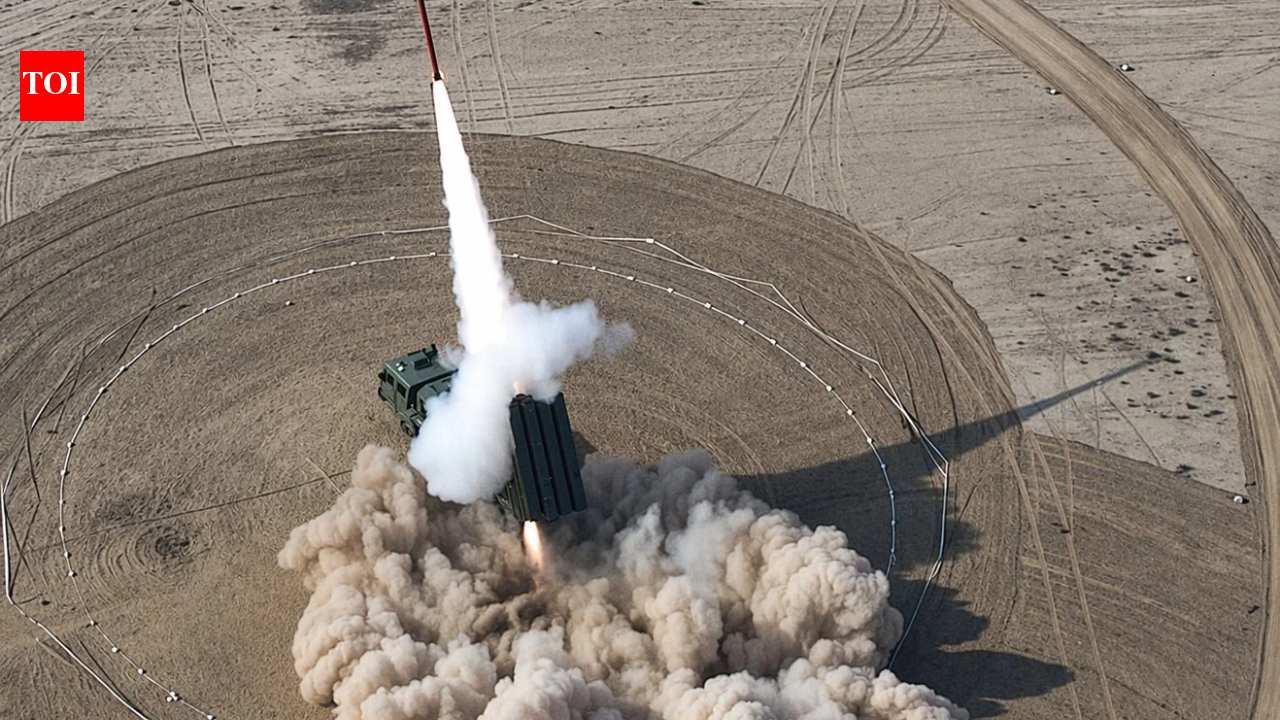
Pakistan test fires the Fatah-II weapon system during a trial. (Image credit: Pak Army)Pakistan has stepped up its missile testing activity this year, conducting a series of launches involving land-attack cruise missiles, ballistic missiles, anti-ship weapons and air-to-air missiles, in a push to expand its conventional strike capabilities across multiple domains. The activity has gathered pace since April, with the Army Rocket Force Command announcing successive tests of extended-range Fatah missiles in October, followed by the testing of a new air-to-air missile and a supersonic cruise missile in November.The Pakistan Navy began the year with the live firing of a LY-80(N) surface-to-air missile from a Tughril-class frigate during an exercise in the North Arabian Sea on January 10. On April 16, it announced the successful test of an indigenously developed ship-launched anti-ship missile, followed five days later by the air-launched Taimoor cruise missile. While the Navy described both as successful, it did not disclose their ranges or detailed technical specifications. The tests point to efforts to strengthen Pakistan's ability to engage hostile vessels through both ship-based and airborne weapons.The Army's programme included a training launch of the Fatah-II on April 28 and a test of the Fatah-IV ground-launched cruise missile on May 14. The Fatah-II has a reported range of around 400 km, while the Fatah-IV's baseline range is estimated at approximately 750 km. Testing resumed in October, with the Army announcing an extended-range Fatah-IV launch on October 6 and an extended-range Fatah-II test on October 13. Pakistan described the latter as a hypersonic ballistic missile, claiming its manoeuvrability would help penetrate missile-defence systems. However, it has not released technical data to independently substantiate the claim.The Pakistan Air Force tested the Fa'az air-to-air missile on November 3, showing it being launched from a JF-17 fighter. The military described it as an indigenous weapon designed to engage aerial targets at extended ranges, but did not disclose its maximum range or seeker technology. On November 18, the Army announced the successful test of the Fatah-3 supersonic cruise missile, adding another category of weapon to its land-based strike inventory. Its range, speed and operational status remain undisclosed.The International Institute for Strategic Studies, in a February 2025 assessment based on satellite imagery, highlighted infrastructure associated with the development and testing of larger solid-fuel rocket motors. A March 2026 US Congressional Research Service report examined Pakistan's longer-range ballistic missile programmes, including Shaheen-III and Ababeel, and raised concerns about the country's potential to develop capabilities extending beyond South Asia.The James Martin Center for Nonproliferation Studies and the Nuclear Threat Initiative have separately highlighted how cruise missiles complicate escalation management between India and Pakistan, particularly because existing bilateral missile-test notification arrangements do not cover cruise missile launches. The growing mix of ballistic, cruise, air-launched and anti-ship weapons could place additional demands on India's surveillance, early-warning and layered air-defence systems.The tests also follow the establishment of Pakistan's Army Rocket Force Command in 2025. While the successive launches indicate efforts to build a more diverse precision-strike arsenal, there is no public evidence that all the systems tested this year have entered operational service. Claims about extended range, hypersonic performance and missile-defence penetration also remain unverified.
Pakistan's missile testing spree: New weapons, extended ranges and unverified claims
Full Article
Original Source
Read the full article at Timesofindia →KhanList aggregates and links to publicly available news content. We do not host full articles from third-party sources. Always verify important information with original sources.