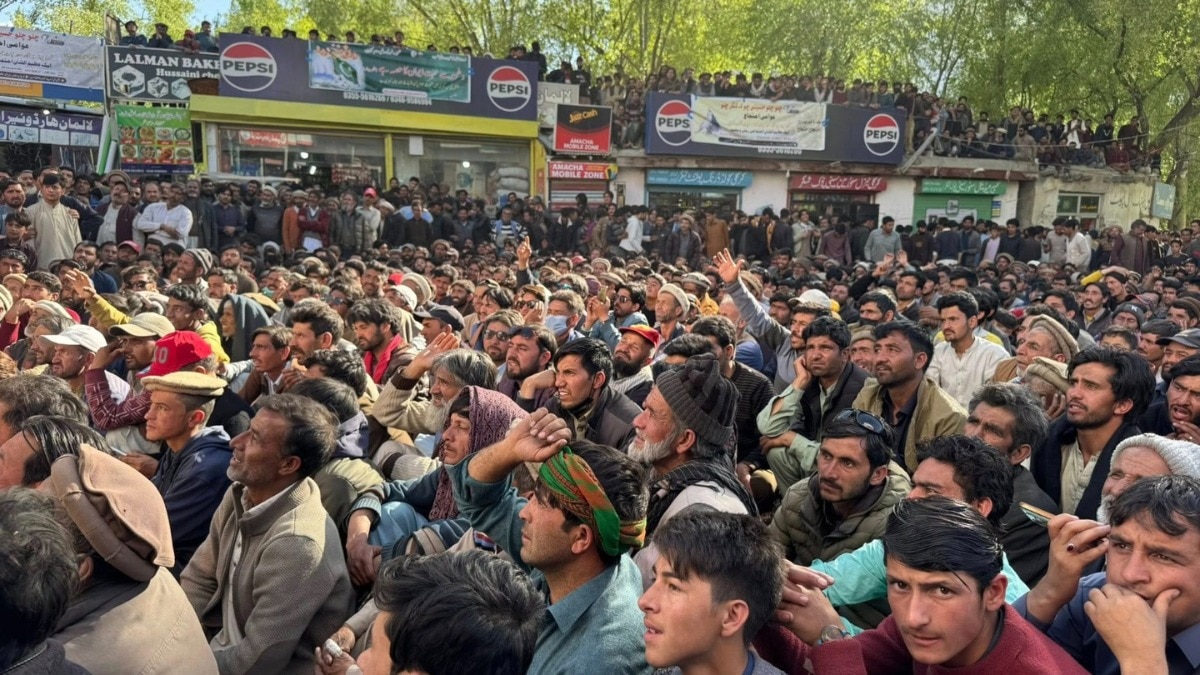
Pakistan on Friday moved a step closer to formally declaring Gilgit-Baltistan in Pakistan-occupied Kashmir (POK), as its fifth province after the region's Legislative Assembly unanimously passed a resolution seeking constitutional recognition. If approved by Pakistan's Parliament and backed by constitutional amendments, the move would mark a major shift in Islamabad's administrative approach to the region and will add another layer to the long-running dispute over Jammu and Kashmir.The resolution urges the federal government to amend Pakistan's Constitution and grant full provincial status to Gilgit-Baltistan. It also seeks representation for the region in Pakistan's National Assembly and Senate."The people of Gilgit-Baltistan shall be accorded the same constitutional, political, and democratic rights as enjoyed by the citizens of other provinces of Pakistan, including representation in the National Assembly, Senate, and other federal constitutional institutions. Appropriate constitutional safeguards shall be incorporated to ensure that the provisional provincial status remains subject to any future settlement of the Jammu and Kashmir dispute in accordance with the wishes of the people concerned and Pakistan's international obligations," the resolution said.The move comes at a time when Pakistan is grappling with multiple domestic challenges, including a worsening security situation in Balochistan and an increase in militant attacks in Khyber Pakhtunkhwa. It also comes at a time when POK has been witnessing recurring protests against Islamabad over a range of issues, including alleged denial of political rights, rising inflation, soaring electricity tariffs, and concerns over governance and resource allocation. Political critics have accused the government of trying to shift public attention from these internal crises by reviving the long-pending proposal.At present, Pakistan officially has four provinces -- Punjab, Sindh, Balochistan and Khyber Pakhtunkhwa. Gilgit-Baltistan has so far been administered under a limited self-governance arrangement and does not enjoy the same constitutional status as the country's provinces. The resolution passed by the Gilgit-Baltistan Legislative Assembly. RESOLUTION FOLLOWS DISPUTED ELECTIONSThe move comes weeks after the June 7 elections to the Gilgit-Baltistan Assembly, which were marred by allegations of electoral irregularities and complaints from opposition parties.Bilawal Bhutto Zardari's Pakistan Peoples Party (PPP) emerged as the single largest party in the polls, paving the way for Amjad Hussain to become Chief Minister. With no party securing an outright majority, the PPP joined hands with Prime Minister Shehbaz Sharif's Pakistan Muslim League-Nawaz (PML-N) to form a coalition government.Under the power-sharing arrangement, the PPP secured the posts of Chief Minister and Assembly speaker, while the PML-N was allotted the positions of governor and deputy speaker. Shortly after assuming office, the coalition government pushed through the resolution seeking provincial status.The resolution was signed by Chief Minister Amjad Hussain, the Assembly speaker, deputy speaker, opposition leader and several independent lawmakers before being forwarded to Pakistan's Parliament for consideration.PROPOSAL REVIVES 2019 PLANThe proposal revives a plan first floated by Pakistan in 2019 after India revoked Article 370 and Article 35A, ending the special status of the erstwhile state of Jammu and Kashmir and reorganising it into two Union Territories.At the time, the government of then-Prime Minister Imran Khan had indicated that Gilgit-Baltistan could be granted provisional provincial status. However, despite several announcements and consultations, the proposal never materialised amid political opposition and concerns over its implications for Pakistan's position on the Kashmir dispute.The current coalition government has now renewed the push, arguing that Gilgit-Baltistan's residents deserve constitutional rights, parliamentary representation and greater political integration with Pakistan.STRATEGIC IMPLICATIONSGilgit-Baltistan occupies a strategically important location and serves as the gateway to the China-Pakistan Economic Corridor (CPEC), a flagship infrastructure project under China's Belt and Road Initiative.Analysts observe that a formal provincial status could strengthen Islamabad's administrative control over the region and provide greater legal certainty for infrastructure and investment projects.Formally incorporating Gilgit-Baltistan as a province also undermines Islamabad's longstanding position that the future of the entire Jammu and Kashmir region should be determined through a final settlement of the Kashmir dispute.INDIA'S POSITIONIndia has consistently maintained that the entire Jammu and Kashmir, including Gilgit-Baltistan, is an integral and inalienable part of India. New Delhi has repeatedly rejected Pakistan's attempts to alter the status of territories under its control, asserting that such unilateral measures have no legal validity.The Ministry of External Affairs has on several occasions described Gilgit-Baltistan and other parts of Pakistan-occupied Kashmir as areas under Pakistan's "illegal and forcible occupation" and has urged Islamabad to vacate the territories.If the proposal clears Pakistan's Parliament, it would mark the most significant constitutional change in Gilgit-Baltistan's status since the region came under Pakistan's control, while adding a new dimension to the already complex dispute over Jammu and Kashmir.- EndsPublished On: Jul 17, 2026 16:22 IST
Pakistan eyes fifth province status for Gilgit-Baltistan amid turmoil in POK
Full Article
Original Source
Read the full article at Indiatoday →KhanList aggregates and links to publicly available news content. We do not host full articles from third-party sources. Always verify important information with original sources.