
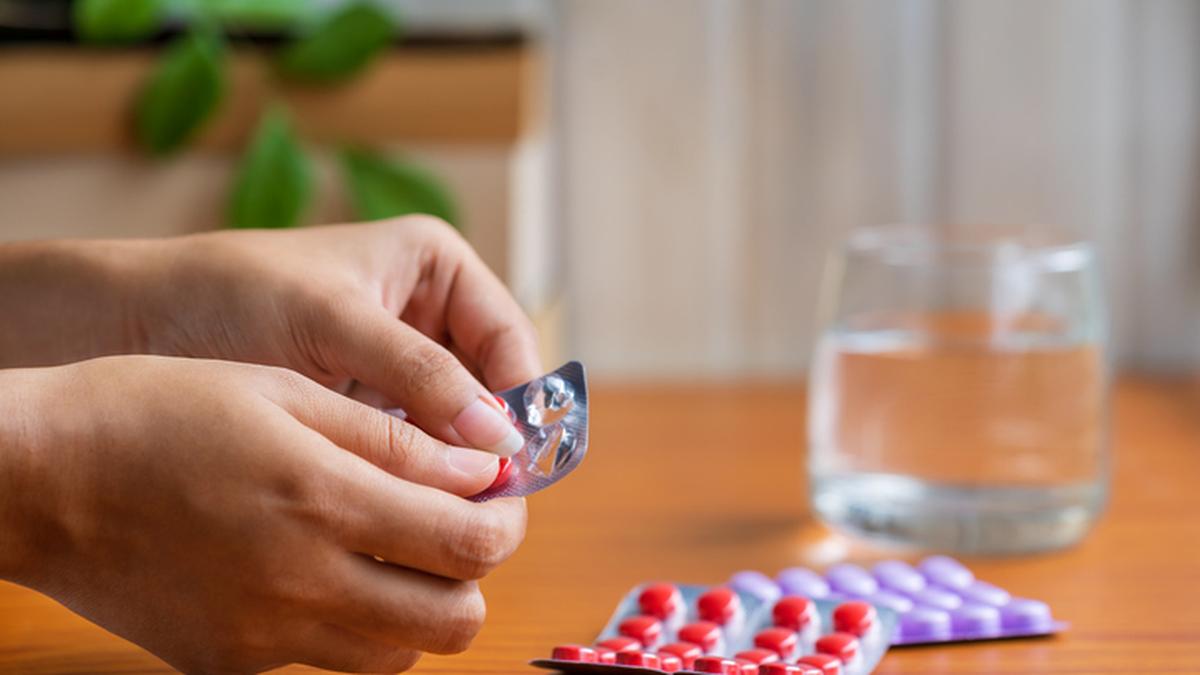
The story so far: The Central Drugs Standard Control Organisation (CDSCO) has warned against the indiscriminate, repeated, or prolonged use of non-steroidal anti-inflammatory drugs (NSAIDs) and antibiotics, linking inappropriate use to avoidable renal complications and chronic kidney disease (CKD).In its September 21 circular, it also reminded doctors, pharmacists, hospitals, and the public that these medicines are subject to prescription and other regulatory safeguards.What does the latest directive mean?The CDSCO circular is, in significant part, a reminder that existing rules already require medical supervision for these medicines and doesn’t amount to any new ban on painkillers or antibiotics.Most NSAIDs are classified under Schedule H of the Drugs Rules, 1945. Most antibiotics are under Schedule H1. These medicines are therefore not meant to be sold at retail without a prescription from a Registered Medical Practitioner.Schedule H1 medicines also carry a specific warning that they should be taken only on and according to medical advice.The regulator has asked the public not to take NSAIDs or antibiotics indiscriminately, repeatedly or for prolonged periods without medical advice.“Antibiotics should not be self-medicated or used for illnesses where they are not clinically indicated,” it said.Also, doctors have been asked to prescribe them only when clinically justified, in the appropriate dose and for the appropriate duration, and to follow antimicrobial stewardship principles. Pharmacies, hospitals, and healthcare institutions have also been put on notice.The kidney warning is particularly relevant to NSAIDs. These drugs can reduce blood flow to the kidneys and are associated with acute kidney injury, particularly among people who already have kidney disease, diabetes, or hypertension. Longer-term use has also been associated with CKD occurrence or progression.Importantly, the warning does not mean that all painkillers or antibiotics are inherently unsafe. The concern is inappropriate selection, dose, duration, and unsupervised use.How extensive is antibiotic misuse?There is no single national figure that captures all inappropriate antibiotic use in India. Available studies, however, show that self-medication remains a significant problem.A systematic review covering 66 Indian studies and nearly 30,000 participants estimated overall self-medication at 64.4%, although this included medicines generally and not antibiotics alone. Analgesics, antipyretics, antibiotics, and cough remedies were among the commonly self-medicated drug categories.A community study from South-East Delhi found that 35% of 200 participants reported antibiotic self-medication. Fever, cold, and flu were common reasons, while pharmacies were the main source of antibiotics.While these studies cannot be interpreted as a national prevalence estimate and represent different populations and locations, together they illustrate why prescription enforcement and antibiotic stewardship remain concerns.What does antibiotic misuse do?Antibiotics work against bacterial infections. They do not treat viral illnesses such as most common colds and influenza.When antibiotics are used unnecessarily, incorrectly or for an inappropriate duration, bacteria can be exposed to the drug without being eliminated. Resistant organisms can then survive and multiply. This contributes to antimicrobial resistance (AMR).The consequences extend beyond the individual who takes the antibiotic. Resistant organisms can spread to other people and through healthcare and environmental pathways.WHO estimates that bacterial AMR was associated with more than 4.7 million deaths globally in 2021. In 2023, approximately one in six laboratory-confirmed bacterial infections globally was resistant to antibiotics. WHO says misuse and overuse of antimicrobials are important drivers of the problem.What does WHO say about antibiotic use?WHO has increasingly moved towards antimicrobial stewardship — ensuring that antimicrobials are used only when necessary and that the right drug, dose and duration are selected.Its AWaRe classification divides antibiotics into three groups: Access, Watch and Reserve. Access antibiotics are generally preferred for common infections because they have a narrower spectrum and lower resistance potential. Watch antibiotics have greater resistance potential and therefore require more careful use. Reserve antibiotics are intended for infections caused by multidrug-resistant organisms when other options are inadequate.WHO’s analysis of 2022 antibiotic-use data found that only about one in three reporting countries/territories/areas met the target of having at least 70% of antibiotic consumption from the Access group. WHO has called for stewardship policies to reduce unnecessary antibiotic use and encourage Access antibiotics when they are clinically appropriate.WHO’s 2025 global AMR surveillance report, based on more than 23 million laboratory-confirmed cases reported by countries, also underlines the continuing global burden of resistance and the need for better surveillance.Which drugs are commonly misused, and who is most vulnerable?NSAIDs are among the medicines of concern because they are widely used for headaches, fever, body pain, arthritis, dental pain, and other painful conditions.Common NSAIDs include ibuprofen, diclofenac, naproxen, and similar anti-inflammatory painkillers. Their risks become more important with prolonged or high-dose use and in people with kidney disease, diabetes, hypertension, dehydration or other risk factors.Indian pharmacovigilance data, although based on reported adverse events rather than population prevalence, provide an important signal: in one analysis of NSAID-associated CKD reports, 82% of cases were among people aged 40–80 years, with diclofenac implicated in 43% of the reports.For antibiotics, children are an important vulnerable group, largely because parents or caregivers may administer medicines based on previous prescriptions or advice from pharmacies and family members. The recent Indian meta-analysis found substantial antibiotic self-medication among children.Older adults and people with chronic diseases also require particular caution because kidney function may already be reduced and multiple medicines may be involved.What measures is the government bringing in?India has been working on AMR for more than a decade. The National Programme on AMR Containment was launched in 2013, with surveillance, monitoring of antimicrobial consumption, infection prevention and control, and promotion of rational antimicrobial use among its objectives.India launched its National Action Plan on Antimicrobial Resistance 2.0 (NAP-AMR 2025–2029) in November 2025. It adopts a One Health approach, bringing human health together with animal, agricultural, and environmental sectors. It includes surveillance, antimicrobial stewardship, infection prevention and control, research and monitoring.The government has also used the Drugs Rules to control antibiotic sales. Schedule H1 requires records of the supply of listed medicines, including details of the prescriber and patient, with records maintained for three years.There is also a recent regulatory development in August 2026, when CDSCO issued a draft notification proposing four additional drugs for inclusion in Schedule H1.Why have rules not worked so far?The central difficulty is that regulation has existed for years, but implementation has been uneven.India’s NAP-AMR documentation itself records earlier CDSCO awareness and enforcement drives concerning Schedule H and H1 medicines, including restrictions on selling antimicrobials without prescriptions. Yet studies continue to document antibiotic self-medication and access through pharmacies.Similarly, antimicrobial stewardship programmes have been part of India’s AMR strategy since the first National Action Plan. The 2017–2021 plan called for stewardship programmes, treatment guidelines, multidisciplinary stewardship committees, and training.The continuing problem, therefore, is less about the absence of rules and more about translating those rules into routine practice — ensuring that prescriptions are actually required at the point of sale, that doctors prescribe antibiotics appropriately, that patients do not demand or reuse medicines, and that hospitals monitor antibiotic consumption.
Painkillers, antibiotics, and kidney disease: Why has drug regulator issued a fresh warning?
Full Article
Original Source
Read the full article at Thehindu →KhanList aggregates and links to publicly available news content. We do not host full articles from third-party sources. Always verify important information with original sources.