
NOVEMBER 5, 2026 19:12When Crown Prince Reza Pahlavi takes the stage in Frankfurt on Saturday to accept the Friedrich Naumann Foundation’s 2026 Freedom Prize, he will receive an award that, for the first time in its two-decade history, has been bestowed on an entire nation.The German foundation, known for its advocacy of democracy and liberal politics, has chosen to honor the Iranian people for their struggle against the Islamic Republic, particularly following the unprecedented bloodshed of the protests that erupted across the country earlier this year.Pahlavi, the exiled son of Iran’s last shah and one of the most prominent figures in the Iranian opposition, has been entrusted with accepting the prize until it can eventually be handed to the representatives of a freely elected Iranian government.The ceremony comes as Pahlavi concludes a week of diplomatic engagements in Europe, meeting senior politicians and officials in Brussels and Germany in an effort to persuade European governments to reconsider their long-standing approach toward Tehran.And according to the crown prince, his message is beginning to resonate.Participants hold up flags, among them the historic Iranian ''Lion and Sun'' national flag, as well as posters depicting Iran's former crown prince and now key opposition figure Reza Pahlavi during a demonstration of the Iranian opposition on February 14, 2026. (credit: Michaela STACHE / AFP via Getty Images)“This award and the productive meetings I have had this week with leaders from across Europe show me that a growing number of politicians understand that this regime must go. It is a matter of how,” Pahlavi told The Jerusalem Post in written responses ahead of the ceremony.“That is what I have been meeting with them to discuss, and more specifically, how they can help.”For the Friedrich Naumann Foundation, however, the decision to award its Freedom Prize to the Iranian people was driven primarily by the extraordinary sacrifices made by ordinary Iranians, particularly during the January crackdown, when security forces killed thousands of demonstrators and imposed a sweeping Internet blackout.Prof. Ludwig Theodor Heuss, a former chairman and current member of the foundation’s board of trustees, told the Post that the events of January had been decisive in bringing the Iranian people’s struggle to the forefront of the foundation’s deliberations.“I think that’s because of what happened this year in Iran,” he said, recalling the enormous demonstrations that spread across the country and the violence that followed.“The regime killed thousands of them, the Internet was shut down, and nobody really knows how many people have been killed,” he explained.Heuss cited estimates suggesting that more than 5,000 people had been killed, while acknowledging that the true number could be considerably higher. Many opposition groups and human rights organizations claim as many as 50,000 people may have been killed on January 8-9.“I think no people in the world paid a higher price for freedom in this year. That’s our opinion,” he said.The foundation’s decision was intended to recognize the courage of Iranians from across society, including women, students, workers, and others who had taken to the streets despite the dangers they faced.Since the prize was established in 2006, it has always been awarded to an individual. This year, Heuss said, the foundation concluded that the Iranian people’s collective struggle deserved recognition in its own right.A nation recognizedThe Freedom Prize will be presented on November 7 at Frankfurt’s historic St. Paul’s Church, a venue closely associated with Germany’s democratic history. The foundation, which is affiliated with the country’s liberal Free Democratic Party, works internationally to promote individual liberty, democratic institutions, and the rule of law.The decision to recognize the Iranian people follows a year in which the Islamic Republic has faced one of the most serious challenges to its authority since the 1979 revolution.What began in late December 2025 with protests over deteriorating economic conditions quickly developed into a nationwide movement demanding an end to clerical rule. Demonstrations spread across cities and towns, accompanied by strikes, anti-government slogans, and increasingly open expressions of support for Pahlavi, something unthinkable just years ago, as his name was chanted across the country.The authorities responded with a crackdown whose full human cost remains difficult to establish, in large part because of the communications blackout imposed as security forces moved against demonstrators.For Heuss, the massacres of January 8 and 9 were particularly important in focusing the foundation’s attention, although he emphasized that the repression continued long after the largest demonstrations subsided.“The terrible thing is that these things go on. The killing goes on. We know that in October, more than 70 executions were carried out,” he said, stressing that those suffering under the Islamic Republic should not be forgotten.The foundation’s decision was therefore also intended to ensure that the Iranian people’s struggle remains visible to an international audience, particularly in Europe, where governments have frequently been criticized for prioritizing diplomacy with Tehran despite its human rights record.For Pahlavi, receiving the award represents another opportunity to bring international attention to those who have sacrificed their lives in the struggle for freedom.“I am grateful to the Friedrich Naumann Foundation for recognizing the Iranian nation’s struggle for freedom against one of the darkest regimes in the world by awarding this prize, and for bringing it to the headlines,” he stated. “Freedom is a human value, and the Friedrich Naumann Foundation has shown that it is a light in the darkness of this world.”Why Pahlavi?While the foundation’s decision to honor the Iranian people has been widely welcomed, its choice of Pahlavi to collect the award on its behalf has attracted some criticism. Iran’s opposition includes monarchists, republicans, ethnic and regional movements, and numerous political organizations that oppose the Islamic Republic.During the previous year, Pahlavi has emerged as the most recognizable figure within that opposition. Nevertheless, Heuss emphasized that the foundation made a deliberate distinction between awarding the prize to Pahlavi personally and asking him to hold it in trust for the Iranian people.“He receives it as a trustee. That’s very important for us,” Heuss explained. “It does not belong to him.”The distinction, he said, was essential because the Iranian people had not elected Pahlavi to represent them. The prize would remain in his custody until it could be transferred to representatives chosen through a democratic process.Asked how the foundation reached its decision, Heuss said Pahlavi’s selection followed lengthy internal discussions.“We discussed that for a long time,” he said, pointing to the crown prince’s ability to attract considerable support, including at the large Iranian diaspora gathering in Munich earlier this year.“He reaches many, many people,” Heuss said, adding that Pahlavi is internationally identified as a representative of the opposition both inside Iran and throughout the diaspora.He was equally emphatic, however, that the foundation’s decision should not be interpreted as an endorsement of Pahlavi as Iran’s future leader, or of the restoration of the monarchy.“We absolutely trust in democracy,” he said, stressing that Iranians themselves must determine who governs them and what form their future political system takes. “That’s not our decision.”What mattered to the foundation, Heuss explained, was Pahlavi’s stated commitment to democratic principles and the rule of law, together with his support for peace in the region – something published at length in the Iran Prosperity Project.“Mr. Pahlavi committed himself to freedom, to the rule of law, and to democracy, also to peace with Israel and neighbors,” Heuss said.For Pahlavi, the responsibility of accepting the prize is closely tied to the commitment he says he has maintained since leaving Iran more than four decades ago.“It’s a heavy responsibility, but not a new one for me,” he said. “For over four decades, I have stood by my covenant with the Iranian nation to lead the struggle for freedom and transition away from this criminal cult.”He added that receiving the award provides another opportunity to reassure Iranians of his continued commitment to their struggle.A changing European approach?The ceremony comes amid a week of European engagements in which Pahlavi has sought to persuade political leaders that the Islamic Republic continues to represent a direct threat to their own security, and that continued diplomatic engagement has only failed.During his visit to Brussels, the crown prince met with David McAllister, chairman of the European Parliament’s Committee on Foreign Affairs, and pressed for stronger measures against the Islamic Republic regime.Among the steps he has advocated are additional sanctions, action against networks associated with the Islamic Republic, diplomatic measures targeting the regime’s representatives, and greater European cooperation with technology companies to help Iranians circumvent Internet restrictions.Pahlavi believes that European governments have repeatedly misunderstood the nature of the Islamic Republic, dealing with it as one would a conventional state whose behavior can be understood through economic incentives and diplomatic negotiations.“Western policy-makers pursue diplomacy with the regime as they project their own rational, cost-benefit metrics onto religious fanatics, wrongly assuming every actor responds to economic incentives,” he said.“The Islamic Republic is not a conventional state that values the prosperity of its country and the welfare of its people. It is a transnational revolutionary jihadist movement that has occupied Iran and turned the country into a headquarters for global terrorism.”The crown prince said his meetings had given him reason to believe that at least some European political figures were beginning to reassess their approach.“I have been discussing this with European leaders, and I can see a shift in the European mindset about the regime,” he said.Heuss, whose foundation is independent of the German government, was more measured in his assessment of Europe’s responsibilities, although he agreed that greater attention should be paid to the Iranian people’s plight.“We think that Germany and Europe should not strengthen the regime in Iran,” he said.He called for sanctions over human rights violations and greater protection for Iranian civil society, while acknowledging that diplomacy could still serve an important purpose.“Diplomacy is okay. Diplomacy is right when it saves lives,” Heuss said. “I think it is absolutely necessary that Germany and Europe pay far more attention to what happens in Iran in these days.”Iran and European securityPahlavi’s European visit has also taken on a security dimension, particularly through his planned meeting with Belgian Defense Minister Theo Francken and an address at Belgium’s Royal Military Academy.The engagements place the Iranian opposition’s arguments before officials concerned with European defense and security at a time when Iranian support for Russia has become an increasingly important issue for European policy-makers.Pahlavi has sought to connect these concerns directly to the question of political change inside Iran.“In my meetings with European policy-makers, I explain the regime’s psychology and its core DNA,” he said. “By supporting Russia in the war against Ukraine, plotting terrorism on European soil, and pursuing both nuclear weapons and ballistic missiles capable of reaching Europe, this regime poses an existential threat to Europe and the Western world.”He argues that European governments should view support for the Iranian people’s aspirations as an investment in their own security.“My central message to them is clear: standing with the Iranian people is not an act of charity; it is an absolute necessity for Europe’s own national security.”The Belgian visit has also highlighted divisions within European politics, with Defense Minister Theo Francken welcoming Pahlavi, while Foreign Minister Maxime Prévot expressed reservations about an official parliamentary reception.“I try not to get involved in the domestic politics of any foreign country. Iran should not be a partisan issue,” Pahlavi said, praising Francken’s understanding of the threat posed by the Islamic Republic and arguing that supporting the Iranian people should transcend political divisions.He nevertheless criticized sections of the European Left for what he described as their ideological approach to Islamist movements.“I will admit that sections of the political Left often view Islamists through a lens of political alliance, and consequently do not perceive the Islamic Republic as an enemy,” he said. “This same divergence in perspective can be seen in their attitudes toward Israel and Hamas.”Beyond the ceremonyFor the foundation, the award forms part of a wider commitment to supporting democratic movements and civil society internationally.Heuss said the organization, which operates in more than 60 countries, has worked for years with Iranian exiles and intends to maintain those relationships.“Our goal, our mission, is freedom,” he said. “We have worked in the past with Iranian exile organizations and journalists and human rights defenders for years. And we will keep doing this also in the future.”The foundation’s work, he explained, is directed toward strengthening liberal democracy at a time when democratic institutions are under pressure in many parts of the world.This year, he said, Iran has become a particular focus because of the extraordinary sacrifices made by its people.For Pahlavi, the ceremony also offers an opportunity to acknowledge the Iranian diaspora, whose demonstrations in cities across Europe and North America have sought to maintain international attention on the repression taking place inside its homeland.He described the award as a recognition of the Iranian people’s sacrifices and expressed particular gratitude to those who continued demonstrating abroad throughout the year.“It is a privilege to join the gathering in Frankfurt and express my deep gratitude to Iranians in the diaspora who, for the past 10 months, through heat and cold, have taken to the streets of Western cities to serve as the unwavering voice of our captive compatriots back home,” he said.Pahlavi said he intends to use the international platform provided by the ceremony to draw further attention to the executions continuing inside Iran.The timing of the award is particularly poignant given that, even as European politicians prepare to gather in Frankfurt to celebrate the Iranian people’s struggle for freedom, the Islamic Republic continues to imprison and execute those accused of opposing its rule. Just this week, Amirhossein Maleki, 20, and Amirhossein Ebrahimi, 19, were executed after being convicted over events in an Isfahan square during the protests that authorities say caused the deaths of four members of the security forces.For Heuss, the continuing repression merely reinforces the importance of keeping international attention focused on the country, particularly as governments confront numerous competing crises, and he hopes that the foundation’s decision will help ensure that the Iranian people’s sacrifices are recognized and that its demands for freedom are not forgotten.Pahlavi, meanwhile, remains convinced that the Iranian people’s struggle will continue regardless of the response from foreign governments.“The Iranian nation will continue its path toward freedom regardless of what any foreign country does,” he told the Post. “Our fight will go on until victory.”Follow us on Google
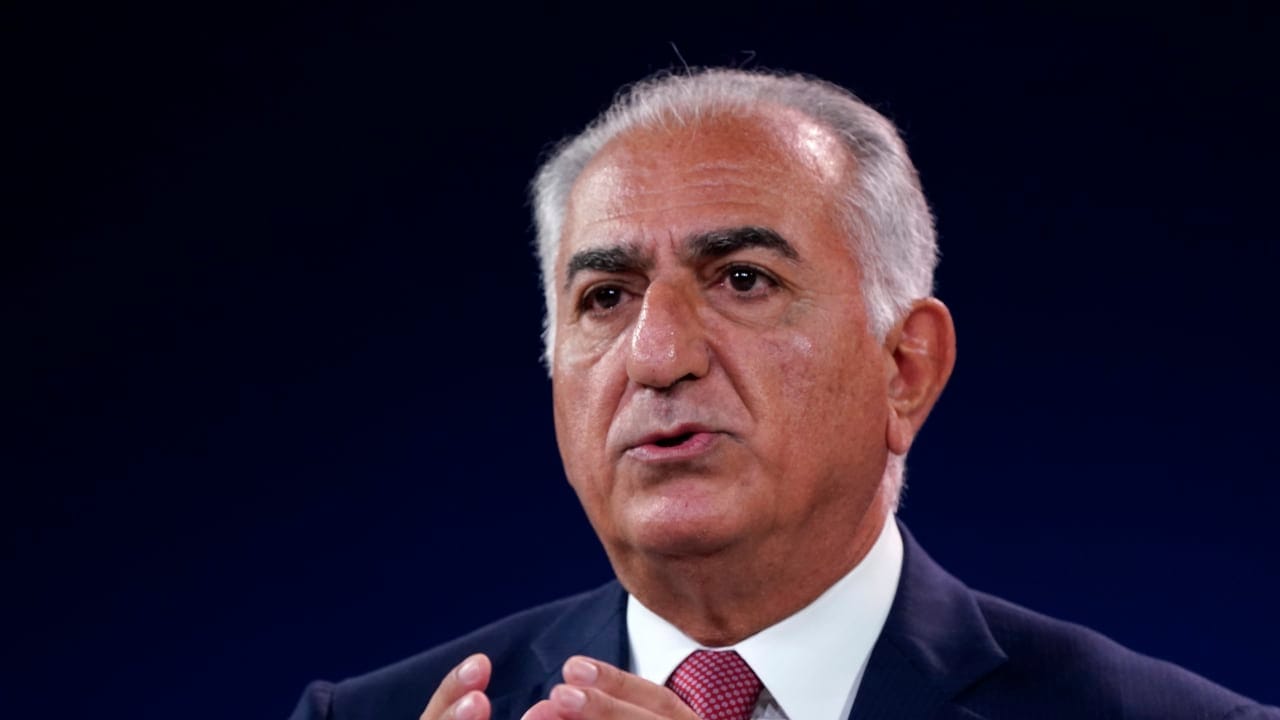
Pahlavi to 'Post' ahead of Freedom Prize: 'Europe's leaders understand Iran's regime must go'
Full Article
Original Source
Read the full article at Jpost →KhanList aggregates and links to publicly available news content. We do not host full articles from third-party sources. Always verify important information with original sources.