
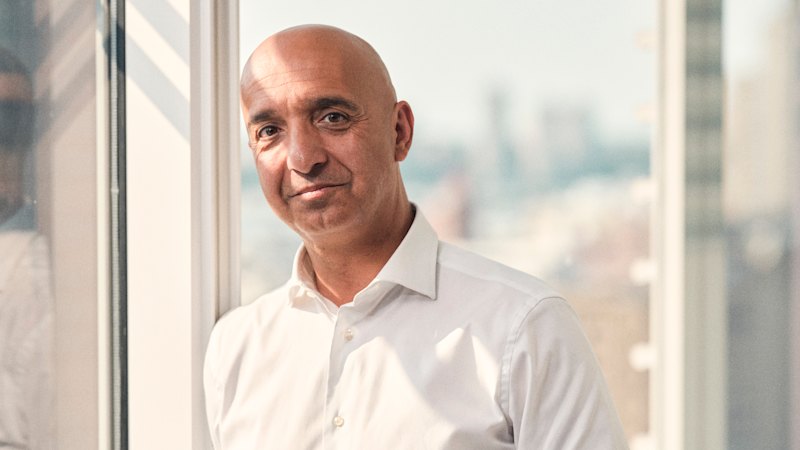
Eshe NelsonSeptember 3, 2026 — 5:22pmFor Novo Nordisk, the Danish drugmaker behind Ozempic and Wegovy, the release of its weight-loss pill has been a much-needed triumph.It was a scientific breakthrough to make an effective tablet form of Wegovy, a weekly injection. It was also a commercial success: More than 1.5 million people, mostly in the United States, have started taking the daily pill since it became available in January.Novo Nordisk CEO Mike Doustdar says the company is primed for a turnaround.NYTBut the company’s investors have not been dazzled. They are nervously looking further into the future. The key US patent on semaglutide, the active ingredient in Wegovy, will expire early in the next decade.Just a few years ago, Novo Nordisk was the darling of the healthcare industry. It had pioneered a single drug with benefits that went beyond weight loss to heart, liver and other cardiovascular diseases.Today Novo’s share price is languishing about 70 per cent below its peak from mid-2024, when it was Europe’s most valuable public company. Investor sentiment is still shaky even after the company said last month that sales and profit would not fall as much as expected this year.As Mike Doustdar, Novo Nordisk’s chief executive, sees it, investors are missing the big picture. They are too focused on the company’s rivalry with US drugmaker Eli Lilly. They are not appreciating the variety of drugs Novo has available and in development.“We have more assets than people are giving us credit for,” Doustdar said in an interview with The New York Times. “In a world where people need more treatment medications, it’s not a zero-sum game.”Customers, not patientsDoustdar’s desire to bring a new energy to the company, and revive its fortunes, is evident in the intense way he talks about the company’s naysayers. His voice is often loud, even assertive. “We haven’t lost it,” he said.He took over in August 2025 in uncomfortable circumstances. The previous chief executive had been forced out a few months earlier by the company’s principal shareholder and board member, the Novo Nordisk Foundation. In October, the company’s chair and all the independent board members quit.The release of its weight-loss pill has been a much-needed triumph.NYTThe situation became more fraught after Lars Rebien Sorensen, the chair of the foundation’s board, installed himself as chair of the company’s board. The dual role of Sorensen, who is also a former chief executive of Novo, unnerved some shareholders, including Norway’s oil fund.But drastic change was necessary. Novo began the modern era of weight-loss drugs, known collectively as GLP-1s, but had lost much of its lead to competition from Eli Lilly and cheaper compounding pharmacies. And there had been a steady drumbeat of bad news: profit warnings, forced price cuts, disappointing trials and slowing prescription growth.In a first, painful step, Novo laid off about 9000 employees, the largest restructuring in Danish corporate history.One big shift in the past year has been rhetorical. Doustdar speaks frequently about serving customers, not just treating patients. He wants the company to cater to anyone who needs the drugs, without judgment about why. Being able to buy weight-loss drugs with a prescription, but without an in-person doctor’s visit, can support people who suffer from shame and depression because of their weight, he said.That has raised the question — internally and externally — whether Novo is becoming a cosmetics company. This debate, Doustdar said, is a distraction.“We have science that works and is safe and efficacious, and there are customers that need it,” he said. “It’s irresponsible not to go in that direction.”An American mindsetNovo Nordisk has sharpened its commercial instincts — and its elbows — as Doustdar seeks to prove the company’s best days aren’t in the past.It is rebranding Rybelsus, which in 2019 was the first semaglutide pill approved for Type 2 diabetes, to “the Ozempic pill,” belatedly taking advantage of the brand recognition. The company is also increasingly litigious. It had taken legal action against more than 150 companies over various claims, and last month sued Eli Lilly over “deceptive advertising” in the US.The company is starting to appear more American. Even with its 103-year Danish history, Novo makes more than half of its sales in the United States, where it employs 10,000 people. The number of Novo workers in Denmark shrank by 13 per cent last year but grew in the US by the same proportion.Whether consciously or not, that shift is a reflection of Doustdar. He is the company’s first non-Danish leader. He was born in Iran and is an Austrian national who grew up in the US. Doustdar has been at Novo Nordisk for more than 30 years, but primarily in international operations, so he had never worked at headquarters in the Copenhagen suburbs.Doustdar emphasised the company’s American ties when he was negotiating last year with President Donald Trump, who was threatening to impose tariffs on imported medicines. The company is plowing ahead with a $US4 billion ($5.5 billion) expansion in Clayton, North Carolina, next to a production facility it opened 30 years ago.Are any of these changes enough to convince investors that Novo’s future is not as grim as its share price suggests?Companies can reverse their ill fortunes. But the successes, like those of Microsoft and Best Buy, are few and far between.“You’re more likely to get a Nokia than a Microsoft,” said Randall Peterson, a professor of organisational behaviour at London Business School, referring to the Finnish company that lost an early lead in the cellphone business.Hassan Chowdhry, a portfolio manager at GMO Asset Management, said he had divested from Novo Nordisk this year. The trigger was the disappointing trial results of CagriSema, Novo’s next-generation weight-loss drug, which is expected to be available early next year, subject to US approval. In February, Novo failed to prove it was more efficacious at weight loss than an existing Eli Lilly drug it would compete with.Novo Nordisk has struggled with competition in the obesity drug race.BloombergWhile Chowdhry expects weight loss to be a $US150 billion market with plenty of room for two big players, he said that Novo had a long way to go before it could release a really competitive product. For example, another drug, Zenagamtide, is likely years away from coming to market.“There doesn’t seem to be any catalyst in the immediate term that might push the stock up in a major way,” Chowdhry said.Some analysts and Novo shareholders want the company to diversify, possibly through acquisitions. Nearly 95 per cent of its sales came from diabetes and obesity medicines in the first half of 2026. Eli Lilly, by comparison, has growing investments in neuroscience and immunology.Among those vocal investors is Markus Manns, a portfolio manager at Union Investment in Frankfurt, Germany, who owns shares in both companies. Novo Nordisk, he said, is “still lacking a vision for sustainable growth,” though he is hopeful the company will detail one at an investor meeting this month.The constant comparisons with Lilly frustrate Doustdar. For investors, the rivalry has become like an “obsession,” he said.But the comparisons with Lilly will be hard to shake, especially because the company is expected to seek US approval for its next-generation drug, retatrutide, early next year.So what will change the sentiment about Novo Nordisk? “Time,” Doustdar said.CagriSema promises to be a test case. Though investors aren’t enthusiastic about it, the drug will be available relatively soon.“It’s a much better drug than right now investors are writing in their models,” Doustdar said.“But like I said, I don’t need to sell this to investors. I need to sell these to physicians who understand the biology better.”This article originally appeared in The New York Times.The Business Briefing newsletter delivers major stories, exclusive coverage and expert opinion. Sign up to get it every weekday morning.From our partners
Ozempic’s maker is in trouble. Tablets may be the answer
Full Article
Original Source
Read the full article at Smh →KhanList aggregates and links to publicly available news content. We do not host full articles from third-party sources. Always verify important information with original sources.