
Sunday Okobi The Minister of Marine and Blue Economy, Dr. Adegboyega Oyetola, has stated that comprehensive seaport modernisation will improve efficiency, capacity and competitiveness across Nigeria’s transportation and logistics system. Also, the Technical Adviser to Vice President Kashim Shetima on Transportation, Logistics and Innovation, Prince Segun Ochuko Obayendo, has urged the federal government to accelerate the transformation of Nigeria’s transportation and logistics system through greater integration of road, rail, waterways, ports and other modes of transport, with technology and professional regulation to reduce the cost of moving people and goods. Both the minister and Obayendo made the calls yesterday at the 2026 Transport Industry Summit organised by the Transport Correspondents Association of Nigeria (TCAN) in Lagos. Oyetola who was represented by the Director, Inland Transport Services, Nigerian Ports Economic Regulatory Agency, Mr. Paul Garnuwa, said transportation logistics directly influenced investment, production, trade and employment through the cost, speed, reliability and predictability of moving goods across Nigeria. The minister said ports and waterways must function as interconnected components of the wider transport chain, alongside roads, rail, warehouses and distribution networks nationwide. Oyetola said the federal government was focusing on improving maritime infrastructure and efficiency to strengthen Nigeria’s capacity to participate competitively in regional and global trade. He announced that Nigeria would commence its most ambitious seaport modernisation programme in more than five decades, following approval by President Bola Ahmed Tinubu. According to him, the programme covers Apapa and Tin Can Island Ports, Onne, Rivers, Calabar and Warri ports, with major infrastructure improvements planned nationwide. He said the programme would involve reconstructing quay walls, deepening channels, replacing obsolete cargo-handling equipment and further digitalising terminal and gate operations. Oyetola said the modernisation programme was designed to increase capacity, reduce vessel and cargo delays, lower logistics costs and strengthen Nigeria’s maritime gateways. He noted that port delays affected manufacturers, exporters, transport operators, distributors and consumers, stressing that inefficiencies at ports ultimately affected the entire logistics chain. The minister said, “Nigeria’s improving port performance has received international recognition through the 2025 Container Port Performance Index produced by the World Bank and S&P Global Market Intelligence. “Tin Can Island Port ranked 10th while Lagos Port Complex, Apapa, ranked 12th among the world’s 20 most improved container ports between 2020 and 2025.” Oyetola said the recognition was encouraging but reinforced the need to sustain reforms aimed at achieving shorter turnaround times and predictable cargo movement. He also announced the removal of the United States Coast Guard’s Conditions of Entry on vessels arriving from Nigeria after 12 years of additional security requirements. According to him, the decision followed sustained efforts to strengthen compliance with international security standards, improve access controls and address identified port-security gaps. He said the development would strengthen confidence in Nigeria’s port-security arrangements while removing additional procedures affecting vessels travelling between Nigerian and United States ports. Oyetola said the ministry was also working with state governments and private investors to develop deep seaports across several coastal states, including Akwa Ibom and Bayelsa states. Others, he posited, were Cross River, Ogun, Ondo and Rivers states, adding that the projects would expand capacity, create maritime corridors and reduce pressure on existing gateways. He said the federal government would provide regulatory frameworks, facilitate inter-agency coordination and support viable public-private partnerships to accelerate sustainable port development across the country. Oyetola said the Nigeria Ports Economic Regulatory Agency Act 2026 would provide a permanent framework for regulating tariffs, charges, service standards, competition and protection of port users. He said NPERA would provide clearer rules for terminal operators, shipping lines and logistics providers while creating structured mechanisms for resolving commercial and regulatory issues. The minister said reducing logistics costs required improvements in infrastructure, regulation, security, technology and coordination, particularly stronger connections between seaports and hinterland transportation networks. He urged TCAN to sustain informed reporting and constructive scrutiny, noting that transport journalism remained crucial because of the sector’s technical and economic importance. The minister said government remained committed to stakeholder engagement and measurable outcomes, including faster cargo movement, improved vessel turnaround, greater capacity, stronger security and transparent regulation. Meanwhile, the Technical Adviser to Vice President on Transportation, Logistics and Innovation, Obayendo, said Nigeria could not unlock its economic potential without addressing the structural weaknesses in its transport and logistics system, arguing that delays, fragmented modes of transportation, multiple checkpoints, insecurity, poor coordination and informality in the road transport sector are adding significantly to the cost of doing business. He said Nigeria should learn from countries such as Singapore, Germany and China, where transportation infrastructure has been deliberately integrated into broader economic development strategies. According to the VP’s aide, “Singapore provides an example of how intelligent transport systems, automation and integrated ticketing can make movement across different modes of transport more seamless. “Most of their automation-wise, intelligent transport systems, if you ask me, I would say they are leading in terms of automation and ITS.” Another major issue raised by the presidential adviser was the absence of adequate integration among Nigeria’s different transport modes. He argued that cargo movement that could be completed much faster through a combination of road, rail and water transport could take considerably longer when the entire journey was forced onto the road. Obayendo also drew attention to China, describing the country as an economic powerhouse whose development had been closely linked to massive investment in transport infrastructure. He argued that China’s ability to produce goods on a large scale would have limited economic value without an equally strong capacity to move those goods to domestic and international markets. “China is the economic powerhouse of the world. How did they attain that economic powerhouse? It is through efficient transportation.”
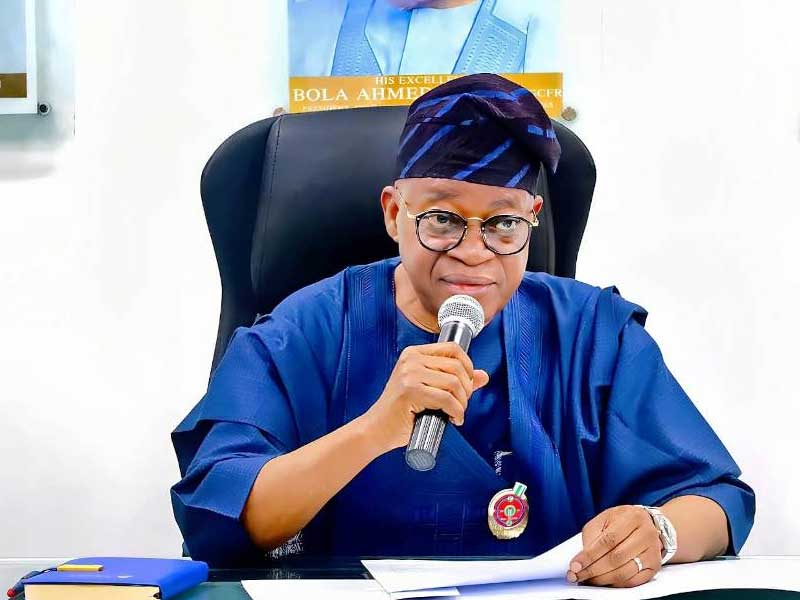
Oyetola: Port Modernisation Will Cut Nigeria’s Logistics Costs, Improve Capacity
Full Article
Original Source
Read the full article at Thisdaylive →KhanList aggregates and links to publicly available news content. We do not host full articles from third-party sources. Always verify important information with original sources.