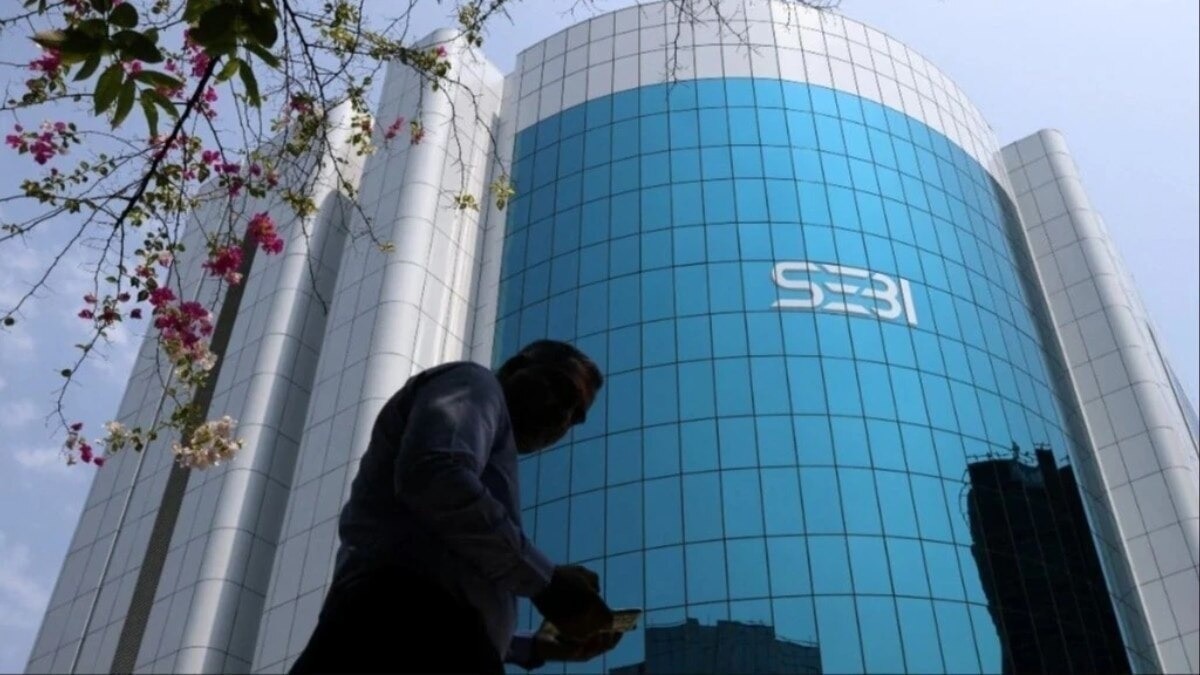
When a government-controlled company exits the stock market, what does it mean for its shareholders? On what grounds will the shares be priced? What exit options do you have? And what will happen if you choose to stay invested?With Sebi's introduction of a special framework for a voluntary delisting of PSUs, investors find these questions more relevant than ever.In its new framework mentioned in the annual report for 2025-26, Sebi's new delisting regulations attempt to rework the earlier challenges faced by shareholders, providing special safeguards to protect investor interest.For shareholders with a smaller number of shares in such companies, it becomes important to watch out for how the exit price will be set and what their options will be when the company delists. WHAT DOES DELISTING MEAN?Delisting stands for the removal of a company’s shares from the stock exchange, so they can no longer be freely bought and sold by investors. For a retail investor, this is crucial because the stock market may not provide a swift exit route while the company is still listed.It is pertinent to note that the delisting option is applicable only to certain PSUs, The company is eligible only when it is a PSU other than a bank, NBFC or insurance company, and the Government of India and/or other PSUs must collectively hold at least 90% of its total issued shares. So, the new rules do not inherently mean that every government-owned company can suddenly delist through this route.WHY DID SEBI NEED A SPECIAL REGULATION?With the government or promoter group owning 90% share of the company, only a small portion is available to public investors. Under the earlier rules, the floor price for frequently traded shares was linked to the 60-day volume-weighted average market price.The report said, “Because these entities are government-backed, they are perceived as lower risk, leading to inflated market prices that far exceed their book value. Under the erstwhile framework, the floor price was determined using a 60-day volume-weighted average market price. For frequently traded PSUs, this methodology often resulted in an inflated floor price that did not reflect intrinsic value, thereby imposing a disproportionate budgetary burden on the Government.”This could make it expensive for the government to acquire the remaining shares from public shareholders and complete the delisting. The new framework is therefore designed to make voluntary delisting more workable for eligible PSUs.In such cases, the market price of the shares does not always reflect the company’s true financial position, and ends up creating an inflated market price for the company.This led the market price to be pushed higher by limited public share availability and investor perception of government backing. Hence, the gap has so far limited the shareholder’s capacity to get a minimum price protection at the exit price.But for retail investors, the crucial question is: what price will they get if the government or the PSU wants to buy them out?HOW THE DELISTING AFFECTS THE RETAIL INVESTORSThe earlier delisting proposal required approval from shareholders, including a two-thirds majority in favour of the proposal. Revising the framework, Sebi has now removed this requirement for eligible PSUs.Instead, the PSU can now follow a fixed-price delisting process. The board has laid down a specific mechanism to determine the minimum price for the delisting.One is the volume-weighted average price paid or payable by the acquirer for acquisitions during the previous 52 weeks.The second is the highest price paid or payable by the acquirer for any acquisition during the previous 26 weeks.The third is a price determined through a joint valuation report prepared by two independent registered valuers. The valuation is based on various financial parameters as of the reference date.The floor price has to be the highest of three measures.This is important as it safeguards the exit point for the shareholders while avoiding reliance solely on the market price. The board believes that this will address one of the major concerns of shareholders about whether they are getting fair compensation or not.INVESTORS TO GET 15% PREMIUMThis is one of the most important provisions for retail shareholders.Under the special framework, eligible PSUs can use a fixed-price mechanism for delisting. But the offer price must be at least 15% higher than the floor price.The actual price in a particular case would depend on the applicable floor-price calculation and the terms of the delisting offer.For a small shareholder, therefore, the key number to watch when a PSU announces a delisting would be the floor price and the final fixed offer price.WHAT HAPPENS TO YOUR MONEY IF YOU DO NOT SELL?Not every shareholder may choose to sell their shares immediately after a PSU is delisted.If the shareholders do not sell within the one-year period from the date of delisting, their shares are no longer listed for trade. To cater to this, the new framework provides a mechanism for the money due to them if the PSU is voluntarily delisted.This means that if the eligible PSU is struck off within 30 days after the one-year period expires, the amount due to shareholders who did not sell their shares, is transferred to an account maintained by the designated stock exchange. From there, the exchange will hold the money for seven years, giving investors time to come forward and claim their dues.If the money remains unclaimed after seven years, it is then transferred to the relevant investor protection fund — the Investor Education and Protection Fund (IEPF) for entities covered under the Companies Act, 2013, or SEBI's Investor Protection and Education Fund (IPEF), as applicable.Importantly, even after the transfer, investors can still approach the designated stock exchange to make a claim. The exchange can then seek reimbursement from the relevant fund.For investors, this means that missing the initial one-year exit window does not immediately mean losing their money. The framework provides a longer route to claim their dues, first through the stock exchange and subsequently through the given investor protection mechanism.SO WHAT CHANGES FOR RETAIL INVESTORS?The newly introduced special framework is essentially about making PSU delisting easier without leaving shareholders without an exit option.For retail investors, the biggest financial benefit is price protection rather than a guaranteed profit. This means that they may receive a premium if the offer price is higher than what they paid for the shares, although the rules do not guarantee a profit.It comes across as a win-win situation as both eligible PSUs get a simpler route to delist, while shareholders get a minimum price for their shares and a defined window to exit. Even if an investor does not sell within that period, the provisions provide a mechanism to recover the money due to them if the company is later struck off.For retail investors, therefore, the most important part of the new rules is not simply that PSU delisting has become easier.It is that if an eligible government-controlled company does decide to leave the stock market, there is now a clearly defined framework governing how the exit price is calculated, the minimum premium that must be offered and what happens to shareholders who do not immediately tender their shares.(Disclaimer: The views, opinions, recommendations, and suggestions expressed by experts/brokerages in this article are their own and do not reflect the views of the India Today Group. It is advisable to consult a qualified broker or financial advisor before making any actual investment or trading choices.)- EndsPublished By: Radhika VermaPublished On: Aug 10, 2026 15:04 IST
Own shares in a PSU? Sebi's new delisting rules could change how you exit
Full Article
Original Source
Read the full article at Indiatoday →KhanList aggregates and links to publicly available news content. We do not host full articles from third-party sources. Always verify important information with original sources.