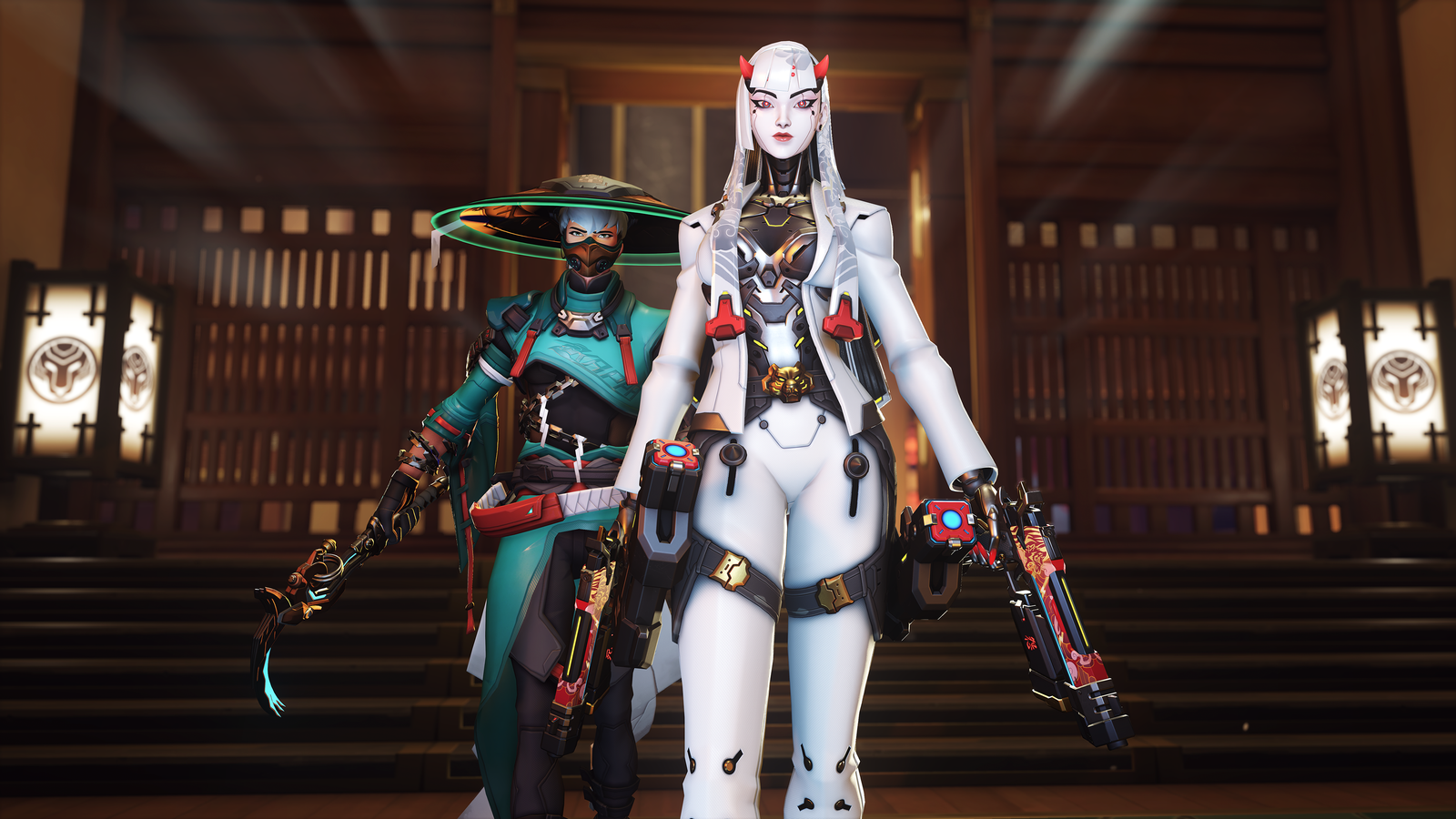
Published Jul 30, 2026, 11:39 AM EDT I bet Mizuki reads 'I'm Glad My Mom Died' Image: Blizzard Entertainment You're supposed to like your parents, and they're meant to like you too, or at least treat you well. Popular media rarely questions what it's like when both of those scenarios are impossible. Bad parents in stories are models for how not to be or vehicles for drama and redemption. They'll abuse and be toxic and you feel relieved when their child makes an escape or triumphant when justice finally makes an appearance or the offender recognizes the error of their ways. So I was surprised after catching up with Overwatch's season 3 story to see how boldly it bucks that trend. It recognizes that sometimes, our parents suck, and it's not an easy truth to build your life around. Overwatch's story has always been a high point for the game, though in the past, it usually acknowledged important topics without exploring them. Moments like Tracer's, Soldier 76's, and Venture's identity were big deals, but the narrative never went further and looked at what it was like living in Overwatch as a lesbian or a non-binary person. There's a difference between being seen and being understood. Overwatch leaned heavily toward the former, so even though the revamped story is, so far, trying to do more with its characters than before, I still expected its style to stay the same. Image: Blizzard Entertainment That was a mistake. This season goes back to before Mizuki joined the Overwatch organization (with a brief detour telling what happened to Doomfist after Vendetta chucked him out a window, brilliantly narrated by actor Sahr Ngaujah). Part two digs into Mizuki's background with Shion as his surrogate mother and how she molded him in her image through fear and "tough love" (read: shooting at him and probably cutting his forearm off). Then he finally gets his moment to break out, to stand up to her and forge a new life for himself. It seems like fairly standard liberation stuff initially, the repressed, abused kid finally escaping and starting over again. But then I heard some of the voice lines that can play when Mizuki and Shion interact with each other during a match. If Mizuki eliminates Shion, she'll respawn and, voice shaking with rage and stunned disbelief, say "Mizuki… why would you do such a thing!?" [emphasis mine]. If Mizuki heals her, he might say "Old habits die hard" or, even more affecting, "I don't wanna see you get hurt." How could he not want to see her get hurt? She kicked him into a wall and shot him! Among a lot of other really bad things! Well, that's not how these relationships work. You don't just recognize abuse and toxicity and magically free yourself from them, even if you're physically removed from the situation. It's even more challenging if the perpetrator isn't entirely bad. Shion's favorite hobby is torturing people and her second-favorite is killing them afterward, so you could reasonably conclude she's entirely bad. It's not so easy for Mizuki, though. Whatever Shion is and does, she's also the only one who looked after him, so that means she cared about him, right? She even calls him “son,” sometimes. Though her behavior sure doesn't look like care, no matter what she says. On the other hand, Mizuki knows, and Shion even says in one of the season's comics, that everything she did, she did to save him from the hatred and violence she endured. The world is cruel, but she could protect him from the suffering it inflicted on her. And in her mind, she succeeded. She's the reason he has a shot at a life better than hers. She wasn't wrong to want that, and she did accomplish what she thinks she did — but she, obviously, didn't go about it the right way. Image: Blizzard Entertainment How do you even start to navigate that kind of emotional hellscape? You might be wondering why the heck this matters. Well, there's a sizable number of people out there struggling with similar problems, albeit not with psychopathic robot gang leaders for moms. Mizuki would feel right at home on the "raised by narcissists" and "emotional neglect" subreddits, and if Shion reads (and hates) Emily Dickinson, then Mizuki undoubtedly has Jeannette McCurdy's I'm Glad My Mom Died on his bookshelf like millions of others (and probably feels guilty reading it, too). And yet despite how common these kinds of relationships are, popular media, including video games, stubbornly resists recognizing them. Most stories insist that the parent-child bond is the most important thing in life, worth protecting at all costs, and they celebrate the reformed bad parents without acknowledging the harm they've done. Just look at God of War and The Last of Us Part 2. That kind of blinkered thinking does no one any good. Even if you cut contact or forgive the parent or find a way forward, it's still hard to reconcile reality with the version of them you wish existed. Those patterns of living don't vanish overnight. You find yourself tossing a magic kappa hat (metaphorically, of course) and saying "I don't want to see you get hurt" before you even realize you've done it. So it matters that Overwatch's storytellers recognize this, and it matters even more that they took the time and planning to make sure people feel seen and understood. To say it's okay that you feel these things, that there's confusion and no easy answer, because even when it's hard and you feel stuck, there's a new life out there. You just have to keep moving forward and find it.
Overwatch's season 3 story just went somewhere Blizzard has never gone before
Full Article
Original Source
Read the full article at Polygon →KhanList aggregates and links to publicly available news content. We do not host full articles from third-party sources. Always verify important information with original sources.