
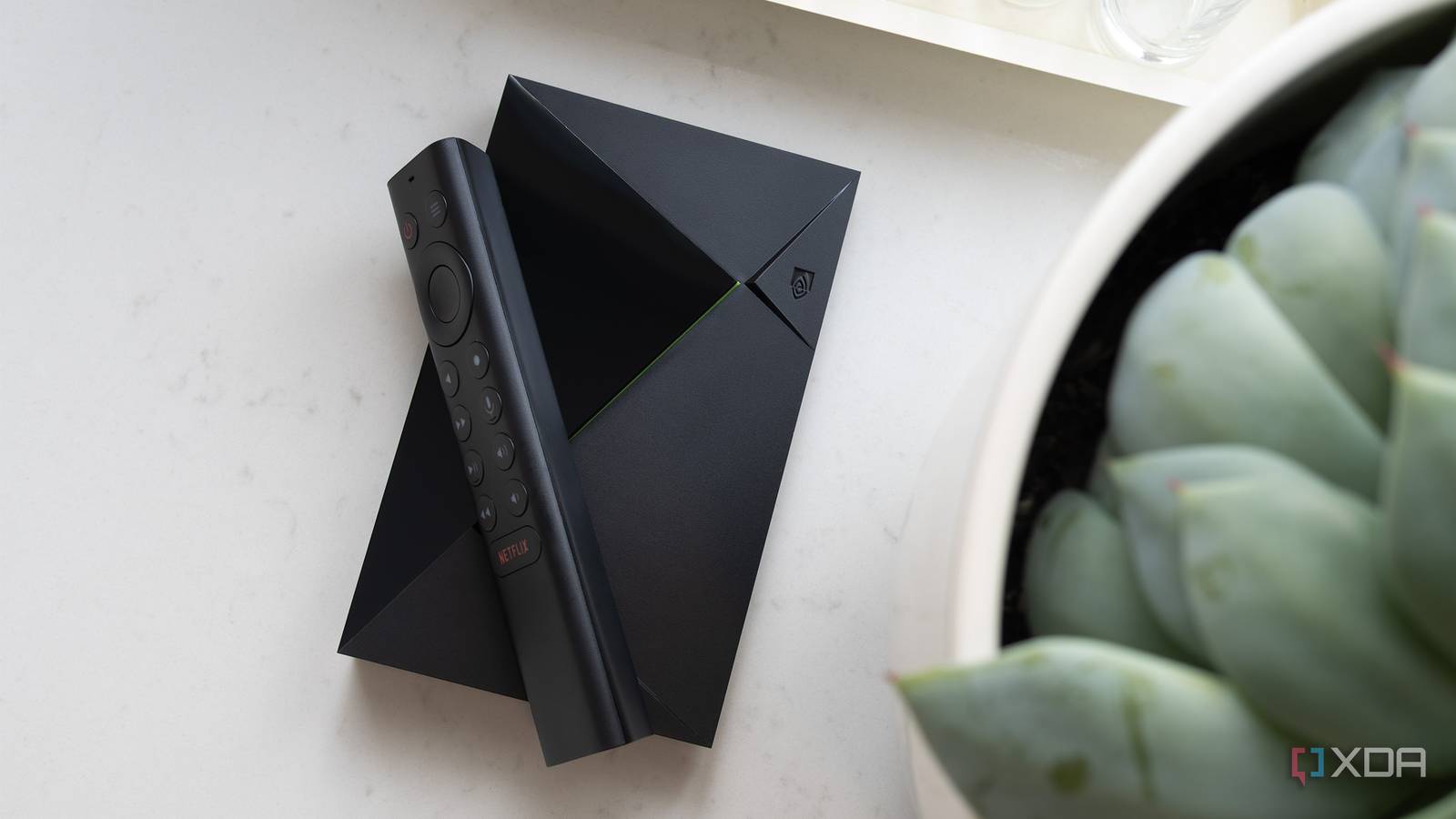
Published Aug 31, 2026, 6:00 PM EDT Anurag is an experienced journalist and author who’s been covering tech for the past 5 years, with a focus on Windows, Android, and Apple. He’s written for sites like Android Police, Neowin, Dexerto, and MakeTechEasier. Anurag’s always pumped about tech and loves getting his hands on the latest gadgets. When he's not procrastinating, you’ll probably find him catching the newest movies in theaters or scrolling through Twitter from his bed. The Nvidia Shield TV was truly ahead of its time when it launched more than six years ago. It’s one of the few streaming devices that remain usable and is still among the best on the market more than half a decade later. I’m talking about the Shield TV Pro released in 2019, and I still know people who use the first-generation models without any issues. Mind you, that device is more than a decade old now. The Shield TV Pro I have continues to work better than any smart TV out there, thanks to the powerful hardware Nvidia packed inside it, including a Tegra X1+ processor and up to 3GB of RAM, which is more than what you get with most smart TVs and streaming devices. The funny thing is that, apart from the Apple TV 4K, there isn’t a streaming device that comes close to the Nvidia Shield. That’s unlikely to change anytime soon, especially as hardware continues to get more expensive. A processor as capable as the one inside the Nvidia Shield would cost more today, while rising RAM prices mean manufacturers have to cut corners elsewhere or charge significantly more for better hardware. The Nvidia Shield TV was truly ahead of its time It packed hardware way ahead of its time Credit: When Nvidia refreshed the Shield in 2019, the market was full of painfully slow smart TVs, and the streaming devices available at the time weren’t much better. Manufacturers could get away with weak processors and just 1GB or 2GB of RAM because people had learned to live with sluggish menus, delayed app launches, and interfaces that became worse with age. That hasn’t changed much even now. Look up the processor and RAM inside most TVs, and you’ll be shocked by the hardware choices manufacturers continue to make. The Apple TV 4K is the obvious exception because it has a genuinely capable processor and delivers consistently good performance. In the Android TV world, including Amazon’s Fire TV devices, the hardware remains largely unambitious. There isn’t much reason to expect that to change anytime soon either. As processors and memory become more expensive, these same mediocre TVs and streaming devices will cost more. The Nvidia Shield took a completely different approach. Both 2019 models came with the Tegra X1+ processor and a 256-core GPU, while the Pro model included 3GB of RAM. Those numbers don’t sound extraordinary by modern smartphone standards, but this was far more hardware than most streaming devices needed at the time. More importantly, Nvidia gave the Shield enough performance headroom to keep running smoothly for years, rather than designing it to handle the software it shipped with barely. The Shield also supports 4K HDR playback, Dolby Vision, Dolby Atmos, DTS:X, Dolby TrueHD passthrough, and DTS-HD passthrough. Its AI-enhanced upscaling can improve lower-resolution content in real time, which is still one of the device’s most distinctive features. The Pro model also came with Gigabit Ethernet and two USB 3.0 ports, so you could connect external storage, controllers, TV tuners, and other peripherals rather than being limited to what the manufacturer included. Nvidia still updates Shield TV regularly Even in 2026, updates continue to drop Powerful hardware alone wouldn’t have kept the Nvidia Shield TV Pro usable for this long. Nvidia has continued to fix the software, maintain compatibility with streaming services, and patch security issues long after most companies have abandoned the device. I am not one to praise a trillion-dollar company, but Nvidia has done an excellent job at updating the Shield TV. The company never advertised a conventional seven-year or ten-year update guarantee for the Shield. However, long-term support was apparently part of the plan from the beginning. Nvidia’s senior vice president of hardware engineering, Andrew Bell, told Ars Technica he once asked Jensen Huang how long the company should support the Shield TV. Huang’s answer was, “For as long as we shall live.” The original Shield TV launched in 2015 with Android 5.1 and received the Android 11-based Shield Experience 9.0 update in 2022. Nvidia released that update for every Shield generation, including the 2015, 2017, and 2019 models. The company could easily have limited major updates to the latest hardware and used software support to push existing owners toward an upgrade, as most technology companies do. Instead, someone who bought the original Shield TV Pro received the same operating system update as someone who bought the 2019 Pro model. The updates aren’t monthly, and there was a long gap between Shield TV Pro Experience 9.1.1 in 2022 and version 9.2 in 2025. However, Nvidia never officially abandoned the device and instead released several bug-fixing updates throughout 2025, followed by Shield TV Pro Experience 9.2.4 in February 2026. The latest version brought the Android security patch level to January 2026 and fixed issues with Disney+, Bluetooth remotes, Xbox controller connections, CEC devices, and system crashes. GeForce Now makes Shield TV Pro more than a streamer You can even game on it GeForce Now is another reason the Shield TV Pro has aged so well. You can connect an Xbox or PlayStation controller and play supported games from stores such as Steam and the Epic Games Store directly on your TV. The Shield TV Pro isn’t running these games locally. Nvidia’s cloud servers handle the rendering and stream the output to the device, allowing a small box from 2019 to play modern AAA games that its own hardware could never run. The Shield TV Pro is also one of the better ways to use GeForce Now on a TV. With an Ultimate membership, streaming is supported at up to 4K HDR at 60 fps or 1080p at 120 fps. Its Gigabit Ethernet port is particularly helpful here because cloud gaming relies heavily on a fast, low-latency connection.
Over six years later, the Nvidia Shield TV Pro is still the best streaming device you can buy
Full Article
Original Source
Read the full article at Xda-developers →KhanList aggregates and links to publicly available news content. We do not host full articles from third-party sources. Always verify important information with original sources.