
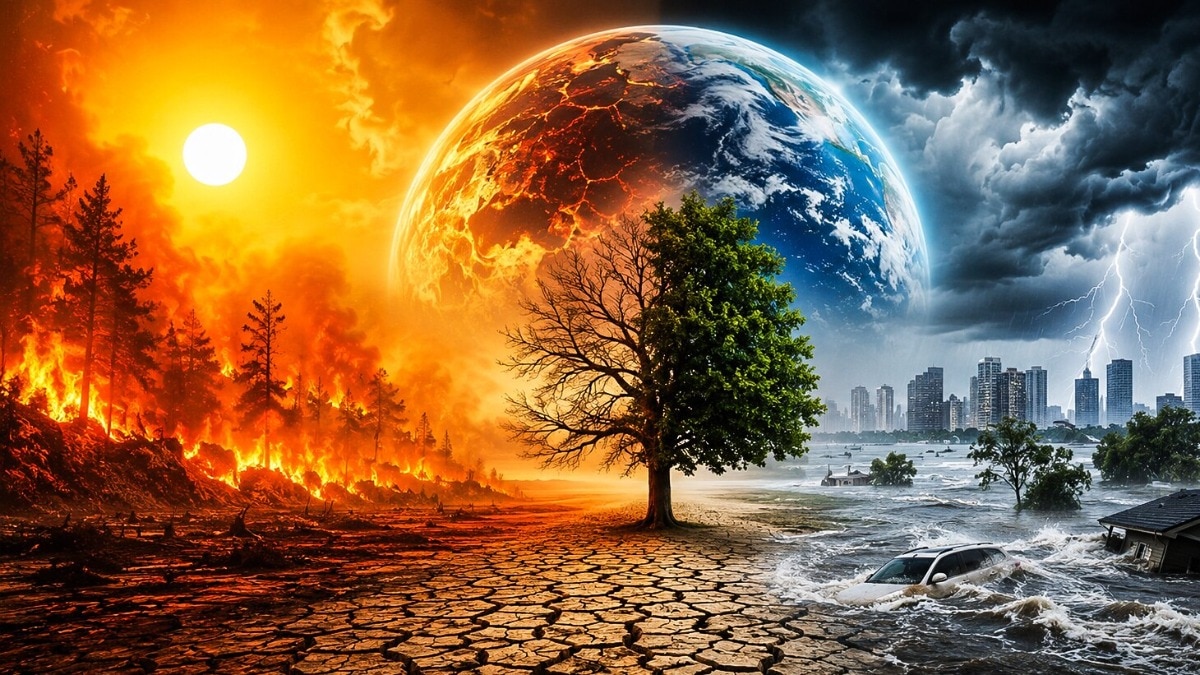
Climate change is no longer a distant environmental concern for a majority of Indians, with more than three in four respondents saying it has affected their lives or livelihoods, according to the latest India Today-CVoter Mood of the Nation survey. More than half of the respondents said they have been significantly affected by climate change, while another one in four reported being affected to some extent.The survey found that 52.7% of respondents said climate change has affected their lives or livelihoods significantly, while 25% said they have been affected a little. Put simply, nearly eight in 10 respondents said climate change has affected them in some way. Only 8.6% said it had not affected their lives or livelihoods, while 13.7% did not know or did not respond.The survey also indicated that a majority of respondents believe enough is being done to protect the environment. Nearly six in 10 respondents, or 59%, said enough is being done to protect the environment, while 34.4% disagreed. Another 6.7% did not know or did not respond.The view has remained broadly stable through 2026. In January, 59.6% said enough was being done, compared with 59% in August. The share answering "No" also remained almost unchanged, moving from 34.2% in January to 34.4% in August. The longer-term trend shows a more positive assessment than in 2025. In August 2025, 52.7% said enough was being done to protect the environment, while 35.6% said it was not. In February 2025, the positive response was lower at 43%, while 41.4% said enough was not being done.Speaking of climate change and environment, here's a chance to get your ideas on how the national capital can curb its vehicular pollution heard by the Delhi Chief Minister. Click here to take part in this initiative by the India Today Group. Taken together, the findings show a clear contrast: climate change is being felt directly by a large majority of people, even as confidence in efforts to protect the environment has grown. For many Indians, its impact is increasingly visible in the form of unpredictable and recurring extreme weather events.India has recorded unusually high temperatures in recent years. In 2024, the country saw its warmest year since nationwide records began in 1901, with the annual mean temperature 0.65°C above the long-term average. In 2025, the annual mean land surface air temperature was 0.28°C higher, making it the eighth warmest year on record. For 2026, the India Meteorological Department warned of warm nights and above-normal heat-wave conditions during April-June.Globally, wildfires, deadly heat waves and record-hot oceans have raised concerns that 2026 could become the hottest year on record. Scientists say a combination of human-driven global warming and a strengthening El Nino is increasing the chances of 2026 matching or surpassing 2024.Even if 2026 sets a record, scientists say it may not remain there for long, with many expecting 2027 to be hotter. A key factor is the strengthening El Nino, a natural warming of the equatorial Pacific that can raise global temperatures and influence weather extremes.- EndsPublished By: Shipra ParasharPublished On: Aug 27, 2026 20:36 IST
Over 75% of people believe climate change hit life, livelihood: MOTN survey
Full Article
Original Source
Read the full article at Indiatoday →KhanList aggregates and links to publicly available news content. We do not host full articles from third-party sources. Always verify important information with original sources.