
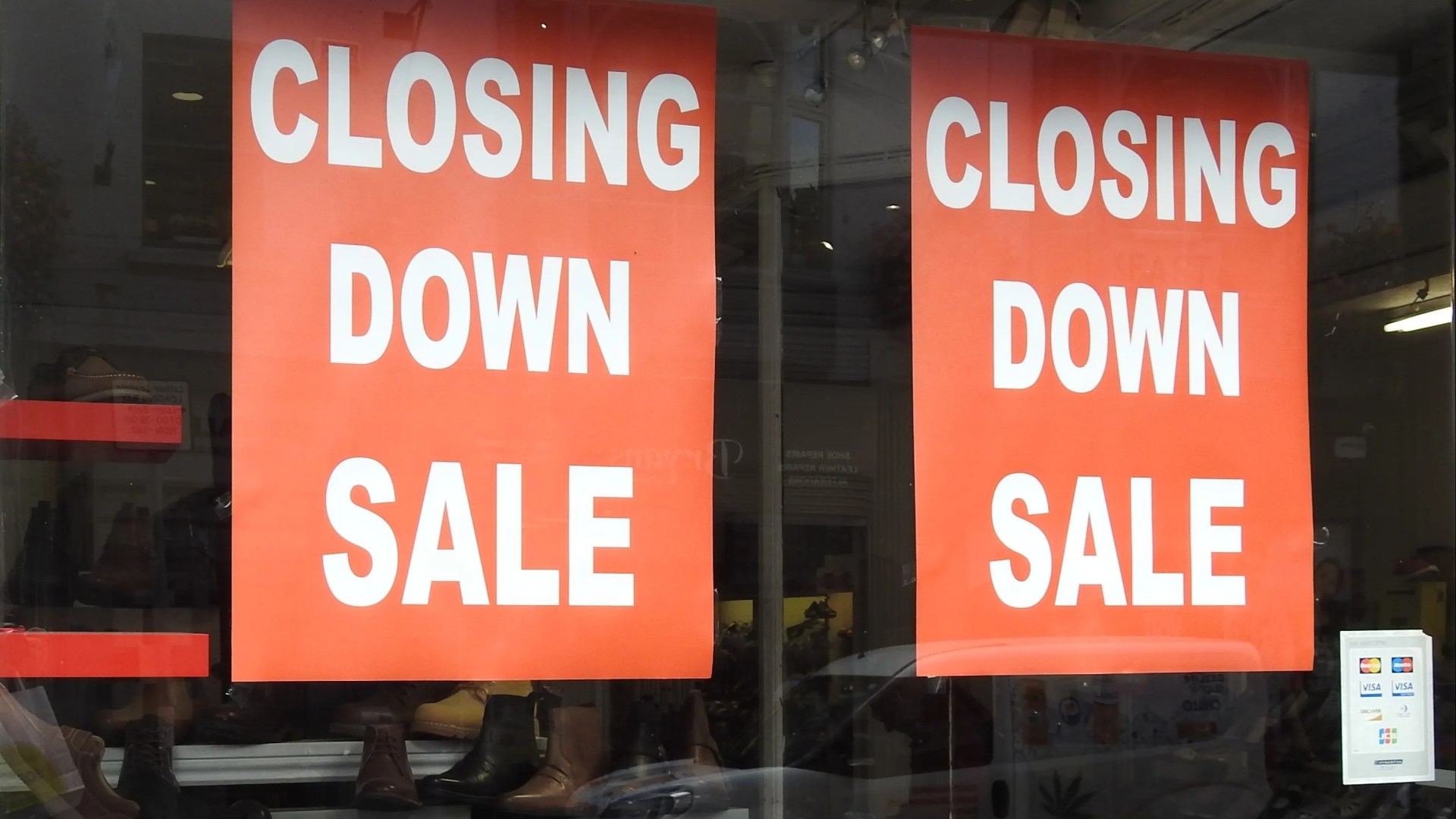
11th September 2019, Dublin, Ireland. Shoe shop closing down sale posters in Dublin city centre. Credit: Getty THE number of UK businesses at risk of going bust has jumped almost 10% over the past year, new data shows, with hotels and leisure centres under the worst financial pressure. Firms considered to be in “critical financial distress” rose to 53,756 in the three months to the end of June, up 9% from the same period last year, according to a report by Begbies Traynor Group (BTG). It found that leisure and culture firms were the worst affected, with a 27.1% increase in businesses reporting they were in critical financial distress, while hotels saw a 26.6% rise. Meanwhile, the number of businesses in “significant” financial distress rose by 1.1% to 674,030. Sign up for the Money newsletter Thank you! Julie Palmer, managing partner at BTG, warned that any further increases in costs for businesses could “accelerate financial distress”. “The persistent rate of critical and significant financial distress in the UK is a clear sign that businesses are walking a tightrope as we move through the second half of 2026,” she said. “While some may be getting used to operating in this challenging environment, it is highly unlikely that business leaders will be feeling optimistic. “Indeed, any further increases to energy costs or inflation could accelerate financial distress and many will be thinking about restructuring or refinancing activities in a bid to improve their current situation.” Ric Traynor, executive chairman at BTG, added that rising energy prices and other costs could cause people to cut back on spending out – just as firms need an extra boost. “Sadly, when confidence and spending remain subdued, I expect the resulting shockwaves to be felt across many other industries later this year and into 2027,” he said. Most read in Money It comes after two thirds of small businesses already reported raising their prices at least three times over the past five years, with a quarter saying they would increase them again before the end of this summer. A survey of 500 business owners by Smart Energy GB found the most common reasons for upping prices were to cover increased supplier costs and energy bills. Two thirds of those firms said they were fearful for their future due to ever rising costs. This can create a difficult cycle as higher prices can lead to consumers spending less overall or making more careful choices about their discretionary spending, hitting businesses harder. New data from the Office for National Statistics found retail sales volumes already fell by 0.5% in July, with experts blaming concurrent heatwaves alongside squeezed household budgets. Phil Monkhouse, UK Country Manager at Ebury, said: “The second half of the year so far looks far from being smooth sailing. “Household budgets are feeling the heat with July’s energy price cap now in place, stalled interest rate cuts, and shaky consumer confidence all harming disposable incomes and spending appetite.” Comment now
Over 50,000 UK firms at risk of going bust – with hotels and leisure centres worst affected
Full Article
Original Source
Read the full article at Thesun →KhanList aggregates and links to publicly available news content. We do not host full articles from third-party sources. Always verify important information with original sources.