
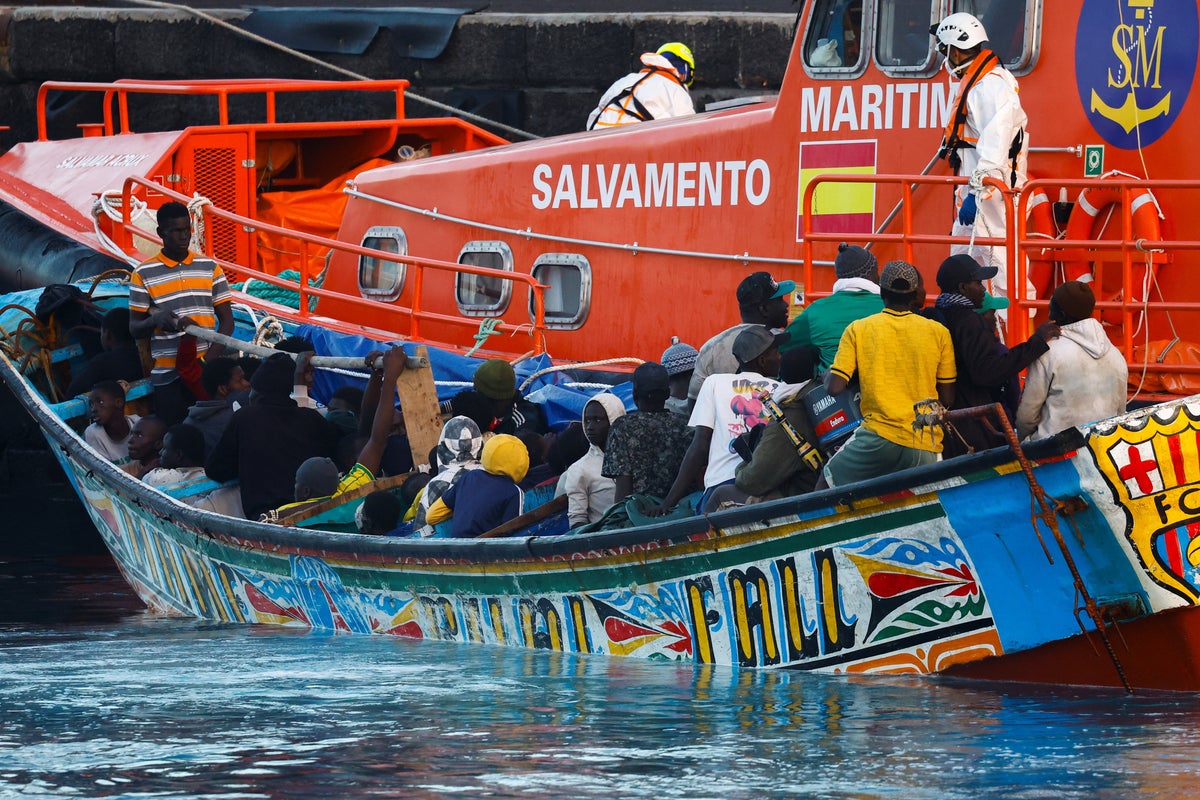
Almost 2,200 migrants reached Spain’s Canary Islands by boat in 48 hours, Spain’s maritime rescue service said on Sunday.It comes just days after Spain declared a migration emergency on the islands on Tuesday following a rise in arrivals in recent weeks, particularly from sub-Saharan Africa.The archipelago, located off northwest Africa, has become a major entry point for migrants despite the Atlantic being considered one of the world’s deadliest migration crossings.Many people attempt the crossing in makeshift boats, which can easily capsize and sink (Reuters)Although the islands lie about 65 miles from the nearest African coast, many migrants take longer routes to evade security forces. Those journeys can last days or weeks, with most boats departing from Mauritania.Many people attempt the crossing in makeshift boats, which can easily capsize and sink. On 2 November, seven people died off the coast of Lanzarote as authorities rescued more than 380 people.According to the Interior Ministry, more than 13,000 of the just over 28,000 people who arrived in Spain by sea between January and the end of October landed in the Canary Islands.The rescue service said it had assisted 1,324 people aboard 14 dinghies, most of whom reached El Hierro, a tiny island with a population of just12,000. That figure approached the route’s daily rescue record of 1,461 people, set on November 7, 2020.Red Cross staff meet migrants at the port, providing dry clothes, food and water and registering their arrival, Dácil León, the organisation’s emergency coordinator in Tenerife, told local news.Spain has started deporting Ceuta migrants to Morocco (Reuters)In July, tens of thousands of people crossed from Morocco into Spain’s North African territory of Ceuta in just two days, causing chaos and reigniting debate over immigration in Europe and beyond. More than 140 people died making the journey.Most of those who crossed left within days, but up to 15,000 remained.Spain has started deporting Ceuta migrants to Morocco following the influx, despite human rights advocates criticising the move.“Spain, despite its [progressive] speeches in Europe, is not ensuring that human rights guarantees are met for people who cross its borders in Ceuta and Melilla,” said Virginia Alvarez, an Amnesty International researcher. “Morocco does not respect many human rights.”A spokesperson for Spain’s Interior Ministry said that Morocco is considered by the European Union to be a safe country, and that deportations are carried out “with all the necessary safeguards”.
Over 2,000 migrants reach Canary Islands after Spain declares migration emergency
Full Article
Original Source
Read the full article at Independent →KhanList aggregates and links to publicly available news content. We do not host full articles from third-party sources. Always verify important information with original sources.