
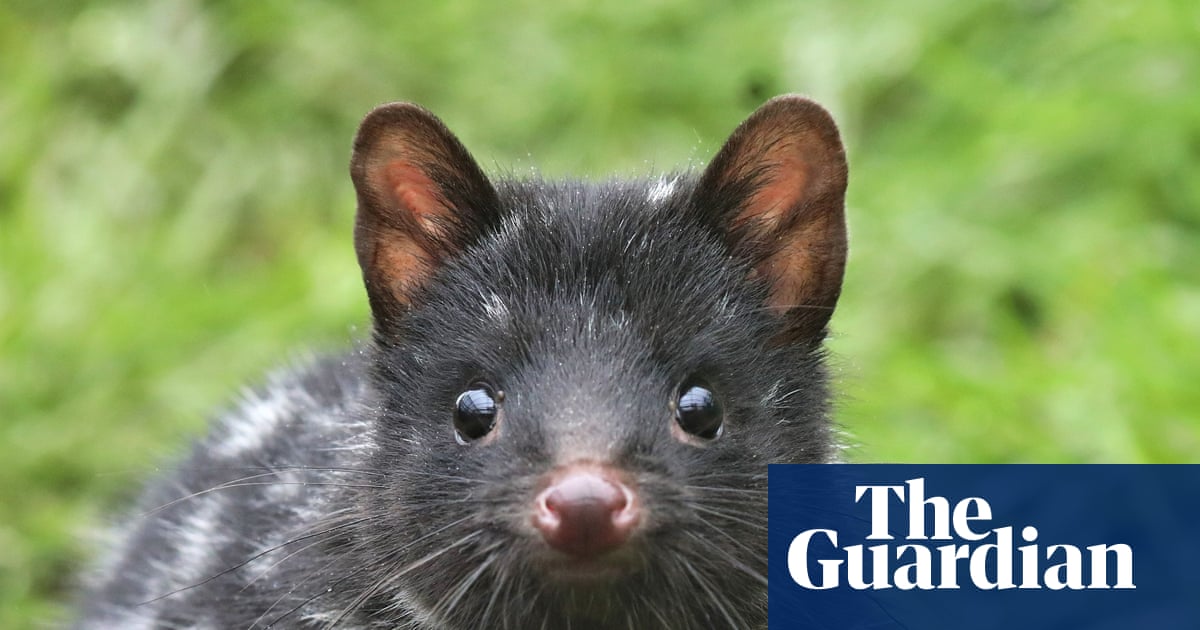
Most people identify wombats and kangaroos as Australian animals, but one in six people surveyed in Queensland, New South Wales and Victoria think red foxes are native wildlife.The polling commissioned by the Invasive Species Council also revealed that one in three Australians on the east coast did not know that quolls were native.More than 95% said kangaroos and wombats were native animals, according to the survey of 5,000 people by DemosAU, which listed animals and asked people to say if they were native or not, but showed recognition of other species like quolls and bandicoots was much lower.One in five thought cane toads were native. These amphibians hailed from Central and South America and were introduced in 1935 in a failed bid to control cane beetles, with disastrous results for native species.About 10% considered cats wildlife.Sign up for the Breaking News Australia email“It’s wild,” the conservation group’s rewilding manager, Rob Brewster, said. Foxes and cats were among the country’s most destructive introduced mammals, while the quoll – a unique native predator – was arguably one of its most beautiful, he said.Brewster said quolls had loads of personality and character, and were once found in the heart of Sydney and Melbourne, right up until the 1950s and 60s. “There’s so few left, that there’s very little chance of having a meaningful interaction with a quoll these days.”The Invasive Species Council said the findings revealed the growing disconnect between Australians and wildlife, as local species declined while introduced animals – like cats, foxes and rabbits – became an increasingly familiar sight.“That is how extinction can begin long before the last animal dies,” Brewster said. “A species disappears from your back yard, then your neighbourhood, then your region. A generation grows up without seeing it, and eventually its absence starts to feel normal.Quoll and possum species brought back from local extinction in the Ikara-Flinders ranges – video“The less Australians encounter an animal, whether that be a quoll, bandicoot or bettong, the quicker they fade from public knowledge and eventually generations will not recognise them all – unless we do something about it.”Associate prof Diana Fisher, an ecologist at the University of Queensland, said quolls were intelligent and voracious predators. But apart from in the bush or at the zoo, most people were unlikely to encounter them because they were nocturnal and avoided houses and built up areas.skip past newsletter promotionafter newsletter promotion“People love predators, and things like big cats,” she said. “Ours are a little bit smaller, but still very impressive and beautiful to look at, and they’ve all got spots.”Prof Euan Ritchie, a wildlife ecologist at Deakin University, said quolls were “magnificent marsupials”, that performed a vital role within ecosystems, and were even known to prey on introduced European rabbits.“Their delightful spotted patterns, wonderfully long tails, the way they bound through forests, woodlands and over boulders … they really are quollity!”Like many Australian mammals, they held deep cultural importance for many First Nations peoples, he said. “They are greatly underappreciated by many, and I hope we can return these wonderful mammals to more areas where they once lived and thrived.”Ritchie has advocated for lesser known species, including the marsupial mole, velvet worm or Jalbil (Boyd’s forest dragon), to be made mascots for the 2032 Brisbane Olympic Games, as a means to raise their profiles.“Sadly Australia is a world leader in extinctions,” he wrote. “Highlighting species many are unfamiliar with, the threats to them and their respective habitats and ecosystems, could help to stimulate increased conservation efforts.”
Outfoxed: How well do you know your native animals? Australians’ questionable quoll knowledge exposed
Full Article
Original Source
Read the full article at Theguardian →KhanList aggregates and links to publicly available news content. We do not host full articles from third-party sources. Always verify important information with original sources.