
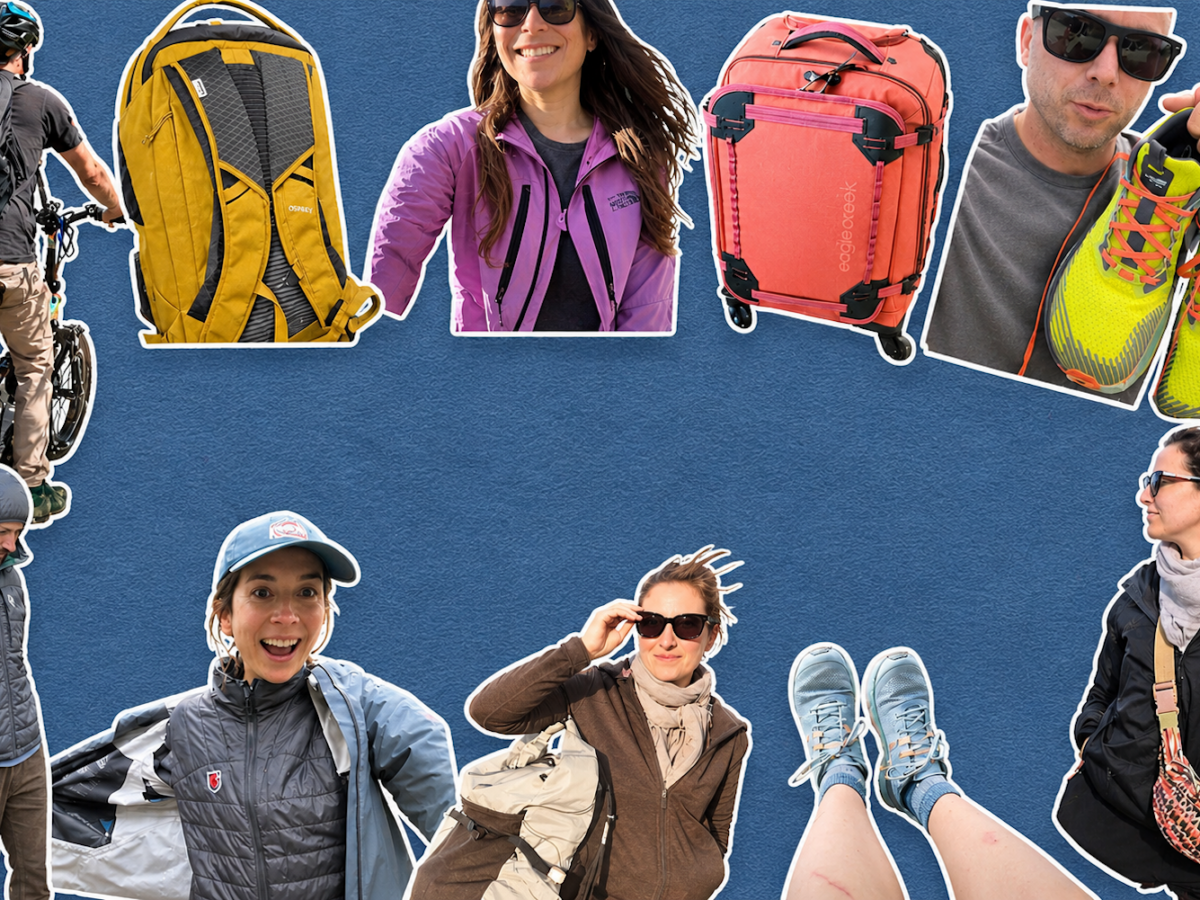
With most gear reviews, you’re reading about that product during a snapshot in time — an editor tested a new piece of luggage on a flight or wore a waterproof jacket on a few rainy camping trips. So when you’re someone who writes gear reviews, you have a lot of gear. Some is randomly mailed to you in the hopes you’ll like it and write about it, and there’s plenty we buy, because different types of travel call for different types of gear (and we travel whenever we can). Some gear stays in our closets, some gets donated, and some doesn’t quite live up to the hype, so we don’t write about it at all. But with gear reviews, what readers don’t usually find out is the part that really matters the most: does it hold up? After a year or more with it, are our editors and writers still using it? So we went back and checked what we’re still using and wearing. These are the bags we grab before flights, the clothing we’d never leave at home on a road trip, and the products we really, truly think are worth the spend. Everything below is something one of us has used not just to review, but in our daily lives and travels. In some cases, we’ve been loyal to these products for nearly a decade. For each one, you’ll see what we said when we first tested it, and what we think now that it’s been dragged through real life. If it’s here, it’s because it’s never been relegated to the back of our gear closet. See you out there, the Matador Network editorial team All products and listings featured on Matador Network are independently selected by our writers and editors. Matador Network may receive compensation if you make a purchase through these links. Prices are accurate as of publication. The best jackets we’re still using Mountain Hardwear Kor AirShell Hoody First tested: September 2024 Price: From $76 Best for: Packable, super-light wind protection What we said then: When I first tested the Mountain Hardwear Kor AirShell Hoody during a weeklong trip through the Swiss Alps in autumn 2024, I was impressed by how useful such a lightweight, minimalist jacket could be. With weather ranging from sunny afternoons to chilly, windy mornings, I appreciated having a versatile layer that packed down to roughly the size of a mango. Despite its barely-there feel, it provided welcome wind protection, especially during a boat tour on Lake Geneva. I also like that it packs into pockets with attached stretchy hooks, so you can clip it around your arm when running — or, as I do, around the outside of your biking hip pack. While it’s no substitute for a waterproof shell or insulated jacket, its tiny packed size, comfort, and versatility made it an easy addition to my daypack for hiking, travel, and everyday adventures. What we think now: I’ve been wearing this jacket frequently over the past two years and have found it especially useful for biking and hiking. The stretchy straps to hook it around your wrist or backpack strap mean there’s no excuse not to carry it, and it’s become my top ultralight layer for hiking, biking, and days when it’s not quite warm enough for a t-shirt alone. For how small and thin it is, it does a great job blocking wind, and that alone keeps me a lot warmer than you’d think. Plus, it has four decently sized pockets, each with a secure zipper — score. Buy Now: From $76 Ibex Mammoth Full Zip Hoodie First tested: June 2025 Price: $298 Best for: An investment piece for warmth in the wild What we said then: I tested the Ibex Mammoth Full Zip Hoodie through a cold, windy fall in Argentinian Patagonia, hiking near Comodoro Rivadavia in temperatures in the 40s with gusts hitting my face at 30 miles per hour, and it performed even better than I’d hoped. It’s built from a dense merino-wool knit that’s both soft and tough, with a fleecy merino interior, and it regulates temperature beautifully. When a hypoglycemic episode left me drenched in sweat, it dried fast and kept me warm. The merino also resists odor well enough to wear for days between washes. I loved the helmet-compatible hood for the extra head and neck coverage, and the fit is athletic and true to size, with thumb holes and plenty of pockets. It’s not fully windproof in sustained wind or at altitude, so I’d still bring a shell for summit pushes, and at close to $300, it’s an investment — but it delivers on its promises. What we think now: What’s kept the Ibex Mammoth in my rotation is the breathability. I can push hard on a hike and still not overheat or get clammy in it, which is rare for something this warm. It’s become my default layer, whether I’m on a trail or just out around town, and the merino has held up better than I expected: a year and a half of regular wear and frequent washing, and the knit still looks sharp with no sagging or wear. For a wool piece I half-expected to have to baby a bit, it’s turned out to be the opposite. Buy Now: $298 Black Diamond Solution Hoodie 2.0 First tested: October 2024 Price: From $174 Best for: Everyday insulation with technical chops What we said then: If you needed a holiday gift to wow a skier, climber, or otherwise outdoorsy person but are more of an indoor person yourself, the Solution Hoodie was what we’d recommend. It’s the kind of gift that will make them say, “Whoa — did someone help you pick this out?” That’s because it’s an extremely packable and portable insulated jacket that feels a lot warmer than you’d think, considering how physically lightweight the jacket is. It’s unusual for a jacket to be technically sound, packable, warm, and reasonably priced, but the Solution Hoodie seems to check all the boxes. My husband — a 30-something skier, climber, and mountain biker — hadn’t worn another jacket since his Solution Hoodie arrived. Sizing was straightforward and as expected, though returns are easy if you buy it through Black Diamond. What we think now: My husband is still obsessed with this jacket, to the point where some of his other down jackets didn’t even come out of the closet last winter. He wears it both for everyday use around town and for ski touring and likes it so much, he bought a second one when he thought he’d left his first one in a motel room in Mammoth. It’s reasonably priced (especially if you buy last season’s) and has lasted through plenty of heavy wear, so there’s every reason to recommend it. Buy Now: From $174 Fjällräven Expedition X-Lätt Jacket First tested: May 2024 Price: From $205 Best for: Sustainable, lightweight everyday use What we said then: When I first tested the Fjällräven Expedition X-Lätt Jacket in June 2024, I loved its balance of warmth, packability, and versatility. Despite being surprisingly lightweight, it provided plenty of warmth and packed into its own pocket, making it ideal for hiking, travel, and everyday wear. I also appreciated its understated design, which looked just as good around town as on the trail. But what impressed me most was its durability. After months of stuffing it into backpacks, wearing it through brush, sleeping in it on planes, traveling, and even sitting on it around campfires straight on the dirt, it barely showed any wear. With standard sizing, room for layers, and a focus on sustainable production, I felt it was well worth the investment despite Fjällräven’s premium pricing. What we think now: This is my everyday jacket all spring and fall, as well as for travel. Because it’s such a classic, understated design, I can wear it to professional events, but because it’s Fjällräven, it’s also ideal for serious outdoor activity. It’s definitely warmer than you’d think, especially once you get moving in it, and after more than two years of wear, it has no tears or pulls. Plus, Fjällräven is one of the OGs when it comes to gear that can be repaired and patched, not thrown away. Love that for the world. Absolutely no complaints. Buy Now: From $205 The North Face Ridgelite Jacket First tested: May 2026 Price: $220 Best for: Serious protection in a very tiny package What we said then: I wore The North Face Ridgelite FutureFleece Jacket on cold, windy, sometimes rainy days in Europe’s Basque Country and on dawn and dusk game drives in Kenya, and it quickly replaced three layers I used to pack. At 7.2 ounces, it’s lighter than any jacket I’d owned, and it stows into its own hood. The recycled nylon shell with WindWall knocks down the wind better than something this thin has any right to, and the recycled fleece lining is soft against the skin and warmer than it looks. The fit is roomy rather than slim, with real space through the hips, which I appreciated. At $220, it’s a premium price for what’s essentially a wind layer, and the zippers are thin enough to give me slight pause, but my last North Face wind jacket lasted more than 20 years, so I trust it. What we think now: I’m so happy with this jacket that I’m planning on buying some winter gear also from The North Face for layering. At the beginning, I was a bit concerned about the thin zippers, but there was no reason to — they’ve held up astonishingly well through near-daily use. It’s a useful layer to keep on my backpack when I go hiking and suspect the temperature may drop, since it adds barely any extra weight. Buy Now: $220 Cotopaxi Fleece Pullover First tested: May 2025 Price: From $72 Best for: Warm fleece that doesn’t feel like fleece What we said then: I wore the Cotopaxi Envo Fleece Quarter-Zip Pullover for about three months straight, through April snow in the Sierra Nevada, rainy days around Whistler and Squamish, and warm California summer nights, and it quickly earned a spot in my regular rotation. It’s deceptively warm for how light and packable it is, about as warm as a standard fleece but without the boxy bulk, and it layered easily under a rain shell. The look is streamlined rather than overly outdoorsy, so it worked for hikes, dinners, and coffee shops alike, and the brushed interior feels soft, more like a technical base layer than a fuzzy fleece. I liked the hidden side pocket that fits a phone, the zipper that’s easy to grab with gloves, and that it comes from a 1% for the Planet brand. At $80 and up, my only real gripe was that it collected dog hair and lint. What we think now: I guess my Cotopaxi is supposed to be a midlayer, but it’s so warm I still use it as a pullover spring and fall layer. It has pilled a little in heavy use areas like the underside of the sleeves, and it still collects dog hair — but that’s probably because I wear it 24/7 in my dog hair-filled house. The color hasn’t faded at all, the material doesn’t feel any thinner or less warm, and all the zippers and pulls are in great shape. My Envo Fleece is my go-to layer to pull on when my house is cold in the morning, and though that particular one is out of stock, the well-priced Otero Fleece looks very similar. Buy Now: From $72 The best bags we’re still using The North Face Base Camp Voyager Duffel First tested: October 2024 Price: From $97 Best for: Durable, simple duffel bag What we said then: When I reviewed The North Face Base Camp Voyager Duffel in April 2025, I loved how it proved that a travel bag doesn’t need fancy features to be incredibly useful. I tested the 42-liter version on a four-day road trip to a music festival and found it had plenty of room without feeling unnecessarily bulky. I especially appreciated the convertible backpack straps, which made it practical for flying, and the soft-sided design that could squeeze into tight overhead bins. The separate shoe compartment was big enough for my size-10 trail runners, and the water-resistant fabric offered peace of mind in bad weather. I also liked that it was made mostly from recycled materials and backed by a lifetime warranty. While I wished it had more pockets and slightly more padding on the straps, I thought it was an excellent, no-fuss travel bag at a reasonable $135 price point. What we think now: Quick overnight? Car camping bag? Hauling lots of climbing gear? This bag has become a go-to for quick trips and if I’m not using a roller bag, I’m probably using this one. The lack of pockets is actually nice because it makes packing and unpacking super quick, and forces me to use a small dopp kit or packing cube — ultimately, keeping me more organized. I’ve also come to love that it’s super lightweight so I never have to worry about weight limits, and the fact that it’s super soft means I never get asked to gate check it on planes, even when overhead space is nearly nonexistent. Buy Now: From $97 Photos: Tim Wenger and Nick Hines No Reception Club Travel Bags First tested: November 2024 Price: From $235 Best for: Hauling everything kids need in a well-organized package What we said then: When editor Tim Wenger tested No Reception Club’s Hideaway Duffel on a family trip to Durango, Colorado, in November 2024, he was so impressed that it replaced the luggage setup his family had used for two years. The 42-liter bag fit clothes, toiletries, and toddler essentials for three people, while the removable packing organizer made everything easy to find. He especially appreciated the convertible backpack straps when juggling luggage and his daughter. In a separate review, editor Nick Hines tested the brand’s Getaway Bag after taking more than 20 flights with his two-year-old daughter. He particularly valued having quick access to spare clothes, diapers, snacks, and toys without digging through a disorganized bag, especially when dealing with unexpected messes. Both editors found that No Reception Club’s parent-focused designs solved real frustrations of traveling with young kids. What we think now: Both Nick and Tim tested these bags when No Reception Club was first getting started, and both agree it’s one of those rare products that actually lives up to all its promises. Years later, their bags are still holding up beautifully, and neither has found much they’d change about the original designs, noting they’re well thought out and built to last. They’re not something you’ll need to replace every few years, even with the inevitable messes that come with kids. Nick says that even when his kids are older, he intends to keep using this bag for himself, appreciating that it’s a well-organized travel backpack, kids or not. Buy Now: From $235 Patagonia Refugio Daypack First tested: March 2024 Price: From $115 Best for: Budget-friendly backpack for heavy use What we said then: When I reviewed the Patagonia Refugio 30L in May 2024, I was convinced I’d found the ideal backpack for remote workers and frequent travelers. What impressed me most was its ability to carry everything I needed for an unpredictable day without feeling bulky. The three compartments kept my laptop, chargers, and work essentials organized while leaving plenty of room for lunch, gym clothes, a jacket, and even my e-bike charger. I especially appreciated the padded laptop sleeve, dual water bottle pockets, comfortable straps, and bike light clip for commuting. Despite its 30-liter capacity, it fit easily under airplane seats and worked just as well for travel as it did for everyday errands. Add in the mostly recycled materials and Patagonia’s reputation for durability, and I felt I’d finally found a backpack that could replace several others. What we think now: Going on three years later, I love this backpack just as much as the day I got it. It’s held up through countless trips, commutes, and adventures, and by now, I know every inch of it. I know which pockets have a little extra wiggle room for another mason jar full of lunch, which side holds my water bottle, and which holds my coffee mug. It’s become such a familiar part of my everyday life that I barely have to think about it anymore. No matter where I go or what my day looks like, this pack is one part of my routine that stays the same. Buy Now: From $115 Photos: Debbie Gonzalez Canada Eagle Creek Gear Warrior XE Carry-on First tested: July 2024 Price: $429 Best for: Tough, spacious carry-on with a lifetime guarantee What we said then: I took the Eagle Creek Gear Warrior XE on a packed four-day trip through Buenos Aires, hauling it on and off trains, buses, and subways and rolling it nearly a mile over uneven sidewalks. I was surprised how much fit inside: two bulky wool cardigans, five shirts, two pairs of jeans, a big toiletry bag, and two books, with room to spare for an extra pair of shoes, all of it staying tidy with little effort. The expandable panel adds 15 liters when you need it, the recycled polyester shell shrugged off abrasion, and the heavy-duty spinner wheels made moving it feel effortless. I also like that the brand’s “No matter what” warranty covers the wheels, handles, zippers, and frame. My one real gripe is the weight: at 7.5 pounds empty, it eats into a tight carry-on allowance, and I’d love these same specs in a lighter bag. What we think now: These wheels have gone places in the past two years. I’ve moved across the world with my Eagle Creek Gear Warrior Carry-On, from Argentina to Spain, and I’ve taken it on trips across Europe via train, buses, cars, and planes. It’s definitely gotten banged around, dropped, and smashed into walls, but it still looks good. It feels like it holds a lot but was still small enough for airlines that measure your bags (cough, Ryanair), and holds the right amount for a long weekend. Old cobblestone streets in cities and towns were no problem for the wheels, which still look as good as new. It’s rather pricey, but I’m expecting to use this bag for a good decade or two to come. Buy Now: $429 Nemo Vantage 30L Backpack First tested: June 2024 Price: $229 Best for: A durable carry-on that holds more than you’d think What we said then: When we first tested the NEMO Vantage 30L, the pitch was one 30-liter, carry-on-sized pack that could cross between travel and the outdoors, and it did. On weekend camping trips in the Colorado mountains it carried about three days of clothing and kept everything dry when it rained at the campsite; it doubled as a day pack on a four-day trip to Mexico City; and it was the carry-on on a nine-day family trip to Türkiye, sliding under the seat on a roughly 13-hour flight. The wide shoulder straps and CCubed back panel kept it comfortable in summer heat, the top duffel compartment and quick-access pockets made packing efficient, and it shrugged off scuffs and a few downpours. At $229.95 it wasn’t cheap, and the side water-bottle pockets ran small, but it earned its place. What we think now: Two years in, it’s still my go-to bag for every trip, whether that’s a work trip to Mexico or a road trip with my mom, sister, wife, and daughter, where trunk space was limited. I still stuff it full and the zippers haven’t given out on me yet — but if they did, I’d just take advantage of NEMO’s repair program, since the brand is all about putting as little as possible in landfills. There’s a pen-sized hole in the fabric from dragging it down a sidewalk in Turks and Caicos while I figured out how to carry two car seats and a roller bag, but the straps are still good as new. I haven’t patched the hole and don’t plan to, as I don’t mind the patina and the hole hasn’t spread no matter how much I continue to overfill the bag. The smaller side pockets still annoy me, though they hold both of my kids’ water bottles now, which counts for something. This bag has definitely justified the price. Buy Now: From $229 Matador Equipment Waterproof Backpacks First tested: July 2019 Price: $75 Best for: Seriously waterproof packable backpacks What we said then: Matador Equipment (no relation) makes the bags I reach for when the forecast turns, and I’ve been using them for years, back when the brand was still pretty small. On an Arctic trip I leaned on the Beast 28, a waterproof hiking daypack with side pockets, hip and chest straps, and a flexible back frame. And after sliding down glaciers and walking through rain (and rivers) in Svalbard, everything inside stayed dry. It hit a good balance of packability, size, and comfort, and proved far more durable than the thinner packable bags I’d worn down to duct-tape patches. Matador’s creative director also recently tested the brand’s larger GlobeRider 45 travel pack and gave it a 10 out of 10, won over more by its easy-access opening and lay-flat organization. What we think now: I rarely take a trip without one of these anymore. It’s my day-hike bag, but I also grab it instead of a purse when I’m just walking around and sightseeing, since I never have to worry if the weather turns on me. I’ve gotten mine seriously soaked more than once, and while the stuff inside sometimes comes out cold, it has never once come out wet. And despite scampering through wet, tight woods with it more times than I can count, it still doesn’t have a single hole. I’ve been using these packable Matador Travel Equipment bags for years and really can’t say enough good things about them. Yes, you can buy cheaper “waterproof,” packable backpacks on Amazon — but having tried them, I can guarantee they won’t last as long. Buy Now: From $75 The best shoes and accessories we’re still using Forsake Cascade Low First tested: November 2024 Price: From $79 Best for: Affordable, grippy, lightweight trail shoes What we said then: When I packed the Forsake Cascade Low for a fall trip through the Swiss Alps, the pitch was that Forsake flies under the radar in the US but makes excellent shoes that I’ve always been pleased with. They held up as a waterproof hiking shoe built for rain and mud: lightweight, comfortable, and with absolutely no blisters or rubbing, even on steeper, rockier trails. The blue-gray pair was low-key enough to wear around town between hikes, and at $130, the price felt “pretty solid” for a waterproof trail shoe. What we think now: I’m still rocking these on shorter hikes and strolls, and they’ve shown relatively little wear on the outsole/tread. They’re still supremely comfortable, and I’ve never felt any foot fatigue or soreness after use. They’re extremely lightweight, so in cold weather, my feet sometimes get a little chilly. But for non-winter hikes, I really like them (and recommend them even more now that they’re on sale online, as of mid-November 2026). Buy Now: From $79 Altra Experience Wild 2 First tested: May 2025 Price: From $109 Best for: Pain-free distance running What we said then: When I reviewed the Altra Experience Wild 2 trail running shoes in 2025, I doubted any shoe could make running comfortable after decades of snowboarding had taken a toll on my knees. But testing them on rocky trails around Grand Junction, Colorado, changed my mind. The wide toe box gave my feet room without aggravating a bunion, while the cushioned heel helped reduce knee pain. I also appreciated their grip on muddy trails, bouncy feel, and performance on uneven terrain. After about 10 runs over six weeks, I went from struggling through a mile to comfortably running several. For the first time, running felt sustainable. What we think now: This year, I bought another pair of the same shoes and picked up right where I left off. I’ll probably never run a marathon or summit a 14er in them, but being able to knock out a few miles without being in immense pain afterward feels like a win. Buy Now: From $109 Hoka Clifton 10 First tested: October 2024 Price: From $98 Best for: Pain-free running plus everyday comfort What we said then: I’m a once-competitive runner in my early 40s. I first laced up the Hoka Clifton 10 when I started running again while coming back from a hand injury, and the shoes felt natural right away — more so than any running shoe I could remember. The thick, impact-absorbing midsole made each step easier on my knees and hips (I’ve also had hip surgery) on longer, uneven runs, and the Cliftons pulled double duty for all-day walking through several days on construction sites. My one adjustment was threading the laces through every eyelet to lock down my heel, after which I stopped thinking about fit entirely. At $125, they seemed like a great price for a shoe that can do it all for runners who travel. What we think now: More than a year later, the Clifton 10 is pretty much the only shoe I reach for. On a recent two-month trip out of town it was the single pair I packed, handling everything from walking around towns to long day hikes without a second option. The cushioning has held up through all of it and still feels solid underfoot, with no real breakdown in the midsole. Hoka has since released the Clifton 11, and I’m curious to see how it compares, but these have given me no reason to retire them yet. They’re dirty, but in great shape. Buy Now: From $98 Chacos Z/1 Hiking Sandals First tested: April 2018 Price: From $70 Best for: Maximum grip in wet conditions What we said then: When I went to Tahiti, the Chaco Z/1 was my pick for hiking, where the waterfall trails run wet and muddy and half the fun involves swimming, floating down rivers, and jumping off cliffs. I’d already been rocking thick-strap Chacos for several years since I first tested them in 2018, and knew that they’d be better than heavy hiking shoes that stay soggy. The classic Z/1 has the same kind of grippy outsole as a trail shoe, but the easy-adjust straps let you wade, splash, and swim without ruining them, and you can rinse the whole thing clean in the shower or the ocean. Back then, I preferred the version without the toe strap, and appreciated that the purchases of some Z/1 styles give back to causes like national parks and Brave Trails. What we think now: I’m still in love with my Chacos and they’re still my go-to for river floats, as shown in the photo above. I’ve worn them for everything from multi-day hikes to hikes through snow and beach days at the river, and even wear them with thick socks at night sometimes when camping. I have probably four pairs now, and my original pair I first got in 2018 is dirty as can be — but they still have grip and the straps still stay tight. They’re not the only hiking sandals I wear in the summer, but I never go too long without strapping them on, either. Buy Now: From $70 Smith Venture Sunglasses First tested: June 2025 Price: From $207 Best for: Maximum eye and sun protection What we said then: When I first tested the Smith Venture Sunglasses during an eight-day expedition around Svalbard in the Arctic Circle, I was impressed by how well they handled extreme sunlight, wind, and glare. What really sets them apart is their removable side shields, which block bright reflections and wind from entering around the edges of the lenses. I wore them everywhere, especially on windy boat rides, where they kept my eyes from watering, and on snowy hikes, where the sun reflecting off the ice could be blinding. I also loved the detachable neck strap, which made it easy to pull them down when taking photos, and I got more than a few compliments on their distinctive look. At more than $200, they’re certainly an investment, but I thought they were well worth it for anyone who spends a lot of time skiing, snowshoeing, or exploring bright, snowy environments. What we think now: My love for these sunglasses has only grown, and they’re my go-to almost every day. They’re incredibly useful for anyone who wants to protect the sensitive skin around the side of their eyes (from wrinkles or wind, your choice) and I’ve gotten a lot of compliments on them. That includes a few compliments from actual dermatologists, who agreed the more sun protection, the better. I get zero eye fatigue wearing these, even after long days in the sun, and the side flaps (which are removable) feel as secure as day one. Love ’em. Buy Now: From $207 Matador Equipment Laptop Base Layer First tested: November 2024 Price: $59 Best for: Portable laptop protection from the elements What we said then: Most of my backpacks already have built-in laptop sleeves, so for carrying my laptop, I needed something that offered protection from dust and moisture, not something with more padding and bulk. Enter: The Matador Laptop Base Layer. It’s a thin, nylon sleeve that fits a 13- to 15.5-inch laptop plus a zippered pocket for chargers and cords, and the waterproofing is the real draw: roll the top closed and fold the Velcro over, and it earns an IPX6 rating. I ran it under a shower and my MacBook stayed dry. At $59, with a three-year warranty and a lifetime repair program, it became my go-to carry sleeve. What we think now: I still use this any time I’m traveling, especially since I can throw it in a backpack, purse, or tote without taking up tons of space. The slim case keeps dirt, dust, and hair out of the ports, and getting caught in a downpour is literally a non-issue. I’ll never go back to a bulky padded case again, especially as this one is in great shape and has a front pocket for carrying my laptop cord and charger, too. I even use it for trips to things like doctor’s appointments, where I know I might be waiting a while but don’t want to carry a whole laptop backpack in with me. Aside from the fact that it still comes in only one color, no complaints. Buy Now: $59 The best clothing we’re still wearing Abode Outside Unisex Sweaters First tested: 2023 Price: $69 Best for:Versatile, quality-made pullovers What we said then: When I first wrote up Abode Outside’s Basecamp Sweater in Matador’s November 2024 gear roundup, the pitch was simple: a knit “softer than cashmere – what I like to call ‘puppy ear soft’” from a Minnesota brand that actually backs up its sustainability talk, with recycled yarn, responsibly sourced wool, and an office that runs on solar power. At under $100, I said it was a smart buy for anyone trying to quit fast fashion without dropping $300 on a high-end organic sweater. The one thing we flagged: the sweaters are unisex but cut to a men’s size chart, so women should size down. Iliked the brand enough that it showed up again in our Earth Month sustainable-gear guide a few months later (that time for its shirts and hoodies). What we think now: My first sweater from this brand was sent to me for a gear review — but I’ve since bought a few more myself. I have Abode Outside sweaters in black, blue, and green, and wear the three of them so much that my husband jokes they’re my “going out sweaters.” They’re unisex, comfortable and easy to wear, look nice enough with jeans and boots for a nice dinner, and haven’t stretched, faded, or pilled. But the best part is probably that they’re also made for outdoor wear, so you can pull one on chilly hiking days or even sleep in one while camping. These days, for most trips, these three sweaters are the only long sleeves I bring while traveling (other than a jacket). They’re definitely some of the most beloved pieces in my wardrobe. I have the Backpacker in green and several of the Basecamp sweaters. Buy Now: From $69 Free Fly Apparel UPF Sun Hoodies First tested: 2020 Price: From $78 Best for: Quick-drying UPF protection What we said then: When I wrote about Free Fly Apparel’s sun shirts in June 2024, I’d already been wearing the brand for nearly three years, and it was already one of my favorites for travel and outdoor adventures. I especially loved the bamboo sun hoodies that offer serious UPF protection (50+) without feeling heavy or hot. They’re my go-to layers for scuba diving boats, kayaking trips, river floats, and any activity where I needed sun protection without overheating. They’re also super soft with minimal branding and classic styles that won’t go out of fashion. Though the thinner fabrics required a little extra care (really, just don’t throw them in the dryer), I think Free Fly items are some of the most practical and versatile pieces of travel clothing I own. What we think now: My love for sunshirts has only grown, and I have at least five from Free Fly in various thicknesses. I’ve also got Free Fly pants, a jacket, and several pairs of shorts, and regularly browse the site for sales and discounts. At this point, you won’t find me in the sun unless I’m wearing an SPF shirt (and I spend a lot of time outside). I also love that the brand’s items continue to be straight cuts, classic shapes, and solid colors, meaning my shirts from six or seven years ago are still just as trendy as they were back then. Buy Now: From $78 Title Nine Switchback Short First tested: June 2022 Price: $49 Best for: Quick-drying everyday outdoor shorts What we said then: I first wore the Title Nine Switchback Short on a scrambly, intense hike to a hidden waterfall, and after that, I kept them in the rotation for basically any outdoor activity with a chance of rain, a stream crossing, or an impromptu river swim. They dry extremely quickly, and the cut runs roomy and a little boxy, so I never felt limited when I needed to take huge steps or jump across rocks. But what sold me may have been the pockets: the shorts have big front pockets that sit on the front of your thighs instead of the sides, so you’re less likely to drop something when you sit down. There’s also a security back pocket and a drawstring waist. At $29, they were an easy pick, and they pull off casual just as well, paired with a white tee and sandals for dinner. What we think now: The Switchback shorts are a straight cut, pull-on, quick-dry short with big pockets — everything you could hope for. I actually forgot I had these for about a year and was so happy when I rediscovered them in the bottom of a drawer. They’re comfy, dry in a matter of minutes, and have a long enough inseam that you can scramble over rocks or climb up tree stumps without flashing your underwear. Sadly, it seems they stopped making them, but the Scout Short looks very similar. Buy Now: $49 Photo: Debbie Gonzalez Canada Patagonia Maipo 7/8 Stash Tights First tested: March 2024 Price: from $62 Best for: Long lasting, versatile leggings What we said then: The Patagonia Maipo 7/8 Stash Tights became my new favorite piece of clothing, by far the best tights I’d owned. The fabric is 81 percent recycled nylon made from old fishing nets, blended with spandex and treated for odor control and wicking, and they felt genuinely soft and dried fast. At 6.1 ounces, they’re remarkably light, the low-profile seams kept them from chafing, and the two drop-in side pockets were easy to reach. I wore a medium, which fit perfectly, and the cut is formfitting without being restrictive. They quickly became my go-to in mild and hot weather, and in winter, I just layered wool leg warmers over them. What we think now: Patagonia Women’s Maipo 7/8 Stash Tights are still my favorite leggings, and I wear them regularly. I’ve put on some weight, and they haven’t complained or lost their strength. They still do their job of making my legs look decent no matter how I’m dressed, whether that’s for an outdoorsy activity or more of an urban-casual look. The soft fabric is in perfect condition after many, many washing cycles during the past two years, and certainly doesn’t look its age. Buy Now: from $62
Our Editors Test Tons of Gear. We’re Still Using These 22 Items Years Later.
Full Article
Original Source
Read the full article at Matadornetwork →KhanList aggregates and links to publicly available news content. We do not host full articles from third-party sources. Always verify important information with original sources.