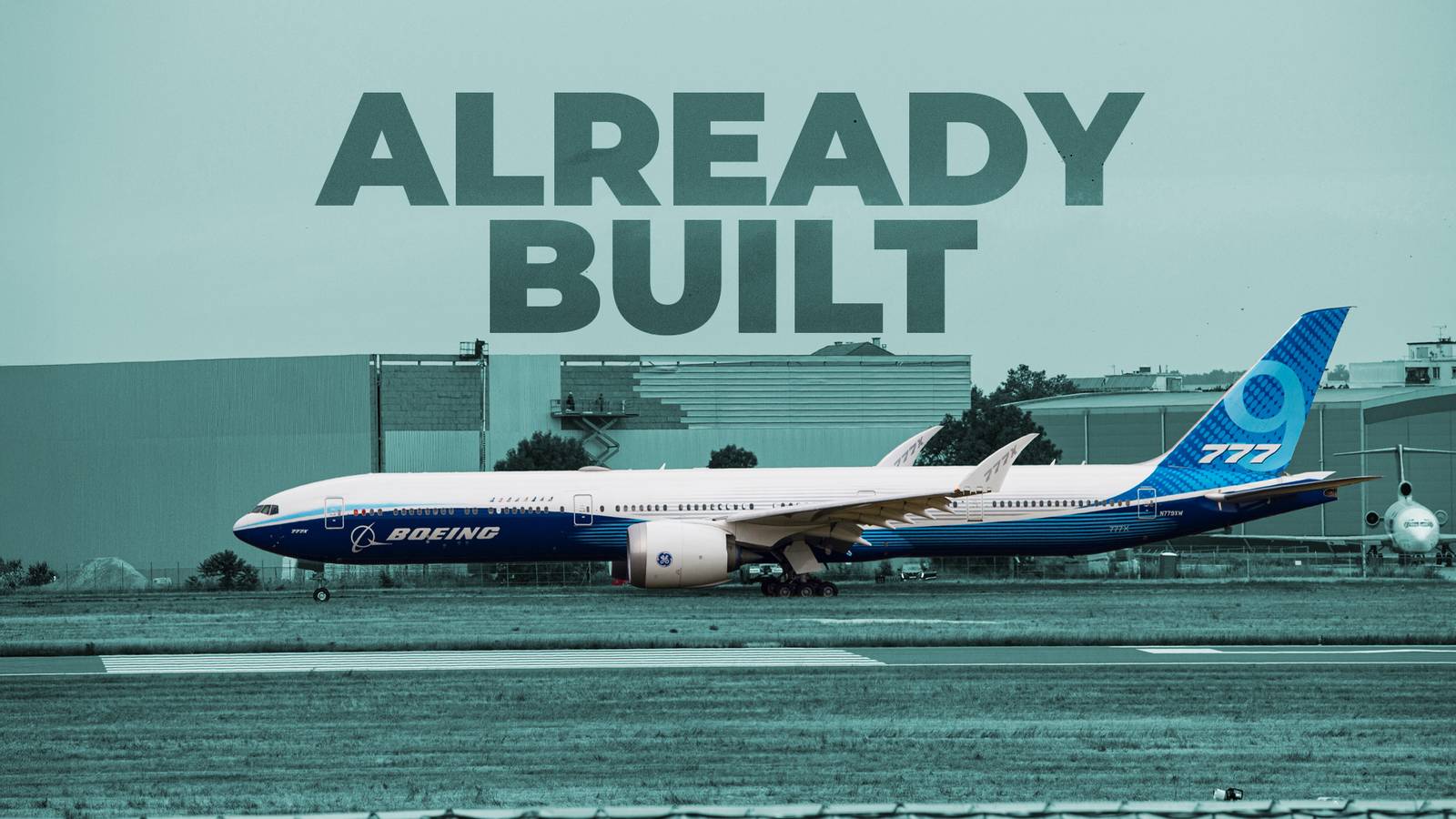
Credit: Shutterstock | Simple Flying Published Aug 7, 2026, 5:26 PM EDT Paul has had a career of 25+ years focused on the international technology sector, which has taken him to over 100 countries. Along the way, he developed a deep love for aviation, with a travel bucket list measured by aircraft types flown rather than destinations reached. Now he is bringing that avgeek passion, along with the journalism experience he accumulated early in his career, to write insightful pieces for Simple Flying. Lufthansa has become the second major Boeing 777X customer to say it does not want some of the oldest 777-9s built for it. During the airline's Q2 earnings call this week, CEO Carsten Spohr confirmed that discussions are underway with Boeing over which early-production aircraft Lufthansa will refuse outright and which could still be accepted after being brought up to the latest standard, with Boeing contributing financially toward that work. Emirates made a similar, but more sweeping, decision in July. This is not Lufthansa walking away from the 777X. The Lufthansa Group remains committed to the aircraft, with 20 firm Boeing 777-9 orders and 24 options, alongside seven Boeing 777-8F Freighters, and Boeing flew the first 777-9 equipped with a full Lufthansa passenger interior in May. Instead, the carrier is rejecting aircraft that were produced years before certification was complete — creating the strange prospect of "brand-new" jets that could already be seven or eight years old before entering service. Lufthansa Still Wants The 777-9 — Just Not All Of Them Credit: Simple Flying Spohr's comments reveal that Lufthansa is effectively sorting the early 777-9s into different categories. Some will not be accepted for commercial operations, while others could potentially be modernized and delivered if Boeing absorbs the cost. Lufthansa has not disclosed how many aircraft fall into either group, with Spohr just saying the following: “We are in talks with Boeing [on] which airplanes we will not accept for commercial service, and which aircraft can be modernized.” Lufthansa has been waiting a very long time. It was among the four customers that launched the 777X in 2013, when Boeing announced a commitment for 34 aircraft from the German carrier and targeted first delivery in 2020. Lufthansa's present order has since been reshaped to 20 firm 777-9s plus 24 options, but the aircraft remains central to its long-haul renewal program. Crucially, Lufthansa now has access to newer-production aircraft. Boeing's May flight involved the first 777-9 to fly with a customer interior, and the manufacturer said production aircraft such as that jet will participate in the final certification effort before deliveries begin in 2027. That leaves Lufthansa with little incentive to accept much older examples requiring extensive rework when newer airframes are coming down the line much closer to the final production standard. How Did Boeing End Up With "Old" Brand-New 777-9s? Credit: Boeing The problem traces directly to the extraordinary length of the 777X development program. Boeing launched the aircraft in November 2013 expecting production to begin in 2017 and deliveries in 2020. But the first 777-9 did not fly until January 2020, by which time Boeing was forecasting delivery in 2021; today, the company expects the first customer handover (to Lufthansa) next year. Meanwhile, aircraft were being assembled as the design, certification requirements and engineering configuration continued to evolve. Milestone What Happened 2013 777X launched; first delivery targeted for 2020 2019 Some of today's oldest customer aircraft were built January 2020 777-9 completed its first flight 2022 Production suspended; early aircraft accumulated in storage 2026 39 early-build 777-9s identified as requiring change incorporation July 2026 Emirates said it would reject its first 10 August 2026 Lufthansa confirmed it would reject at least some early aircraft 2027 Boeing's current target for first delivery Aviation Week reports that 39 early 777-9s have been stored at Everett since Boeing suspended production in 2022, and Boeing is establishing a dedicated "change incorporation" line to bring them toward the final standard. Boeing Commercial Airplanes CEO Stephanie Pope has stressed that the work varies by airframe: the earliest examples need more changes than later ones. Emirates President Tim Clark has said the issues with these early aircraft span both the aircraft and engines, because Boeing and GE Aerospace have both continued working through GE9X durability matters during the program's prolonged certification. In his opinion, the only way that Boeing will shift the aircraft is in a fire sale: “They are not going anywhere unless you give them away for $10 million or so. That is the commercial reality.” Emirates has already drawn a much firmer line than Lufthansa. The world's largest 777X customer — with 270 aircraft on order — says it will refuse its first 10 777-9s, three built in 2019, four in 2020 and three in 2021. Clark argues that an aircraft assembled in 2019 could be eight years old by the time Emirates receives it in 2027, consuming a substantial portion of the time the airline would normally expect to keep it in frontline service. That leaves Boeing with several possibilities: spend heavily on modernizing aircraft for their intended customers, offer them at substantial discounts elsewhere, convert suitable examples for specialist or test purposes, or simply dismantle airframes where modification makes no economic sense. Finding another buyer, however, is easier said than done for a 400+ seat widebody requiring GE9X support, specialized training and enough long-haul demand to justify introducing an entirely new fleet type. Boeing's experience with the 787 shows both how large discounts can solve the problem — and where they sometimes cannot. The 787 “Terrible Teens” Show What Could Happen Next Credit: Shutterstock During the Dreamliner's troubled development, Boeing similarly built aircraft before the production design had stabilized. Several early 787-8s emerged substantially heavier than later examples, reducing their efficiency and range. Consequently, some original customers, including All Nippon Airways and Royal Air Maroc shifted to later-built aircraft. By 2015, ten unwanted jets had sat around Everett for years and were reportedly valued collectively at roughly $1 billion — less than half their combined catalog value. 787 Line No. Originally Intended For Eventual Outcome 10 ANA Ethiopian — ET-ATG 11 ANA VIP 787; now HL8508 12 ANA Ethiopian — ET-ATL 13 ANA Ethiopian — ET-ATJ 14 ANA Ethiopian — ET-ATK 15 ANA Air Austral — F-OLRB 16 LAN Ethiopian — ET-ATH 17 Royal Air Maroc Dismantled for parts 18 ANA Ethiopian — ET-ATI 19 Royal Air Maroc Private ownership; offered for sale 22 ANA Air Austral — F-OLRC The remarkable part is that most of the commercially remarketed aircraft ultimately became useful airliners. Ethiopian Airlines agreed to take six of the remaining early 787s in 2015, while Air Austral acquired two; a decade later, these examples all continue operating, despite their shortcomings. The 787 precedent therefore shows that an early-build aircraft does not automatically become scrap if Boeing can make its limitations financially attractive enough. The difficulty for Boeing is that the 777-9 has a far narrower potential secondhand customer base than the 787-8. A discounted Dreamliner could serve countless airlines; a discounted 777-9 is only relevant to a handful. Lufthansa and Emirates have therefore demonstrated how much negotiating power they have, and after years of delays, they have zero inclination to settle for second best. The experience of the 787 Terrible Teens suggests that Boeing can probably save some of those aircraft — but the cost required to find them homes could be painful.
Ouch: Lufthansa Becomes 2nd Airline To Reject Boeing’s Oldest 777-9s
Full Article
Original Source
Read the full article at Simpleflying →KhanList aggregates and links to publicly available news content. We do not host full articles from third-party sources. Always verify important information with original sources.