
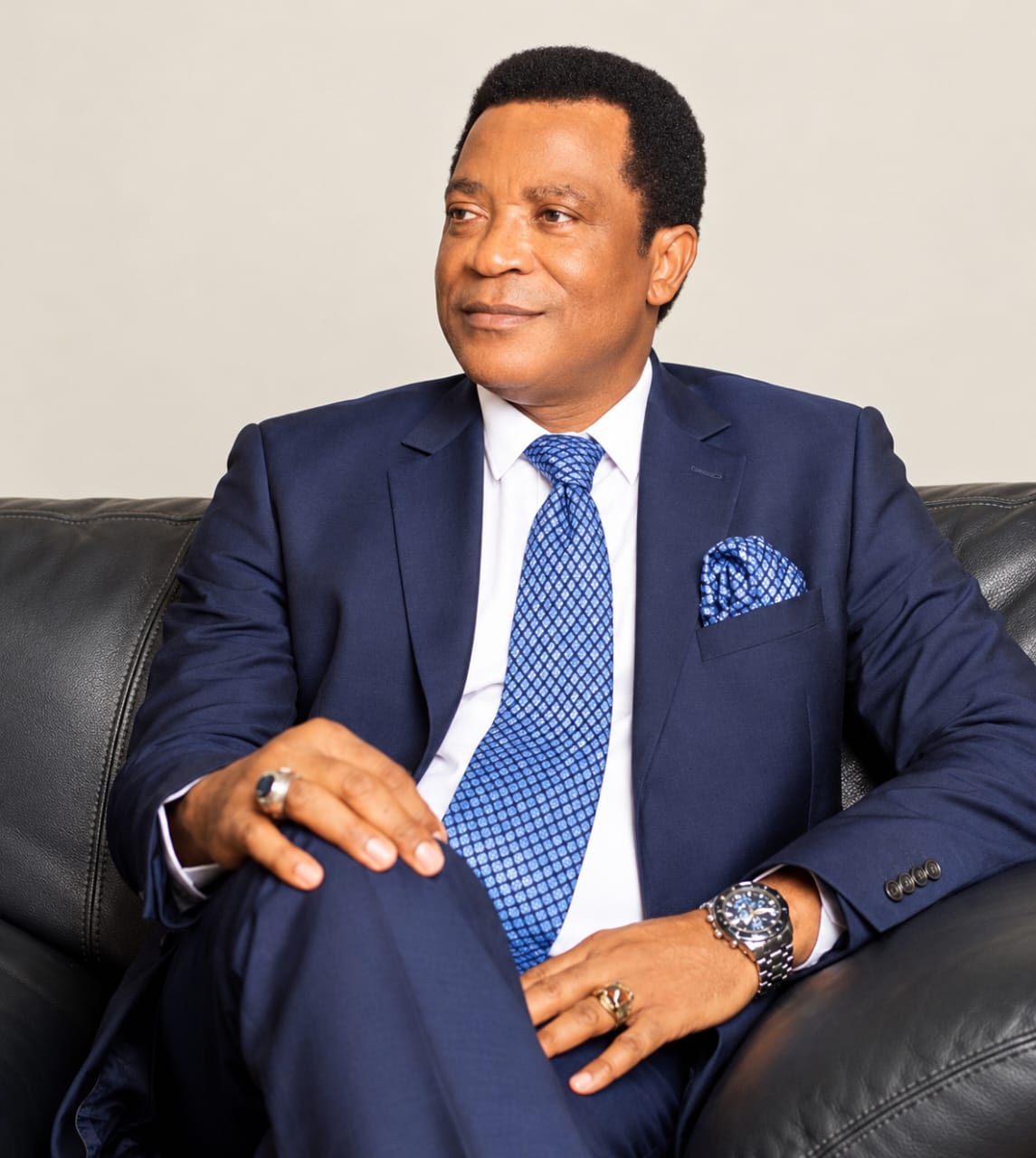
High Chief Higgins Peters, a prominent Cross River stakeholder, has given Governor Bassey Edet Otu an emphatic 80 per cent performance rating, declaring that the governor’s achievements in infrastructure renewal, investment attraction and economic repositioning constitute compelling evidence of purposeful leadership that even his fiercest critics would find difficult to discount. In a robust defence of the administration’s record, Peters insisted that Otu’s performance should be judged by tangible accomplishments rather than political sentiments, partisan prejudice or personal relationships. “I am not scoring him because he is my friend. I am scoring him based on his performance. And you should know that if a governor was not doing well, I would say so. At the level where I am, I cannot be seen to be patronising anybody,” he declared. He maintained that the evidence of governance was sufficiently visible across the state to speak for itself, adding emphatically: “Facts don’t lie. These are facts and evidence. Prince is doing very well.” Peters, who spoke against the backdrop of the Governor’s Ball held at Government House, Calabar, on Sunday, November 8, described the gathering as a powerful endorsement of Otu’s leadership and the growing investment confidence in Cross River. He particularly emphasised that the state government did not expend public funds on the event, which attracted an impressive assembly of business leaders, captains of industry and influential personalities from across the country. To him, the gathering represented considerably more than a social celebration; it was a convergence of influential economic interests responding to the opportunities created by the governor’s administration. “The state doesn’t spend a penny on that ball. It was a confluence of opinion across the country because the people who came were business leaders, captains of industry. You heard the kind of quality and calibre of people who were there. These were global business leaders who had identified this man by his performance and the direction he is taking the state,” he said. He added that the visitors were attracted not simply by the desire to honour Otu but by their determination to explore the investment opportunities and economic possibilities opening up in Cross River. Expatiating on the significance of the gathering, Peters argued that the quality of leadership was the ultimate determinant of investment attraction, stressing that natural resources and economic potential, without credible leadership, were insufficient to stimulate prosperity. Citing the intervention of the Managing Director of Global Tanaris, he declared that Governor Otu was providing the kind of purposeful leadership that inspires confidence, attracts investors and unlocks economic opportunities. “Investment does not just come because you have potentials and raw materials. Leadership is more important than any potential that exists. If there is no leadership, those potentials may remain dormant. When you have leadership, even if you don’t have raw materials or solid minerals, leadership thrives. Leadership brings the economy. Leadership is the backbone of the economy of any nation in the world. And that is what the governor is providing. He is providing clear leadership and clear direction,” he asserted. He further observed that performance indicators from relevant agencies and organisations had increasingly validated Cross River’s development trajectory, insisting that the state was making meaningful progress under Otu’s watch. Peters also described the forthcoming ASDEX conference as a major economic breakthrough for Cross River, insisting that the state’s emergence as host was a direct reflection of the confidence its governance environment had inspired. He explained that securing an international business conference of such magnitude involved a competitive bidding process in which prospective host destinations were assessed on performance, leadership credibility, integrity and investment confidence. “Hosting ASDEX anywhere is competitive. It is bidding. People take you through an audit of your performance, an audit of your character, an audit of your integrity and the investment confidence you have brought to the environment. That is why you can see such a conference holding here. It does not happen in isolation,” he said. Describing the event as potentially one of the biggest economic opportunities in Cross River’s history, he urged residents and businesses to rise to the occasion and maximise its benefits. “Our carnival is big, but this is not just carnival. This is a business carnival that brings so many envelopes of opportunities that people can tap from. This is a once-in-a-lifetime opportunity. I pray our people wake up to the reality, take advantage of it and support it.” On the governor’s infrastructure scorecard, Peters challenged anyone questioning Otu’s performance to look beyond political commentary and examine the physical evidence of development in communities across the state. He recalled that he had maintained cordial relationships with successive governors, from Donald Duke and Liyel Imoke to Ben Ayade and the incumbent, but insisted that such relationships had never compromised his objectivity. “Assuming you are deaf, you could see it; and assuming you are blind, you could hear it. Some of these performances are on the ground. People live around the environments where those infrastructures are built. I don’t need to score him anything for the people to know that the man is doing well,” he declared. As a particularly compelling example, he cited a major road project in the Northern Senatorial District that had remained neglected for more than 30 to 40 years, with an earlier attempt abandoned at an estimated five to seven per cent completion. Under Otu, he said, the project had now attained approximately 97 per cent completion. “The people are speaking so loudly that the man is doing well, and they are not just praising him. They are saying it because of the practical infrastructure on the ground,” he added. Taking his assessment closer to home, Peters highlighted the administration’s interventions in the Northern Senatorial District, particularly the nearly 20 kilometres of access roads undertaken within Ogoja, the Ndo Junction–Monaya road and several other projects across the area. He singled out Bekwarra for special commendation, citing approximately 15 kilometres of road construction, comprising 10-kilometre and five-kilometre projects, as well as an electricity intervention nearing 85 per cent completion. “You go to Bekwarra, where you come from. You cannot say that something is not going on in your place. Light has not come to your place for ages. Today, the light has been installed, and it is about 85 per cent complete. Roads have been done. Today, the roads that have been done in Bekwarra are 15 kilometres. Ten kilometres and five kilometres. It has not happened before,” he said. Drawing from the wisdom of his community, he offered an unmistakable endorsement of the governor’s prospects for greater accomplishments: “In my village, they say a masquerade that knows how to dance, you will first see it in his first step. If in three years he has done this much, why are you talking about what he will do in eight years? He will do much better. He has shown us that he can perform.” Peters equally cautioned against simplistic comparisons of government performance that ignored the prevailing macroeconomic realities and the escalating cost of delivering infrastructure. He argued that although allocations to state governments had increased, inflation, fluctuations in international crude oil prices and the corresponding rise in the cost of petroleum products and construction materials had significantly eroded the purchasing power of public resources. Explaining that bitumen, a critical component of road construction, and products such as diesel and other petroleum derivatives were affected by movements in the global crude oil market, he said the economic variables confronting the present administration must inform any objective assessment of its performance. “These things are not hidden. These are the macroeconomics that control the reality of the performance of any leader,” he explained. He illustrated the challenge by noting that a kilometre of road which could have cost approximately N200 million before 2023 might now require as much as N1 billion to construct. According to him, “It is not just about the money available. These are the indices of performance. The general populace looks at the macroeconomics, but they are not looking at the microeconomic indices that control those factors, and they cannot be avoided.” Concluding, Peters reaffirmed his 80 per cent performance rating, describing Governor Otu as a leader whose accomplishments deserve recognition, encouragement and sustained public support. He maintained that the administration had demonstrated the capacity to translate its development vision into concrete achievements, while laying a foundation for more ambitious interventions in the years ahead. For him, the governor’s record in infrastructure delivery, investment attraction and economic repositioning provides sufficient justification for confidence in his leadership and the prospect of an even stronger second-term performance. “Our governor needs to be encouraged because he is on the right course. He is doing very well. Very well. But he could do more,” he declared. He also urged Cross Riverians to place the collective interest of the state above partisan considerations, stressing that support for good governance should never be determined by political affiliation. “Our aim is the development of Cross River, the good of Cross River. So, if we see anybody doing well for Cross River, we have to support that person.”
Otu’s Achievements Undeniable, Deserves 80% Performance Score, Says Higgins Peters
Full Article
Original Source
Read the full article at Thisdaylive →KhanList aggregates and links to publicly available news content. We do not host full articles from third-party sources. Always verify important information with original sources.