
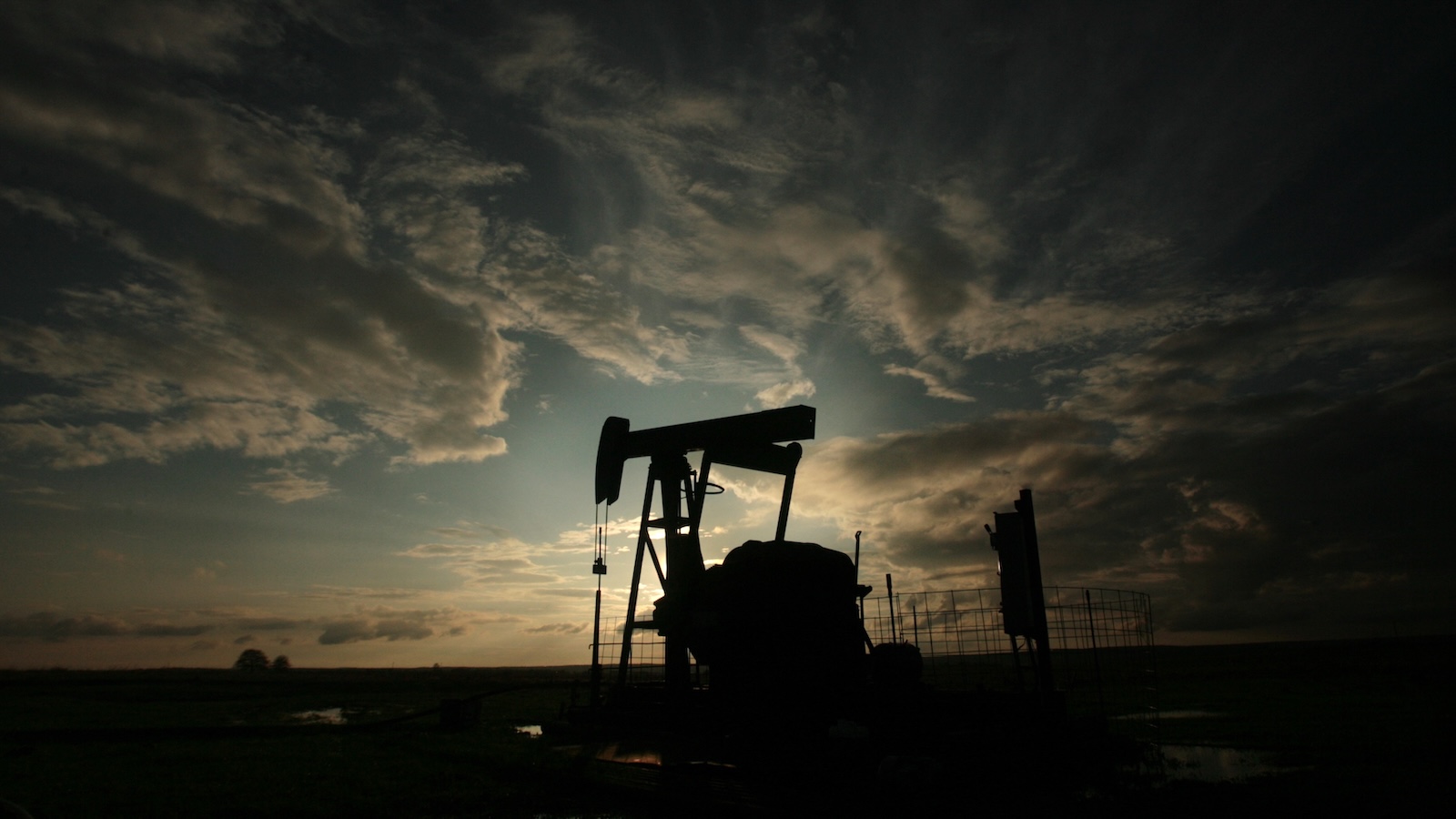
This story was originally published by Osage News, and is published through the Indigenous News Alliance. At the entrance to Harvest Land Farms, Fred Beartrack prepares to plug another orphaned well. Records indicated a cement plug covered it, but excavation and a casing cutout revealed no cement. “There was no cement, so the data was wrong,” Beartrack of the Nation’s Department of Natural Resources, or DNR, said in a video posted to the Osage Nation’s Facebook page. The well was open down to 2,400 feet. Instead of a quick cap, the crew now has to clean the well out to the bottom and properly fill it with cement. Beartrack and his crew said this work could take anywhere from two days to two months. “We don’t really know what’s down there,” he said. “People could have thrown anything in the well before we got here.” Beartrack said crews found only about a foot of cement at the top of the well, with nothing beneath it. They drilled past the freshwater zone and cemented the well from there up. “That well is an example of everything that’s wrong,” he said, referring to how the DNR has battled inaccurate well data as it has plugged wells throughout the Nation’s reservation, which covers about 1,470,559 acres in northeastern Oklahoma. When Osage News spoke with Beartrack, the Department of Natural Resources was at the end of Phase 1 of the Nation’s federally funded orphan well program. Beartrack said the agency has plugged about 160 wells since the program began, 70 to 80 of them this year. Crews have inspected at least 2,500 to 2,700 wells. “We keep finding new wells every quarter section we get into,” he said. Many go back decades, to operators that disappeared or wells that were plugged to standards now considered inadequate. The pace of well plugging picked up after a significant change this spring. The Bureau of Indian Affairs’ Osage Agency used to approve every plugging permit the Nation filed. But on March 13, the Orphan Wells Plugging Office, or OWPO, revised its tribal grant guidelines for all Phase 1 and Phase 2 projects like the one Beartrack is working on. Read Next The Bureau of Indian Affairs, or BIA, told the DNR that wells without a responsible party are not a federal function. That is a significant shift within the Osage Nation Reservation, where the BIA has long overseen oil and gas development as trustee of the Nation’s mineral estate, including drilling and plugging wells. Adam Trumbly, superintendent for the Osage Agency in Pawhuska, said his office continues to review permits and issue well-plugging permits as appropriate. “The BIA–Osage Agency is not issuing plugging permits for orphan wells plugged pursuant to the Department of the Interior’s Orphaned Wells Program Office Tribal Orphaned Wells Program,” Trumbly told Osage News in an email. “The Revised Tribal Grant Guidance removed the compliance requirements based on Section 7 of the Endangered Species Act and Section 106 of the National Historic Preservation Act.” Trumbly said this revision reflects OWPO’s determination that tribal development and tribal implementation grants are “nondiscretionary” and that activities conducted under them are not “federal undertakings.” He said this guidance means the Osage Nation no longer needs the BIA Osage Agency (or the Orphan Wells Plugging Office) to review orphan well plugging activities for Endangered Species Ace or National Historic Preservation Act compliance, and the BIA Osage Agency no longer has the authority to conduct those reviews. The change follows a report that faulted the program’s slow start. Much of the blame stemmed from the Bureau’s lengthy permitting process. The criticism fits a longer pattern: Federal watchdogs have repeatedly faulted the BIA’s oversight of operators who work within the Osage Reservation. Reporting by Grist and Osage News found roughly 2,300 documented orphaned wells in Osage, though the true number may be higher because many old wells were never recorded. Shane Brown / Grist / Osage News Previously, the bureau reviewed each plugging application, verified the Department of Natural Resources’ photos and field data, then published a record of decision for a 30-day public comment period that often stretched to 45 days. Beartrack said the full process could take 120 to 130 days. Now, he said, it takes one to two weeks. The DNR still checks with the Osage Agency to confirm whether a well truly has no responsible party, whether leases were canceled or terminated, and how old they were. “We ask the BIA almost daily questions,” Beartrack said. The slowdown was a central theme of a February report from the Office of the Inspector General for the Interior Department. It found that as of December 31, 2024, the Osage Nation had plugged 14 of the 290 wells it planned for Phase 1, about 5 percent. The report cited delays in hiring a petroleum engineer, staffing shortages at the Osage Agency, and disagreements between the agency and the Nation over which permit applications qualified as emergencies. As of January 30, the DNR had submitted 217 plugging permits since August of 2024. The Bureau of Indian Affairs had approved 90 of them. At a Natural Resources Committee meeting in March, Trumbly said the agency processed the permits as a courtesy and was working with a “skeleton crew” under a federal hiring freeze. Beartrack told Osage News that the agency had four or five people in the field to verify applications. Adam Peltz, who works on orphan wells for the Environmental Defense Fund, or EDF, said tribal nations face hurdles that states don’t. Even if the Nation does the work well, it still needs the Bureau of Indian Affairs to review and approve its permits on time. “That part is out of Osage’s hands,” he said. Peltz said the federal money itself is new. Until around 2020, he said, orphan wells were barely on the national radar. The bipartisan Regrow Act, passed as part of the 2021 Infrastructure Investment and Jobs Act, set aside $4.7 billion for well plugging by states, federal agencies, and tribes. It was the first federal funding of its kind. About $150 million went to tribes, with the Osage Nation receiving the largest share. When the EDF built a national orphan well map a few years ago, Peltz said there wasn’t any data available for Osage County. He said many tribal nations and the federal Bureau of Land Management never prioritized oversight of oil and gas, while some states have their own agencies and databases. State records on old wells aren’t much better, he added: Oklahoma has about 18,000 documented orphan wells and is believed to have more than 300,000 undocumented ones, said Peltz. Beartrack said the Osage Agency didn’t hand the program over to the Nation so much as step away. “They just said wells without a responsible party are not a federal function,” he said. “It’s not like they gave us carte blanche. They just said it’s not their problem. They kind of wash their hands of it more than anything else.” Read Next That’s good for the program, he said, but it raises a bigger question for the Nation. “What does that mean for the Osage Nation overall?” Beartrack said. “Are all of these orphan wells our responsibility? When they say that orphan wells are not a federal function, what does that mean?” Beartrack said he believes Bureau of Indian Affairs leadership in Washington, D.C., made the decision, not the local agency. He said the bureau sent a formal letter announcing the change. Former Principal Chief Geoffrey Standing Bear, now on the Osage Minerals Council, said he would like to see a scientific and environmental review for any federal action related to the change. The council has long argued that the BIA is the trustee of the Osage mineral estate. The council focuses on attracting producers and leasing the mineral estate, while the Nation has kept the well plugging grant under the DNR. Peltz said the two goals shouldn’t conflict. Modern horizontal drilling in old fields only works if the old wells are plugged first, he said. “Plugging old wells and developing new wells should not be in tension,” he said. Before the change, much of the friction centered on what counted as an emergency. The Department of Natural Resources repeatedly flagged wells as emergencies; in March, Trumbly told committee members, “If everything’s an emergency, then nothing’s an emergency.” Peltz said some states and tribes were filing almost nothing but emergency permits because it was the only way to break through the backlog. That isn’t how the system is supposed to work, he said. An emergency should be reserved for something like discovering a leaking well in someone’s backyard. At the request of the Department of Natural Resources, the agency produced a weighted checklist. A score of 75 or higher for an actively leaking well or storage tank, high methane readings, or hydrogen sulfide near the wellhead marked a well as an emergency. Beartrack said that the checklist never actually sped up permits. “It hasn’t changed any of the timing on how fast we get permits back,” he said. A pumpjack in Osage County, where decades of oil and gas development have left the Osage Nation with a sprawling orphan-well cleanup. Jim West / UCG / Universal Images Group via Getty Images Peltz, who reviewed the checklist, said it closely resembles the scoring systems Texas and Louisiana use. An actively leaking well or storage tank threatens water and safety; high methane levels raise explosion risk; and hydrogen sulfide is among the most dangerous chemicals in the oil field. A measured fluid level above the deepest underground source of drinking water carries a weight of 50, below the threshold for an emergency. Peltz said that doesn’t prove groundwater is contaminated, but it is a risk factor worth checking. “Could they have put that as a weight 75? Sure,” he said. “Is it a crime that they put it at 50? Not necessarily.” The bigger problem, he said, is the scale. “The crime is that this was allowed to happen at this scale,” Peltz said, “and that it’s been so hard to work through it, even with the money flowing.” The Department of Natural Resources still scores every well with it. Beartrack said some questions overlap or contradict each other. He has suggestions to fix them, but revising it isn’t a priority. “If it’s an emergency and the well has downhole conditions that would make it an emergency, then … we’re gonna plug it,” he said. Beartrack said he is finishing contracts and purchase orders with rigs expected to roll in the next few weeks. Phase 2 has roughly 70 to 80 wells on deck to plug. He does not expect a dramatic jump in pace. “Maybe it should,” he said, “but … we’ll still be doing probably the same amount, 70 wells in this fiscal year.” The DNR’s field team is small, he said, and still has to gather and verify information for each well. The Nation’s award comes to about $91 million over five years. Peltz said that won’t come close to covering Osage County, where no one knows how many orphan wells exist. Asked whether $91 million is enough, Peltz said, “No, not even close.” Previous reporting by Grist and Osage News found roughly 2,300 documented orphaned wells in Osage, though the true number may be higher because many old wells were never recorded. Plugging a single well costs anywhere from $40,000 to $500,000, depending on its condition. Peltz said the program needs the Nation to hire more engineers and procurement staff to get bids out, “hopefully to Osage Nation contractors.” Asked whether oil drilling causes many of Osage County’s drinking water problems, Beartrack said, “Not if the wells are designed up to today’s standards.” That said, most of the wells his crews encounter are not. Many were drilled before operators routinely set surface casing deep enough to protect fresh water — something Beartrack said didn’t take hold until around the 1970s. Older wells, he said, “were OK for the standard of the day.” At Harvest Land, the crew planned to finish the job the same way at every site: Clear the land, remediate it, and return it to its original surface, with the well capped and buried. “The final result is you won’t see anything,” Beartrack said. “And we’ll have a record of where it was.”
Osage Nation speeds up orphan well cleanup as federal oversight recedes
Full Article
Original Source
Read the full article at Grist →KhanList aggregates and links to publicly available news content. We do not host full articles from third-party sources. Always verify important information with original sources.