
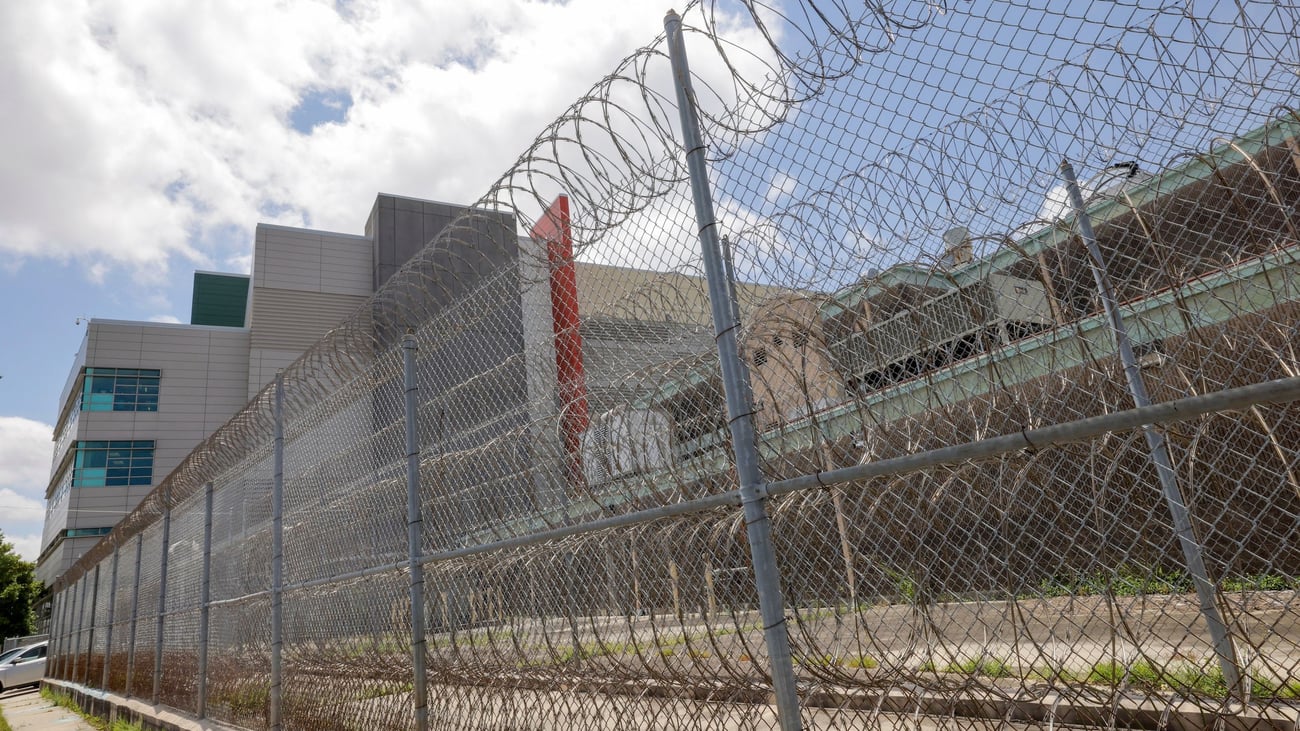
(CN) — Two construction partners who once teamed up to build a new jail in Orleans Parish, Louisiana, spent Thursday morning at the Fifth Circuit arguing over who should pay the lawyers.The McDonnel Group, a local contractor, asked a three-judge panel to revive a fee request the lower court refused after a fight with Archer Western Contractors, a much larger out-of-state firm. The companies formed a joint venture in 2011 to build the Orleans Parish Sheriff’s Office Inmate Processing Center, with Archer Western owning 70% and McDonnel 30%. The project produced two legal battles: one over unpaid capital calls, another over a secret $2.7 million settlement McDonnel struck with the parish and kept.Archer Western won the settlement fight on summary judgment and later collected about $518,000 in fees, an award the Fifth Circuit has already affirmed. A jury later found McDonnel did not breach the joint venture agreement by refusing the capital calls. McDonnel then asked for roughly $413,000 in fees for defending those claims. U.S. Magistrate Judge Michael B. North and Chief U.S. District Judge Wendy Vitter said no, resulting in Thursday’s appeal.Both sides point to one sentence of the agreement: a “defaulting party” must pay the other side’s legal expenses to “protect their interests or defend any action arising out of the defaulting party’s breach.” McDonnel says years-old default notices and its victories on the capital-call claims are enough. Archer Western says the clause is not a winner-takes-fees rule and that no court has ever found it in breach.Randall Smith, arguing for McDonnel, did not mince words when U.S. Circuit Judge Jerry E. Smith, a Ronald Reagan appointee, asked the opening question.“Are you claiming that Archer breached the contract?” the judge asked.“Archer Western did breach the contract. Yes,” the attorney said.“Was that question actually litigated?” the judge asked.“You’re on the nub of it, Judge Smith,” the attorney answered.Smith’s theory is that Vitter’s summary-judgment ruling and the later jury verdict prove Archer Western was wrong to demand the money. McDonnel, he said, then had to “defend the lawsuit, win the summary judgment and win the trial.” Those defenses, he argued, “arise out of the defaulting party’s breach.”U.S. Circuit Judge Kurt D. Engelhardt, a Donald Trump appointee, was not ready to treat a defensive win as a finding the other side breached.“This is not a prevailing parties clause. It seems to require a breach,” Engelhardt said. “We don’t have anything that adjudicates a breach by your opponent.”Smith said the breach happened long before trial, when Archer Western issued capital calls without a unanimous vote. He pointed to a September 2015 letter from Allan McDonnel calling those demands a breach. He also said McDonnel reserved fees in its answer and the pretrial order, only for the magistrate to refuse to decide the question.“I decline to delve into the substance of whether [Archer Western] is a default party in breach of the agreement,” the magistrate wrote, calling a post-judgment fee motion the wrong vehicle. Vitter adopted that recommendation.“The problem for us is we haven’t had our day in court,” Smith told the panel. At worst, he said, the case should go back so a judge will decide whether Archer Western breached.“They shouldn’t be getting half a million dollars in attorneys’ fees for winning one summary judgment claim,” he argued. “We won one summary judgment claim and an entire trial.”Jeremy Grabill, arguing for Archer Western, said McDonnel is trying to rewrite the contract.“[McDonnel] here is trying to convert a very clear attorney’s fees provision in this contract into a general prevailing party clause,” Grabill said.The jury, he reminded the court, answered only one question on that part of the case: Did McDonnel breach? The answer was no. Grabill said that verdict can be explained in several ways. McDonnel argued not only that the calls lacked unanimous approval but also that Archer Western overspent and that any true accounting should wait until the project’s end.“We cannot assume that they credited this first theory that somehow we breached the agreement,” he said.Grabill also noted McDonnel once pleaded an affirmative defense that Archer Western had previously breached. Vitter dismissed that defense, and McDonnel did not appeal it. A fee motion after judgment, he argued, is not a second chance to prove the same thing.Even if the capital calls were not binding, Grabill said, that does not make Archer Western a “defaulting party.”“At most, those capital calls were not binding on [McDonnel],” he said. “It doesn’t mean we breached the agreement.”He closed with the American Rule: Parties ordinarily pay their own lawyers unless a statute or contract clearly says otherwise.In rebuttal, Smith rejected the idea McDonnel needed a counterclaim. “There’s nothing in this contract that says you have to make an affirmative claim of breach,” he said. Filing one when McDonnel had no damages of its own, he added, “would have been a waste of judicial economy.”The panel, which also included George W. Bush appointee U.S. Circuit Judge Catharina Haynes, took the case under submission.Subscribe to our free newslettersOur weekly newsletter Closing Arguments offers the latest about ongoing trials, major litigation and rulings in courthouses around the U.S. and the world, while the monthly Under the Lights dishes the legal dirt from Hollywood, sports, Big Tech and the arts.Additional Reads
Orleans Parish jail partnership battles over legal fees
Full Article
Original Source
Read the full article at Courthousenews →KhanList aggregates and links to publicly available news content. We do not host full articles from third-party sources. Always verify important information with original sources.