
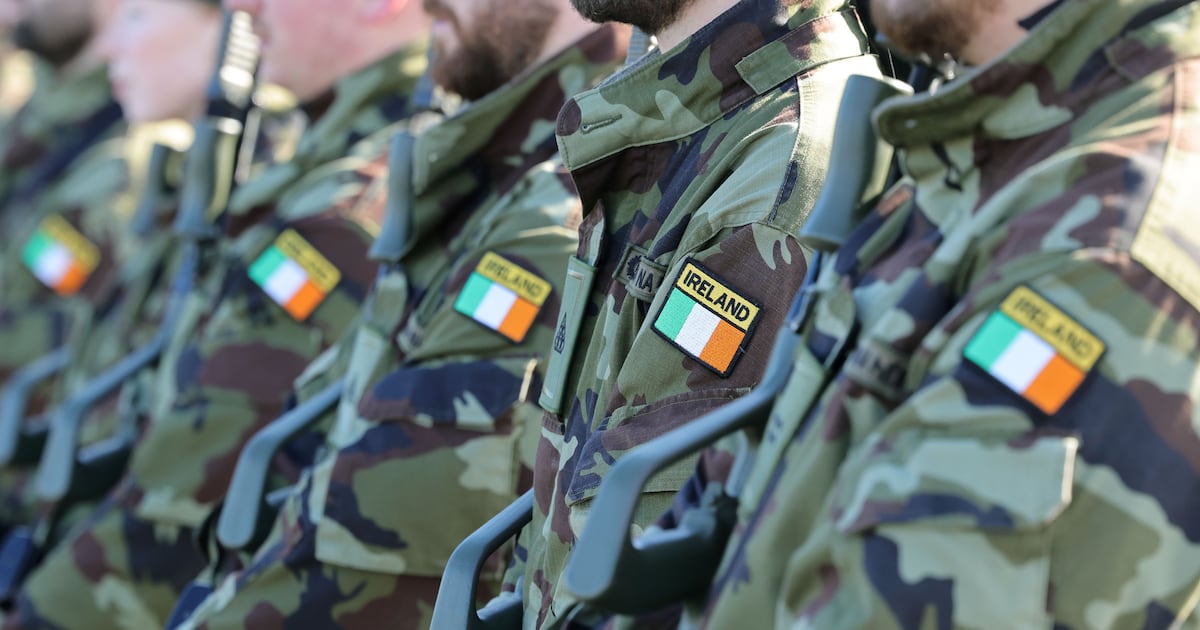
Opposition TDs have called on the Government to hold a referendum on its proposal to remove the triple lock on the deployment of Irish soldiers overseas.This comes though Minister for Foreign Affairs Helen McEntee insisted the Coalition was “not looking to send our troops to war” by introducing legislation to remove the triple lock.Ireland was “committed to” the United Nations and “the ideals of peace and peacekeeping”, and the country would maintain its military neutrality if the triple lock were reformed, McEntee said. The Government’s proposal is to remove the obligation for a UN mandate before 12 or more Irish troops could be deployed overseas on peacekeeping and other missions. If passed, these missions would be decided by the Government and by a vote in the Dáil. READ MOREShe said that the Security Council had not established a new UN mission since 2014, and the number of UN missions continued to fall, because of a “power rivalry” between members. “The contribution that Ireland can make to peacekeeping and to serving some of the most vulnerable communities on Earth is being undermined,” McEntee said at the Oireachtas Select Committee on Defence and National Security.She added that “claims this Bill will end Irish neutrality, or that our young people will be sent off to fight in foreign wars are simply not true”.Opposition members of the committee, whose amendments to the legislation were defeated at committee stage on Tuesday, have called for a referendum on the triple lock. One of the proposers of an amendment, Aontú leader Peadar Tóibín, said the triple lock had a democratic mandate and was supported by the will of the Irish people. He said people were concerned Ireland would be part of a “peace enforcement group in south Lebanon, potentially enforcing peace with regards Hizbullah, which as you know is a proxy of Iran”. He said the Government had indicated it wanted to be part of the “Coalition of the Willing” in Ukraine, and there was “deep concern” that removing the triple lock could potentially get Ireland “into conflict”. People Before Profit-Solidarity TD Paul Murphy said scrapping the triple lock should be put to the people, because it was a matter of “grave importance” that “goes to the heart of our neutrality”. Sinn Féin’s Donnchadh Ó Laoghaire said many voters changed their minds and voted in favour of the second referendums on the treaties of Nice and Lisbon based on commitments given that “the triple lock would continue to apply”. “Given those commitments were made, I think it’s fundamentally important that the Irish people get a referendum [on the triple lock],” he said.Labour TD Duncan Smith said it appeared the Government was leaving “one gang” – the UN – and “throwing our lot in with” the EU. [ ‘Neutrality belongs to the Irish people’: Battle lines drawn over the triple lock and Irish defenceOpens in new window ]EU overseas missions were “evolving rapidly” and could involve both civilian and military pillars, he said. Smith said the EU missions had limited parliamentary oversight and lacked democratic and judicial accountability. [ Harry McGee: On the triple lock, there are now winnersOpens in new window ]“We are going to join EU missions in large numbers ... in increasingly insecure environments ... I think there’s real trouble ahead,” he said.Fine Gael’s spokesperson on defence, Catherine Callaghan, said the triple lock was not the same thing as neutrality. “We are not joining an EU army or military alliance,” insisted the Carlow-Kilkenny TD, a former member of the Defence Forces.“We are not removing the requirement to abide by international law; we are removing an additional restriction that we have placed upon ourselves. Ireland is responsible enough to make decisions which concern where our Irish peacekeeping troops are deployed overseas in the service of peace,” she said.
Opposition TDs call for referendum on proposed scrapping of triple lock
Full Article
Original Source
Read the full article at Irishtimes →KhanList aggregates and links to publicly available news content. We do not host full articles from third-party sources. Always verify important information with original sources.