
Springtime, New Delhi. The disappearing last week of February 2004. As my car neared the heavily barricaded boundary walls of the Lutyens Delhi bungalow, I quite literally pinched myself. It appeared surreal; I would soon be entering into one of the most celebrated, fortified addresses in the country: 10, Janpath. During my earlier six-year professional stint in the capital city, I had driven past the famous abode a thousand times, wondering each time about the extraordinary inhabitants who lived there, often christened by champagne society columnists as India's First Family. That rubric was not a subtle insinuation; the Gandhis were being overtly compared to the other political lineage, which had repeatedly made global headlines: the Kennedys of America. Both of them bound together by a disturbing commonality: sudden death triggered by cold-blooded assassinations. Tragedy was insuperably interwoven with their very existence. There was no escaping its oppressive dark shadow that would trail them forever like their anxious security staff in armored vehicles.I waited nervously as stone-faced military personnel frisked the pockets of my trousers and jacket, letting me finally go with a short, and somewhat brusque wave of the hand. A few minutes later, I was sitting cross-legged, trying desperately to appear imperturbable, in the storied drawing room whose pictures I had often seen in India Today and Outlook magazines. This was not a fantasy dream or a hallucinatory road trip. I was going to meet Mrs Sonia Gandhi. It was real. It was happening. Twenty-two years later, I sit here and type about her just-published memoir, Belonging. It has been quite a journey. Advertisement - Scroll to continue Why Belonging? As an author of a few books, I can tell you with a modicum of hubris that the title of a hardcover has an overwhelming criticality in the narrative that follows in the pages. Or, at least, it significantly impinges on the storyline of the writer's mind. When I first heard about the title Belonging, I was not surprised. Not an iota. This was going to be a heartfelt, unvarnished expression of vulnerability from a woman who has experienced grief when it has been in magnificent form; unforgiving, relentless. Grief is not meant for a comparative contest, but Sonia Gandhi's losses have been searing. Gutting. Belonging was a word that probably has been Sonia Gandhi's albatross. An excruciating struggle to be accepted. A plaintive cry for being understood. Amidst the bloodshed. And the loneliness that one experiences in the quiet corners of a dark room when TV sets are long switched off and a hyper-kinetic nation has gone to sleep. What then? Belonging is Sonia Gandhi's Indianness, beyond documentary evidence, electoral rolls, and SIR. Home is where the heart is.I can write a whole book on the several days I spent at 10, Janpath that followed. It was extraordinary because Sonia Gandhi, I believe, has no idea how extraordinary she is. Within hours and days of meeting her, I was thoroughly astounded, shaking my head in disbelief as to how even seasoned journalists could go so wrong; Mrs Gandhi was no impassive, emotionless Sphinx. She had a luminous bounciness to her. Machiavellian? That made me laugh. Personally, I thought her to be almost simplistically naive. What fascinated me was her curiosity to know what the other person felt, her keenness to know your mind. There were no haughty pretensions, and a near absence of the aloof imperiousness of royalty that one had come to associate with her in newspaper columns. Around two weeks later, I was convinced of my conclusions: Sonia Gandhi was easily the most misunderstood person in Indian politics. I believe Belonging is her way of telling us who she really was and is. One's legacy can never be determined by gossipy hearsay, a premeditated journalistic assessment, or the wins and losses in an election. Before we are successful accomplishers, superheroes, or vaunted political celebrities, we are actually just ordinary human beings; people who laugh, sing, and dance, and cry in pain and grief. We are a sum of complex human experiences that range from ecstatic highs to spectacular lows; Sonia Gandhi saw both. And some. One of them was at 10.21 pm on May 21st, 1991. It would change her life forever.Advertisement - Scroll to continueI believe Belonging comes from a deeper emotional burn; the betrayals encountered in a tumultuous journey of life that once appeared like a fairytale romance, away from the vulgar spotlight of insidious cunning. And shocking violence. The assassinations, Sharad Pawar, VP Singh, Arun Nehru, and many of those who maligned her the moment she hit the November of her political attractiveness. Or when Congress sank into a self-destructive abyss.I was in Delhi when Rajiv Gandhi was assassinated. He was just 47. Sonia Gandhi was 44. A love story had just abruptly ended. The Camelot was dead. Comparisons with the Kennedy family flooded news networks. A private person in a white sari was expected to grieve her man's loss behind dark sunglasses as a stunned nation awoke to her horrific bereavement, and a country's tragic loss. Her children stood next to her in a daze. They were not entitled to their tears.I believe in Belonging, Sonia Gandhi has taken those dark glares off. She belongs here. She wants us to know that.(The author is a former National Spokesperson of the Congress)Disclaimer: These are the personal opinions of the author
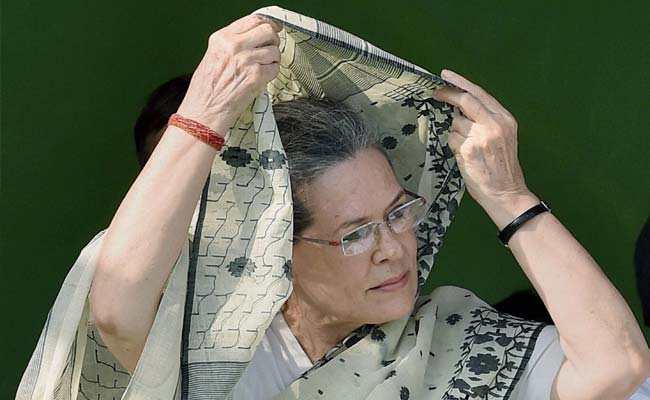
Opinion: Opinion | Sonia Gandhi Belongs Here, And She Wants Us To Know That
Full Article
Original Source
Read the full article at Ndtv →KhanList aggregates and links to publicly available news content. We do not host full articles from third-party sources. Always verify important information with original sources.