
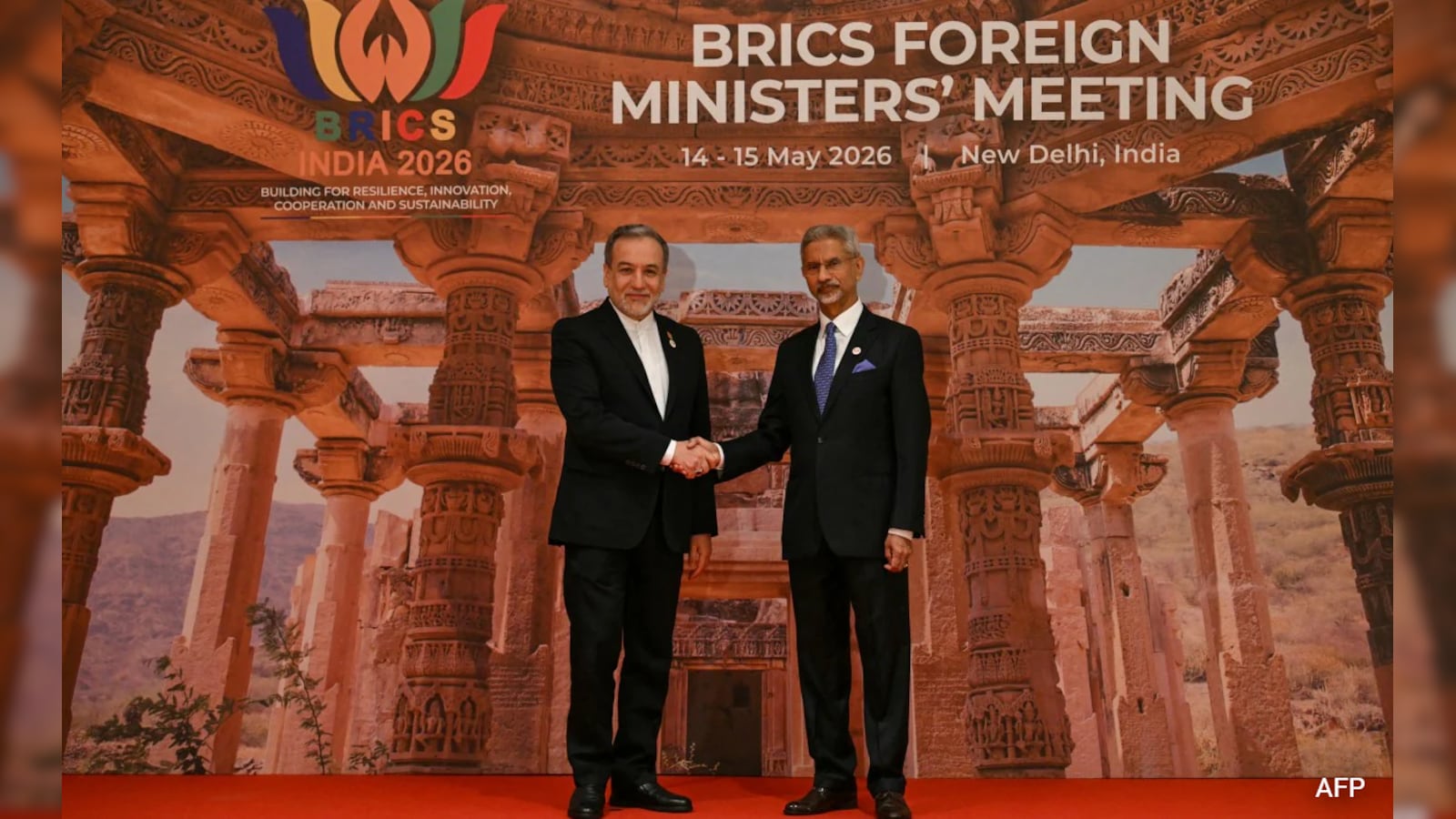
As India hosts the BRICS summit this year, it's chairship comes at an extraordinary time not just for itself or the member states, but for the globe. Two major wars are underway, and in this part of the world, some major geopolitical re-alignments are shaping up with long-term consequences for the world.While India is not directly involved in either the Ukraine or Iran war, it has been majorly impacted by both. But, the Iran war has had far more negative consequences for it. Its energy supplies from the Gulf have been adversely impacted, leading to a surge in oil and gas prices, and, in a cascading effect, leading to price rise in food and consumer products, inflation and falling rupee, impacting overall growth. Furthermore, many Indians have lost lives in a war that they had nothing to do with. Advertisement - Scroll to continue It is striking that India will be hosting the BRICS summit with the expanded bloc - eleven member states are participating in it, and ten more partner countries will join in. Importantly, three parties to the Iran war - Iran, the United Arab Emirates (UAE) and the Kingdom of Saudi Arabia (KSA) - are BRICS member states whose representatives are in Delhi to attend the summit. Can India broker some sort of a truce between Iran and the UAE, both geographically close neighbours with entwined destinies? Of course, not the sham kind that Pakistan "mediated" between Iran and the US, which collapsed within a month.This would indeed be a major achievement of the summit, if not the greatest. The divide between Iran and the UAE has also already impacted the BRICS, given how the foreign ministerial meeting of the member states ended without a joint statement because of a difference in opinion. India had to issue a statement as the chair.Advertisement - Scroll to continueIn this context, the recent bilateral meeting that Prime Minister Narendra Modi had with Iranian President Masoud Pezeshkian in Bishkek, on the sidelines of the Shanghai Cooperation Organization (SCO), of which Iran is also a member state, is significant. The meeting itself was a strong message from India, coming as it did in the backdrop of the US' efforts to throttle Iran economically and its threats to sanction countries that do business with Iran. It signalled that New Delhi considered it important to continue engagement with Iran, while also conveying that India would act in its own interest.And Iran is, of course, important to India both geopolitically as well as economically. It has been an important crude oil supplier to India and was also a critical destination for Indian exports before sanctions kicked in. Iran has also often cooperated with India on counterterrorism and has been useful in India's efforts against Pakistan.Simultaneously, Iran is indispensable for India's Eurasian outreach and connectivity ambitions.The Chabahar Port project that India was developing with Iran offered a host of benefits, including access to Central Asia. The port's significance has multiplied now with the closure of the Strait of Hormuz and the uncertainty around the Bab-el-Mandeb - two major chokepoints not only for India's energy supplies but also for its imports and exports.The UAE, similarly, has become an indispensable strategic partner for India, and is possibly its closest Gulf partner. Cooperation spans a range of sectors, trade, energy security, labour corridor, defence, space, culture, counterterrorism, et al. Bilateral trade has soared exponentially after the signing of the Comprehensive Economic Partnership Agreement (CEPA) between the two. India is the UAE's second-largest trading partner. Almost four million Indians live and work in the Emirates. This year saw the UAE President, Sheikh Mohammed bin Zayed Al Nahyan, visit India; PM Modi also visited the UAE. That visit resulted in a slew of agreements that would ease the cost of the Iran conflict imposed on ordinary citizens, who have nothing to do with the war.Mediating some kind of understanding and peace between Iran and the UAE would go a long way in stabilising the region, as well as eventually hammering out a lasting resolution to the war.Both countries are neighbours and will remain so. Geography cannot be wished away. And both countries have engaged closely over the years. The UAE, in particular, has been a window for Iran to the outer world and an economic conduit since the time the sanctions regime was imposed on it. So, both have a long history of cooperation with each other.What is also interesting and perhaps can provide the grounds for India's mediation efforts is that such affirmation of India's potential to play a mediating role has come from both these countries. At the very start of the Israel-US war on Iran, it was a UAE diplomat - a former UAE Ambassador to India, Hussain Hassan Mirza - who had said that India was well positioned to play a mediating role in the conflict, given its good relations with all sides. He said that Prime Minister Modi holds rare credibility across the region, something that would be useful to reduce escalation and defuse tensions.More recently, in Delhi, Iranian Foreign Minister Abbas Araghchi echoed Mirza's opinion during his visit to attend the BRICS Foreign Ministers' meet. Praising India's diplomatic standing, Araghchi, too, suggested that New Delhi can play a constructive role in promoting peace and stability in West Asia. Such suggestions and opinions have not occurred in a vacuum. It is important to remember that while it may have been a long time ago, there is precedence to suggest that India could play a mediating role. Decades ago, in 1953, then Prime Minister Jawaharlal Nehru had mediated between the then USSR and Austria, which ultimately led to the emergence of post-World War II Austria as a sovereign, independent but neutral state. Around the same time, from 1950 to 1954, India's deployment of troops to Korea during and immediately after the Korean War is widely acknowledged to have begun a foundational chapter in global peacekeeping.Is it a coincidence that this year, when India is hosting the BRICS, is the very year that Defence Minister Rajnath Singh inaugurated the Indian War Memorial in Seoul? The memorial has been erected to commemorate the role Indian troops played during the Korean War and in its aftermath,on the 75th anniversary of the Korean War. Perhaps it's a sign from the universe that it is not just the right time but also the right opportunity for India to step up and take up the challenge. India can count on the support of most BRICS members, too.(The author is a senior journalist)Disclaimer: These are the personal opinions of the author
Opinion: Opinion | Can India Mediate A 'Truce' Between Iran And UAE During BRICS Summit?
Full Article
Original Source
Read the full article at Ndtv →KhanList aggregates and links to publicly available news content. We do not host full articles from third-party sources. Always verify important information with original sources.