Every public conversation about NEET focuses on the same question: how do we prevent the next leak? That is the right question about the wrong problem. The examination's integrity crisis is real and urgent. But it sits atop seven deeper systemic failures that will continue to damage students, families, and India's healthcare future regardless of how tamper-proof the examination becomes.A foolproof examination delivers a perfectly fair result on an imperfectly designed game. The seven angles explored here go further than the examination - into the coaching ecosystem that has colonised the preparation process, the curriculum that misaligns with the profession it gates, the equity chasm between the student who has a physics teacher and the student who does not, the psychology of the drop year, the absence of career counselling, the question of what NEET actually selects for, and the vast healthcare workforce India needs that MBBS alone cannot produce. Fixing the exam without addressing these is the administrative equivalent of repainting a structurally compromised building.Advertisement - Scroll to continueThe Coaching Industrial Complex: A ₹58,000 Crore Shadow SystemIndia has built, entirely outside any policy framework, a parallel education system that has effectively privatised the gateway to public medical education. The NEET coaching industry - centred in Kota, Hyderabad, Patna, and Chennai, but now franchise-spread across every tier-two city - is estimated at ₹58,000 crore annually. It serves one function: to prepare students for a single examination designed by a government body using a public school curriculum.The paradox is stark. NEET is based on the NCERT syllabus - free, public, and universally available. In theory, a student who has studied their Class 11 and 12 NCERT textbooks with a competent teacher should be able to compete. In practice, a student without coaching is statistically non-competitive. The average NEET qualifier from the general category has received between ₹8 lakh and ₹25 lakh worth of coaching. The examination has not measured ability against curriculum; it has measured ability against coaching exposure. The meritocracy it claims to enforce is, in practice, a proxy measurement of parental income.The Kota model - residential coaching factories where students live in dormitories, study 14 hours a day, and are ranked weekly against their cohort - has produced a documented mental health crisis alongside its toppers. Kota's student suicide rate has been reported at among the highest of any educational cluster in India. The city's coaching institutes have generated ₹2,000+ crore in annual revenue and a generation of psychologically depleted young adults.What Reform Looks Like: A National Preparatory Resource Programme delivering free, structured, AI-personalised NEET preparation to every student with a smartphone - NCERT-anchored, teacher-supported, and available in 22 scheduled languages. DIKSHA and SWAYAM already provide partial infrastructure; a NEET-specific free preparation pathway, formally endorsed and resourced, would reduce the coaching premium over three examination cycles. Simultaneously, coaching institutes must be brought under a regulatory framework - mandated counselling infrastructure, student-to-counsellor ratios, and mental health disclosure requirements - as a condition of operating.The Examination-Profession MismatchThere is a question that Indian medical education has never seriously asked: does a high NEET score predict a good doctor? The evidence from comparable international systems suggests the answer is: not reliably, and not sufficiently.NEET in its current form is a test of high-speed recall and pattern recognition across a fixed, memorisation-heavy syllabus. It measures a student's capacity to retrieve information under time pressure and to identify the correct answer from four options. Medicine requires a substantially different cognitive profile: clinical reasoning under uncertainty, communication with distressed human beings, ethical judgment in ambiguous situations, empathy that does not deplete under sustained exposure to suffering, and the intellectual humility to say "I do not know." Not one of these competencies is assessed by NEET. Not one appears in the preparation process that generates a NEET rank.The United Kingdom's UCAT (University Clinical Aptitude Test) evaluates verbal reasoning, decision-making, quantitative reasoning, abstract reasoning, and situational judgment - the last being a structured assessment of how a candidate responds to ethically complex clinical scenarios. Australia uses a similar instrument. The MCAT in the United States tests biological sciences, chemistry, physics, and critically, a dedicated section on Psychological, Social, and Biological Foundations of Behaviour. All of these systems have recognised, through decades of research, that the attributes that make a person a good doctor are not coterminous with the attributes that make them a fast and accurate memoriser.What Reform Looks Like: A two-stage NEET. Stage One: the current knowledge assessment, streamlined to 120 questions with an emphasis on application over recall. Stage Two (for the top 15 lakh qualifying Stage One): a Situational Judgment Test assessing ethical reasoning and clinical scenario response, adapted from the UCAT SJT model and developed in Indian linguistic and cultural contexts. Stage Two scores carry 30 percent weightage in the final merit list. This does not make NEET softer. It makes it more accurate - a better predictor of who will actually serve patients well.NEET as a Geography and Language ExaminationWhen a student from a rural district of Bihar - whose Class 12 school has three teachers for eight subjects, no functional laboratory, and physics taught by a commerce graduate - appears on the same merit list as a student from a Kota institute with subject-specialist coaching eight hours a day, the merit list does not measure merit. It measures access. NEET, in its current form, is as much a test of geography and family income as it is of intellectual ability.The language dimension compounds this. NEET is available in thirteen languages, but its question papers in regional languages have historically been translated with inconsistent quality, producing ambiguities and errors that penalise candidates who take the examination in their mother tongue. A student answering in Tamil or Bengali is not competing on equivalent terms with a student answering in English, because the English paper has been the design document and all translations have been derivative. This is not a minor administrative inconvenience. It is a structural disadvantage embedded in the examination architecture that systematically filters out students whose intellectual capabilities are expressed in languages other than English or Hindi.Tamil Nadu's decade-long resistance to NEET - backed by successive state governments of different political persuasions - is frequently misread as political obstructionism. It is better understood as a rational response to empirical evidence: the state's own data showed that NEET systematically reduced the representation of rural, government-school, and first-generation-learner students in medical college admissions compared to the previous Class 12 board-based selection method.What Reform Looks Like: A standardised socioeconomic disadvantage index, calculated from verifiable indicators (school type, district-level teacher-vacancy rates, household income, first-generation learner status, distance from coaching centre), applied as a contextual adjustment factor in merit-list construction. This is not reservation; it is calibration - correcting the merit list for unequal preparation conditions before comparing candidates. The UK's UCAS system applies contextual offers using exactly this principle. Simultaneously, original-language paper development (not translation) for the five most widely spoken Indian languages, with independent psychometric equivalence validation before deployment.The Drop Year Economy: 3 Million Young In LimboThe most under-examined demographic consequence of NEET's current design is the drop year. Approximately 70% of NEET qualifiers in any given year are repeaters - students sitting the examination for the second, third, or fourth time. At any given moment, India has an estimated 30 to 35 lakh young people between the ages of 18 and 24 in a state of suspended developmental animation: not in higher education, not in employment, not acquiring any skill set other than NEET-specific examination knowledge, waiting for a result that may not arrive.These are not years of patient preparation. They are years in which the brain's developmental windows for social formation, vocational exploration, and identity consolidation are consumed by a single high-stakes gamble. A student who spends ages 17 to 21 in NEET preparation and does not qualify has not merely lost four years academically. They have lost the years in which most humans form the social networks, collaborative habits, and resilience frameworks that adult professional life requires. The psychological literature on prolonged goal-failure in young adults identifies precisely this period as generating the most durable and treatment-resistant forms of learned helplessness.The economic cost is equally significant. Each drop year represents a family's living expenses plus coaching fees - conservatively ₹3 to 6 lakh per year. Across 30 lakh students, the aggregate annual cost of the drop year economy exceeds ₹90,000 crore. This is money that does not circulate in the productive economy, does not generate skills, and does not build human capital. It evaporates into the coaching industry and into the opportunity cost of a generation's time.What Reform Looks Like: A three-attempt lifetime cap on NEET, communicated clearly and implemented with a three-year transition period, combined with a nationally mandated Bridge Programme - a six-month structured pathway connecting NEET non-qualifiers to allied health, life sciences, public health, biotechnology, and paramedical degree programmes without requiring another entrance examination. No student who has spent two years studying biology, chemistry, and physics should leave that investment with no recognised pathway. The Bridge Programme does not console; it redirects human capital productively.The Counselling Desert: 25 Lakh Students with No MapIndia has approximately 2,200 registered school counsellors for a secondary school population of 160 million students. The ratio is roughly 1:72,000. In practical terms, this means that the overwhelming majority of students making one of the most consequential decisions of their lives - whether to pursue NEET, which coaching institute to attend, whether to take a drop year, what to do if they do not qualify - are making these decisions with no professional guidance whatsoever. They are guided instead by family precedent, peer pressure, social media influencers who monetise aspirant anxiety, and the admissions counsellors of coaching institutes who have a direct financial interest in the student's continued enrolment.The information asymmetry is severe. Most parents making ₹15 lakh decisions about their children's educational futures do not know the actual statistical probability of their child qualifying given their current academic profile. They do not know that 70% of NEET qualifiers are repeaters, which means that first-attempt success is the exception, not the norm. They do not know the employment outcomes for MBBS graduates from government colleges versus private colleges versus deemed universities. They do not know that India currently produces approximately 88,000 MBBS graduates per year for a country that needs 600,000 doctors. They do not know about the alternative healthcare careers that would allow their child to serve in medicine without navigating NEET at all.What Reform Looks Like: A National NEET Guidance Portal - not a brochure, but an AI-personalised decision-support tool. A student enters their Class 11 grades, board examination scores, household income, state, and language; the system outputs a realistic probability estimate of NEET qualification, a comparison of preparation cost versus outcome statistics, and a mapped alternative pathway chart covering twelve allied health and life sciences careers with salary ranges, seat availability, and admission routes. This tool should be mandated for display at every coaching institute's enrolment counter before any fee is collected. Informed consent before financial commitment. It is not a radical idea. It is the minimum standard of consumer protection applied to a decision that shapes a family's financial future for a decade.The Healthcare Workforce BlindspotNEET is the gateway to MBBS. MBBS is the gateway to becoming a doctor. India is focused, almost exclusively, on producing doctors through this single channel - while simultaneously facing a healthcare workforce deficit that no number of MBBS seats can resolve within the relevant timeframe.India has 0.74 doctors per 1,000 population against the WHO benchmark of 1 per 1,000. Reaching that benchmark requires approximately 700,000 additional doctors. At current production rates, this requires 40 years. But a functional healthcare system is not a system of doctors alone. It is a system of doctors, nurses, nurse practitioners, physician assistants, laboratory technicians, radiographers, physiotherapists, occupational therapists, community health workers, mental health counsellors, dieticians, and public health administrators. Countries with the best health outcomes - Finland, Japan, Australia - achieve them not through doctor density alone but through integrated, task-shifted healthcare teams in which each professional works at the top of their qualification.India has 2.1 nursing professionals per 1,000 population, against a benchmark of 3. It has a near-total absence of formally trained physician assistants. Its community health worker programme (ASHA workers) is structurally brilliant but chronically underfunded and underrecognised. The NEET obsession has absorbed the entire national conversation about healthcare entry to the exclusion of a workforce strategy that could actually close India's health gap within a generation.What Reform Looks Like: A National Allied Health Entrance Examination (NAHEE) - a separate, appropriately designed entrance pathway for nursing, physiotherapy, radiography, laboratory technology, occupational therapy, and physician assistant programmes, with its own merit-based, integrity-secured examination, national seat matrix, and counselling process. Not a consolation prize for NEET non-qualifiers but an independent and respected pathway, with salary scales, career progression, and social recognition redesigned to match. India cannot doctor its way to health equity. It must healthcare-workforce its way there.The Mental Health Infrastructure GapIndia currently has no dedicated mental health support ecosystem for the 25 lakh NEET aspirant population. There are generic helplines. There are occasional awareness campaigns. There are coaching institutes that have added 'counselling cells' as afterthoughts - staffed, in many cases, by unqualified personnel, and operationally designed to retain students rather than support them. There is no public institution specifically equipped to address the clinical profile of the NEET aspirant: a young person between 16 and 22, under sustained examination stress, experiencing identity constriction, social isolation, comparison anxiety, and in severe cases, post-traumatic stress from examination cancellation or repeated failure.The 2026 cancellation generated, by conservative estimate, 1.55 lakh students in a state of suicidal ideation. No coordinated national mental health response was mobilised. The crisis was administratively reclassified as a logistics problem - a new date was announced - and the psychological reality of 1.55 lakh young people in crisis was not addressed, not acknowledged, and not resourced.The absence of mental health infrastructure is not only a humanitarian failure. It is a strategic failure. A student who enters the examination hall in a state of post-traumatic stress from the previous year's cancellation does not perform to their ability. A student who drops out of NEET preparation because the psychological cost becomes unbearable represents a loss of human capital investment - both the family's and the nation's. The economics of preventive mental health support for this population, measured against the cost of drop years, family financial distress, and the lost productivity of burnout, make the investment straightforwardly rational.What Reform Looks Like: A dedicated NEET Aspirant Mental Health Programme operating through three channels simultaneously: a 24/7 digital mental health platform (not a generic helpline, but a service staffed by psychologists specifically trained in examination-related stress and identity disruption), a mandatory counsellor-per-student ratio requirement for all coaching institutes above 200 students as a condition of operation, and a network of district-level NEET Wellness Centres embedded in existing government health infrastructure. The programme should be activated not only after crises but prophylactically - integrated into the preparation process from Month One, not deployed as an emergency response at Month 24.(The writer is a noted educationist, psychologist, and author.)Disclaimer: These are the personal opinions of the author
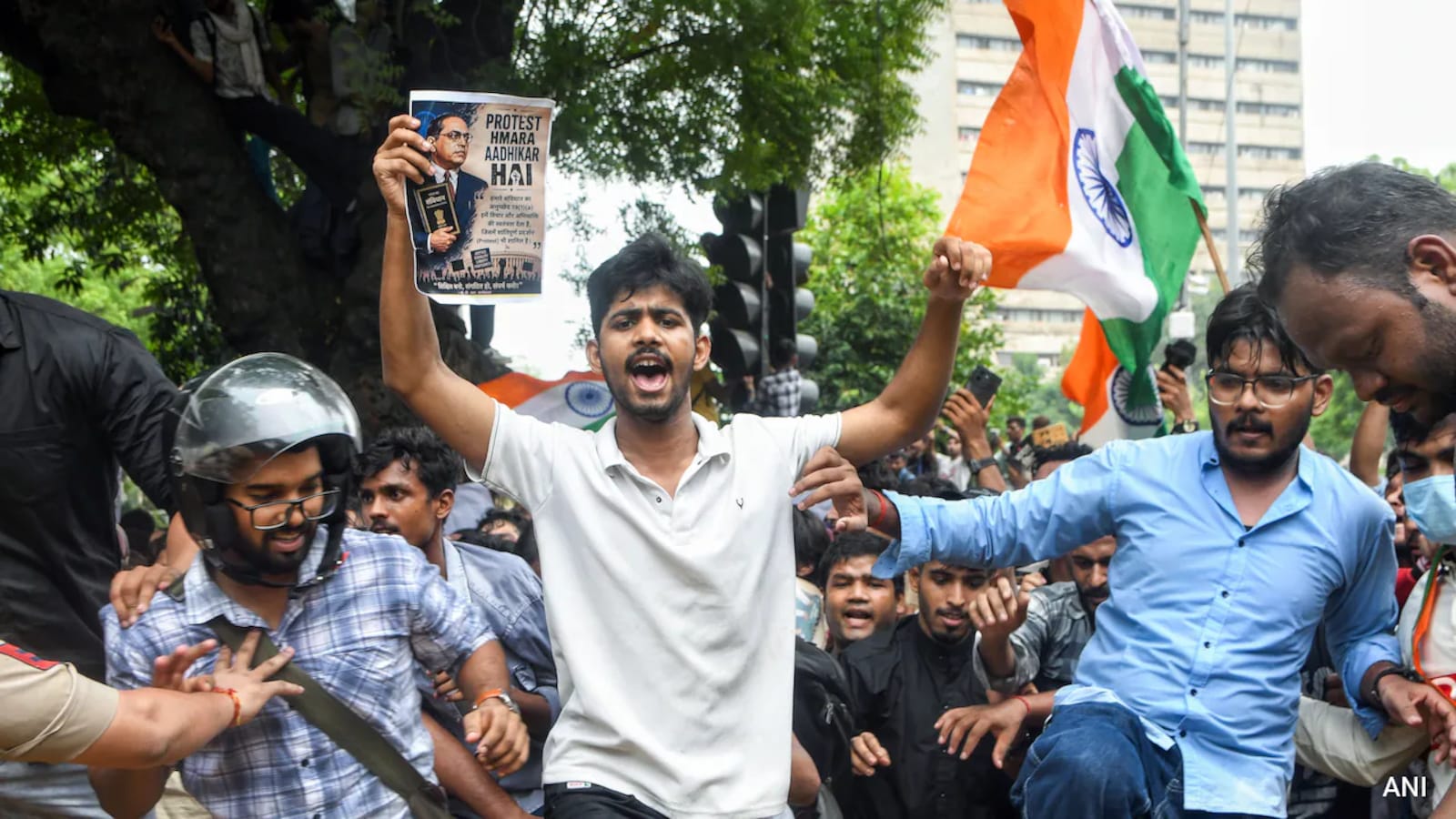
Opinion: Opinion | 7 Big Problems That Have Turned NEET Into A Trauma Machine For 22 Lakh Students
Full Article
Original Source
Read the full article at Ndtv →KhanList aggregates and links to publicly available news content. We do not host full articles from third-party sources. Always verify important information with original sources.