
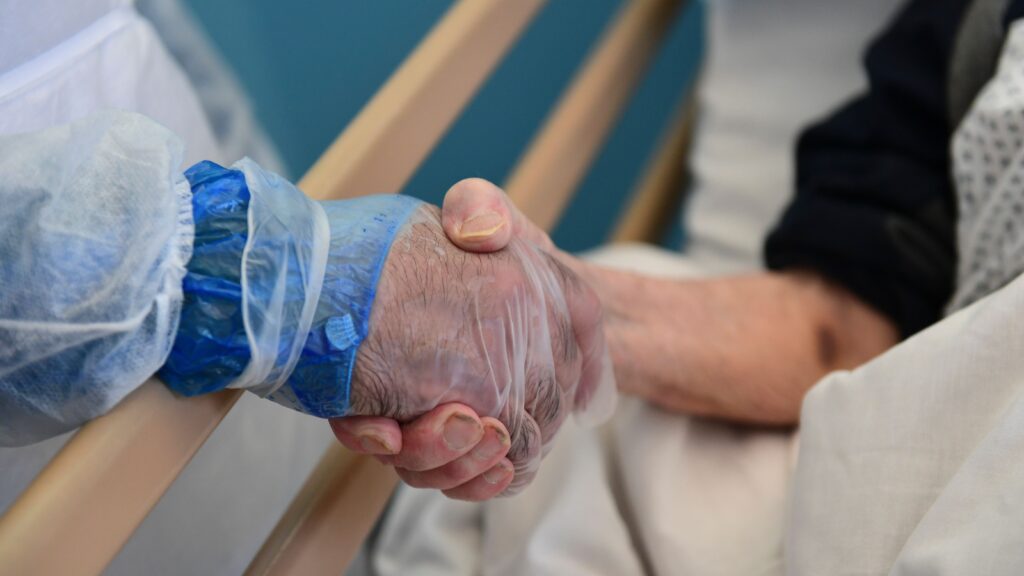
During a recent shift in the emergency department, I helped care for a woman facing a suspected oncologic emergency. She had come to the hospital expecting a routine evaluation, but suddenly found herself confronting conversations about diagnoses that could fundamentally change her life. When I first entered the room, she was visibly nervous. Her family, gathered around the hospital bed, looked equally concerned. I introduced myself and shook her hand. I then shook the hands of the family members standing beside her. Soon afterward, the medical evaluation intensified. Like many patients in the emergency department, she was surrounded by unfamiliar faces moving quickly in and out of the room. Nurses entered to draw blood, while my senior resident, attending physician, and I asked questions, explained our concerns, and outlined the immediate medical plan. In the background, monitor alarms sounded intermittently. Within a short period of time, the patient had become the center of a complex medical evaluation that she had little time to process. Shaking her hand was an extremely simple gesture, but it appeared to ease some of the tension in the room. She smiled, and her family appeared more at ease. Before discussing the initial laboratory results, our diagnostic concerns, and what would happen next, we had a brief moment of connection that felt distinctly human. The handshake did not change her diagnosis. It did not make the medical uncertainty disappear. But it seemed to remind her (and me) that she was not merely the patient in the room with the concerning test results. She was a person experiencing one of the most frightening days of her life. The first few moments of a patient encounter shape everything that follows. Before we as clinicians ask about symptoms, perform a physical examination, or explain a treatment plan, patients are already deciding whether they trust us and whether they feel comfortable sharing what is wrong. Shaking the patient’s hand is one small way to begin building trust and fostering a sense of human connection. This is especially relevant in emergency medicine, where trust has to be built quickly. Emergency physicians do not have years to develop relationships with patients. Right after meeting someone, we have to ask them about substance use, sexual history, violence at home, psychiatric symptoms, housing insecurity, or the worst pain they have ever experienced. We ask patients to let us examine their bodies, call their families, admit them to the hospital, or make decisions that may change the course of their lives. In that context, a gesture of human acknowledgment is part of the foundation on which the rest of the encounter is built. Research suggests that many patients value the traditional handshake. In a study published in JAMA Internal Medicine, researchers surveyed 415 adults about how they preferred to be greeted by physicians. More than 78% said they wanted their physician to shake their hand. The researchers also reviewed recordings of 123 outpatient visits and concluded that physicians should be encouraged to shake hands while remaining attentive to nonverbal cues indicating whether a patient is comfortable with it. Other research suggests that similarly small gestures can meaningfully shape the patient experience. A 2023 study found that simply placing a chair near the bedside made physicians more likely to sit during patient encounters and improved patient satisfaction and communication scores without increasing time spent in the room. A handshake alone will not create a strong patient-clinician relationship. However, it can help establish the conditions for one. Unfortunately, this simple practice can easily disappear in modern medicine. Clinicians face growing demands from the electronic medical record, increasing patient volumes, frequent interruptions, and pressure to make decisions quickly. In the emergency department, these pressures are particularly evident. We often meet patients during moments of tremendous fear while simultaneously managing several other critically ill patients. The result is that an encounter can begin with our eyes directed toward a computer rather than the person in front of us. A patient may be asked to repeat their story to several members of the medical team without knowing who is ultimately responsible for their care. It is possible to order the right tests, make the correct diagnosis, and provide appropriate treatment while still leaving a patient feeling unseen. The Covid-19 pandemic created an additional barrier. Physical distancing, personal protective equipment, and necessary concern about disease transmission changed how health care professionals interacted with patients. Handshakes largely disappeared from hospitals and clinics. In many places, the handshake never fully returned. There are legitimate concerns about infection. Hands can transmit pathogens, creating a potential risk of infection in the hospital. However, the answer should not be to eliminate human contact indiscriminately. The answer is appropriate hand hygiene and clinical judgment. Health care workers should sanitize their hands before and after patient contact regardless of whether that contact involves a handshake, a physical examination, or a procedure. A handshake is obviously inappropriate when isolation precautions are in place, when a patient is significantly immunocompromised, or when either person may have a transmissible illness. We must also recognize that not every patient wants to shake hands. Cultural and religious traditions, physical limitations, pain, and personal preferences all matter. Clinicians should never force a handshake or assume that a handshake will be welcomed. A warm verbal greeting, a hand placed over one’s own chest, or another culturally appropriate gesture can communicate the same respect. The goal here is not the handshake itself — it’s deliberate human connection. This responsibility extends beyond physicians. Every member of the care team shapes how patients experience the health care system. Each introduction is an opportunity to make an unfamiliar environment feel slightly less impersonal. Medicine is becoming increasingly technologically advanced. Artificial intelligence, remote monitoring, and increasingly sophisticated diagnostic tools will continue to change how we practice. These developments have the potential to improve patient care tremendously. However, the more technologically advanced medicine becomes, the more intentional we must be about preserving its human elements. Zain Khawaja, M.D., is an emergency medicine resident physician at Northwestern University whose work focuses on the intersection of health policy and health care economics. His research and writing have appeared in U.S. government publications, The Hill, and MedPage Today.
Opinion: Medicine stopped shaking hands. We should start again
Full Article
Original Source
Read the full article at Statnews →KhanList aggregates and links to publicly available news content. We do not host full articles from third-party sources. Always verify important information with original sources.