
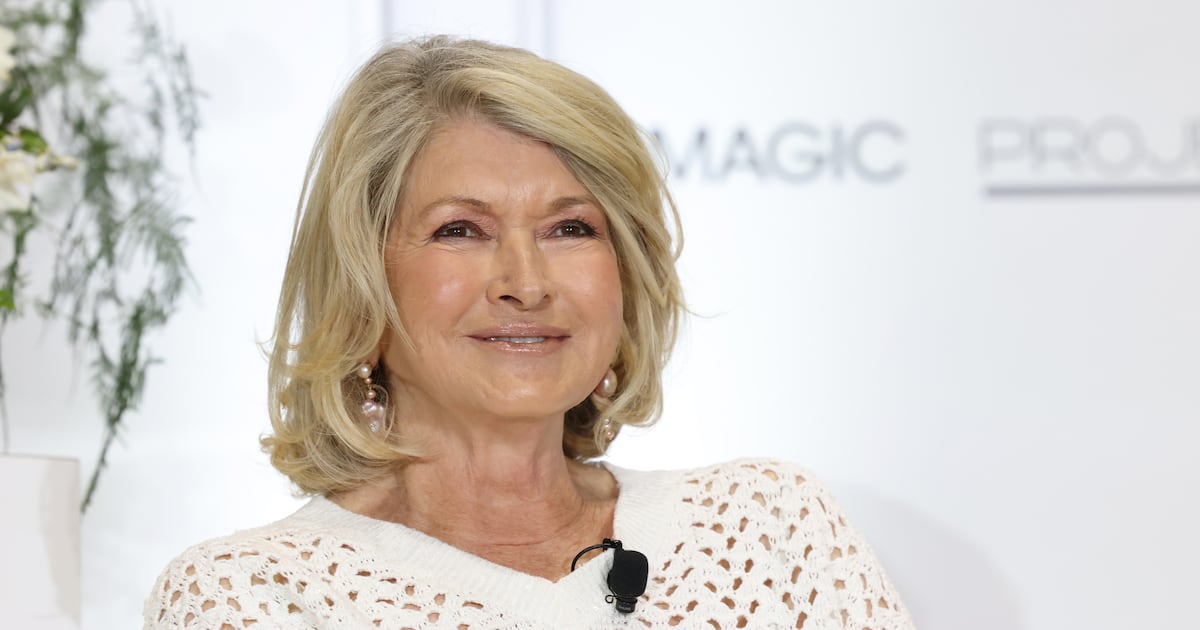
Like most children in the 1990s, my family’s fancy-dress costumes comprised whatever low-effort ensemble could be fashioned out of a black bin liner or a cardboard box. And so, for Halloween 1989, my dad decided that one of his eight children should go as the Berlin Wall. Communism may have been dead, but Halloween as a cultural reference point was just beginning. And okay, it was 1989, everybody except for a pissed off five-year-old (who had put a LOT of effort into her witchy bin-bag) “got” the significance of the Berlin Wall. In hindsight, this was a primitive version of “Gay Halloween”, a modern trend that thrives on dressing up as the most obscure cultural reference. Think Molly, the automaton bird that Kelly Clarkson recently tried and failed to buy, or Cynthia Erivo of Wicked’s acrylic nail. The costume is less about being scary (Erivo’s nails are terrifying, mind) and more about how fluent you are in the language of niche cultural allusions. Like memes and reels, costumes are now acts of visual quotation and interpretation, not really made to go to a party so much as shared on the internet. This year, Martha Stewart missed the memo and decided to dress as a socioeconomic crisis. If many Halloween costumes now thrive on obscure in-jokes, this was a bad stereotype. In the photo, which was shared to her Instagram account, Stewart stands before the Clapboard exterior of Cantitoe Corners, her 150-acre farm in Bedford, New York, like a modern-day Marie Antoinette cosplaying at peasant life. She’s dressed in a wealthy person’s approximation of Seattle grunge, dirt smeared across her face. She holds a clipboard that says “I am hungry! Help me!”. A giant Chow Chow stares down the lens, bewildered, while a small French bulldog regards his owner with distaste. The photo appeared in a reel promoting Stewart’s QVC candle collection and caused an outcry for its insensitivity. “Why do you think poor people who are dying on the side of the road are a costume?” one follower posted on Instagram. Stewart quickly removed the photo, but it continued to circulate online. The homemaker entrepreneur initially maintained that the costume had been social commentary and “was intended to bring more awareness to the very serious subject of homelessness”. “Homelessness continues to remain one of America’s greatest challenges and ongoing crises,” Stewart went on to say, “something that I care deeply about.” In a follow-up on Instagram, however, Stewart acknowledged that her initial statement had been inadequate. “It’s hard to admit when you’ve really screwed up,” she wrote to her 5.9 million followers. “I know many people are suffering economically. Wearing a costume like I did was insensitive and not funny. I am very sorry.”READ MOREThe intention was beside the point. Today’s costumes are visual shorthand; they can invoke a whole set of cultural touchstones without voicing their argument. Sometimes the result is an elaborate in-joke. Sometimes it is a political statement. And sometimes, as with Stewart, the image says more than the maker probably intended. If Martha Stewart hoped to raise awareness, she drew attention to the extraordinary distance between those in the United States who experience poverty and those wealthy enough to cosplay it for Halloween. In the time since plastic bag witch costumes and the fall of communism, we’ve also seen an extraordinary expansion of politics conducted through images. Writing in the 1930s, the philosopher Walter Benjamin argued that film and photography transformed the relationship between images and politics. Images could be made and shared widely, offering new possibilities for political expression. Benjamin was thinking about the aesthetics of fascism like the Nuremberg rallies. But everyday people would be able to express themselves this way too, without necessarily having the power to change their material circumstances. It’s a distinction that lands today. So much politics happens through the shorthand of an image – a tradwife dressed in cottagecore, a rich American cosplaying as a poor American, a president dressed as a McDonald’s worker.Think of October 30th 2024, when Donald Trump donned a high-vis vest and climbed into a garbage truck in response to comments from Biden that his supporters were trash. Politics is no longer about coherent narratives, so much as visual spectacle. This Halloween, Trump – who understands how to create a spectacle better than anyone – hosted a lavish pre-midterm party at Mar-a-Lago and came in the most elaborate costume of all: he dressed as himself.
Opinion: Martha Stewart dressing up as a socioeconomic crisis was a perfect reflection of the times
Full Article
Original Source
Read the full article at Irishtimes →KhanList aggregates and links to publicly available news content. We do not host full articles from third-party sources. Always verify important information with original sources.