
The lobby drop-off at the Dusit Thani Davao stopped moving a little after 2 pm on October 27. Cars backed up along the driveway. People in lanyards drifted toward the glass doors and craned their necks to see what was holding everyone up. Under the portico, a man was suiting up. He had changed into a racing jersey and pulled a black balaclava over his head, a red gaiter at his throat. He tugged his collar into place beside a big adventure motorbike, a black helmet resting on his top box. A broad man in a black polo cap stood at his elbow. Behind them, an officer of the Philippine National Police Highway Patrol Group sat on his own bike in a white helmet, waiting to clear the road. The man in the balaclava was Manny Pacquiao, who was appointed the lead convenor of the National Anti-Poverty Commission (NAPC) with a rank of Cabinet secretary in September. Earlier that day, he had been inside the ballroom talking about poverty. He is, after all, the man in charge of it. Inside, at the Mindanao Development Forum, Pacquiao had told a room of officials and investors that “development must reach the people, not just the places where investments are made.” It was a good line. He also admitted, with what sounded like honesty, that many Filipinos don’t know his agency exists. The NAPC was created in 1998 under the Social Reform and Poverty Alleviation Act. It doesn’t build houses or hand out cash. Its job is to coordinate poverty programs across national agencies, local governments, and the private sector, monitor whether they work, recommend policy, and make sure the poor themselves have a voice in it. It is, in other words, the government’s conscience on poverty. It is supposed to be the office that asks whether all the other offices are reaching the people they claim to serve. The official gets waved through Malacañang cited Pacquiao’s desire to help people in marginalized sectors. Nobody doubts the story behind that. He grew up poor in Mindanao, and for years he handed out cash to long lines of Filipinos after his fights. That is precisely why the scene under the portico stayed with me. I don’t begrudge any public official his security. Threats are real, and a former senator and world champion draws crowds wherever he goes. The motorbike is his own business. I am not writing to scold a man for liking engines. What stayed with me was the order of things. The lobby stopped. The car queue stopped. A police officer from the Highway Patrol Group, paid from public funds, waited to clear the road ahead. Everyone else was made to wait so that one man could pass. People craned to see, and then went back to waiting. That is a small picture of a large problem. In much of this country, and especially in Mindanao, power is measured by who gets waved through. The mayor’s convoy, the governor’s escort, the politician whose car never seems to queue. We have grown so used to it that we think it’s normal. But it teaches the rest of us a lesson: that the road belongs first to those with guards, and the rest of us use it when they are done. The poor wait in line An anti-poverty secretary, of all officials, should feel the weight of that lesson. The people his agency exists to serve are the ones who are always made to wait: in the clinic line, at the municipal hall, at the checkpoint, on the shoulder of the highway while the convoy goes by. When the man in charge of poverty leaves a development forum behind a police escort, he is showing us, without meaning to, which side of the cleared road he is on. The numbers he inherits look good on paper. The Philippines Statistics Authority reported that poverty incidence fell to 9.7% in 2025, or about 11.08 million Filipinos, down from 15.5% in 2023. It is the first time the figure dropped into single digits, three years ahead of the government’s target. (READ: [In This Economy] Less than 10% of Filipinos are now poor? Not so fast) But the line that counts someone as poor is low. A typical family of five is not considered poor if it earns slightly more than P14,634 a month, which works out to about P96 per person per day. Think tanks such as IBON have called that standard outdated, and when Social Weather Stations ask families directly, self-rated poverty stood at 49% in June. One in 10 Filipinos is poor by the government’s count. Half say they are poor by their own. The gap between those two numbers is where an anti-povery commission earns its keep. Its job is not to celebrate the official figure. It is to stand with the people who don’t recognize themselves in it, and ask why. That is hard to do from behind a cleared road. Pacquiao’s asset as anti-poverty chief To be fair, Pacquiao has been in the job barely two months, and the commission he leads coordinates other agencies’ programs rather than runs its own. He cannot fix poverty by himself, and nobody should expect him to. As a senator, he consistently backed bills to raise the minimum wage and proposed narrowing the pay gap between cities and the countryside. He knows hunger in a way most Cabinet secretaries never will. That is a real asset if he uses it. To use it, he needs to make the commission loud. Publish, in plain language, which agencies’ anti-poverty programs are reaching people and which are not. Take the gap between the official poverty rate and what families say about their own lives, and make the commission’s central question. Go to the municipalities where the poorest Filipinos live and hold hearings where they can be heard, without the stage and the motorcade. And, small as it sounds, wait in line. The most useful thing a powerful man can do for the powerless is to refuse, now and then, to be waved through. An anti-poverty secretary who queues like everyone would tell us more about his priorities than any speech. When the escort finally moved, the Highway Patrol officer pulled out first, then the motorbike, then the men behind it. The road opened. The cars in the driveway inched forward, and the drop-off began to move again, one vehicle at a time. Development, Pacquiao told us that morning, must reach the people. I believe he meant it. But development travels the way power travels, and that afternoon I watched how power travels in this country; covered, guarded, and with the road cleared ahead of it. The rest of us followed when it was gone. If the man in charge of poverty wants development to reach the people, he could start by letting the people see him in the same line. – Rappler.com Mick Basa is an investment analyst who tracks mergers and acquisitions (M&A) across Southeast Asia, focusing on Indonesia, and more recently, Thailand. He was Rappler’s business reporter in 2014 before moving to Indonesia.
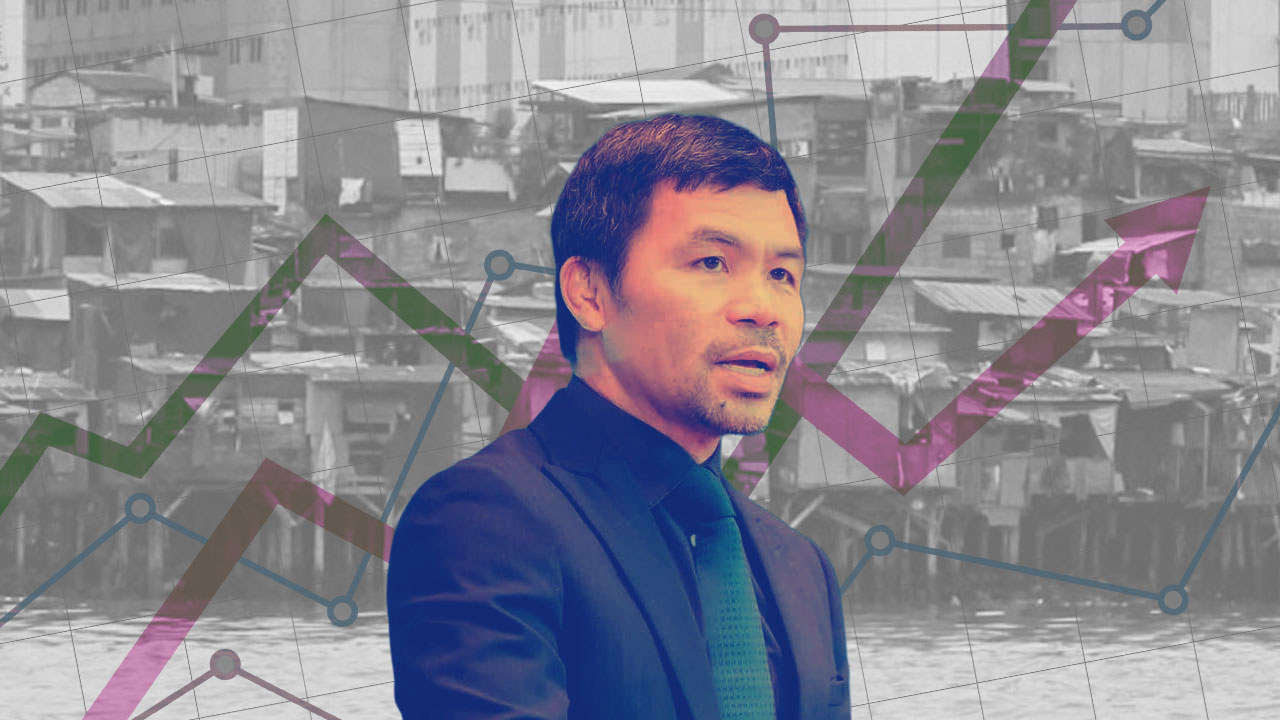
[OPINION] Manny Pacquiao, anti-poverty chief, can give up some privileges
Full Article
Original Source
Read the full article at Rappler →KhanList aggregates and links to publicly available news content. We do not host full articles from third-party sources. Always verify important information with original sources.