
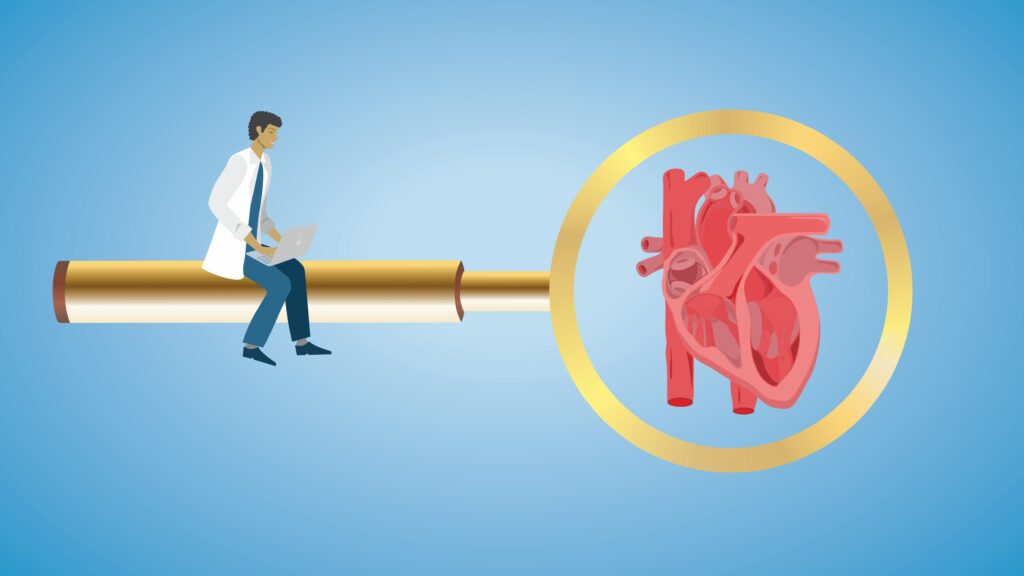
For more than a century, medicine has behaved as though we understood everything about the anatomy of the heart. As medical students, we memorize its chambers, valves, and vessels. As surgeons, we operate within its well-known boundaries. As cardiologists, we interpret heart images so familiar that they’re nearly invisible. Anatomy itself is routinely taught as history — a chapter written and closed by Andreas Vesalius, Henry Gray, and generations of anatomists who painstakingly documented the architecture of the human body. Today’s scientific frontiers, we are told, lie elsewhere: in genomics, artificial intelligence, and precision medicine. But that assumption may be wrong. I learned this while studying preserved human hearts on my own time, beginning in 2004, at the Jesse E. Edwards Registry of Cardiac Disease in St. Paul, Minn. Edwards, a cardiac pathologist, believed anatomy still had lessons to teach and secrets to reveal. Thousands of hearts are preserved there because he understood that today’s normal specimen could become tomorrow’s question. Long after many considered gross anatomy a completed science, the registry remained a place where careful observation was treated as a legitimate engine of discovery. During my studies, I encountered a configuration within the atrial septum I had never read about: a pouch opening into the left atrium, about 8-11 millimeters deep. My colleague and I undertook a systematic investigation using the registry’s collection, and years later, in 2010, we published the first formal description of what became known as the left atrial septal pouch (LASP). The discovery required no artificial intelligence, genomic sequencing, or billion-dollar technology. It required only preserved specimens, careful observation, and the willingness to question something everyone assumed was already understood. The finding was remarkable not because it revealed some previously unknown chamber or valve, but because it had remained hidden within one of the best-studied organs in medical history. Subsequent studies found this structure in approximately one-third of adult hearts. How does a structure that exists in 1 of 3 three people remain formally unrecognized until the 21st century? The answer is that discovery is often limited less by technology than by our own assumptions about where to stop looking. Looking back, I realize that the registry did more than preserve hearts. It preserved a way of thinking about science that has become increasingly uncommon. The left atrial septal pouch illustrates why anatomy still matters clinically. Development creates anatomy, which determines local physiology. Physiology, under the right circumstances, becomes disease or pathology. The pouch is closely related to a hole in the heart called a patent foramen ovale (PFO). But it resembles the left atrial appendage: a blind-ended cul-de-sac where blood can stagnate and clot. Unlike the appendage, where atrial fibrillation is necessary for clots to form, stagnation and clot formation can occur within the LASP even in a perfectly normal heart rhythm. Over the past 16 years, observational studies have suggested this anatomical variant may contribute to unexplained, “cryptogenic” strokes. But observational studies can only establish association — not causation. That changed recently, when investigators at the Fuwai Hospital in Beijing reported the first randomized trial evaluating transcatheter elimination of the pouch. Using a septal occluder device originally built for PFO closure, they showed that mechanically excluding the pouch was feasible and associated with a marked reduction in recurrent, MRI-detected ischemic brain lesions compared with medical therapy alone. The trial should not be viewed as definitive evidence — but it was the first demonstration that directly treating this structure might change outcomes. That progression mirrors one of cardiology’s most familiar stories. For years, the PFO itself occupied uncertain territory: recognized anatomically, but clinically controversial. Only after decades of epidemiology, imaging, and randomized trials did PFO closure become accepted therapy for selected stroke patients. The LASP appears to be following the same trajectory — but at a far faster pace. Scientific progress rarely begins with a clinical trial. It begins with observation. Observation generates hypotheses; hypotheses lead to anatomical investigation; anatomy stimulates physiological questions; physiology eventually produces clinical trials. The process may be slower than technological innovation, but it remains one of medicine’s most reliable engines of discovery. Ironically, my subsequent work on an implant-free strategy to close PFOs grew directly out of studying the pouch. We realized that a LASP can be understood as an incompletely fused PFO tunnel — which suggested that nature does not require complete adhesion across the entire overlap zone to seal it. If failed postnatal fusion creates a PFO, perhaps we could recreate the biological conditions that normally complete that fusion, inducing focal adhesions so the tunnel closes without a permanent implant. An anatomical observation had generated a therapeutic hypothesis. Modern medicine should continue investing heavily in genomics, molecular biology, and artificial intelligence. But those advances shouldn’t persuade us that anatomy has finished teaching us. As we spend billions teaching computers to recognize patterns in the human body, we must not lose the ability to recognize them ourselves. The discovery of the left atrial septal pouch is about more than preventing strokes. It reminds us that anatomy remains a living science, that curiosity still matters, and that the next important medical discovery may not be hiding inside a gene. It may be hiding in plain sight — in an organ we thought we already knew. Dr. Subramaniam C. Krishnan is a cardiac electrophysiologist at Sutter Health in Sacramento, Calif., with extensive expertise in the diagnosis and treatment of complex heart rhythm disorders.
Opinion: I discovered a new structure in the heart — just by looking closely
Full Article
Original Source
Read the full article at Statnews →KhanList aggregates and links to publicly available news content. We do not host full articles from third-party sources. Always verify important information with original sources.