
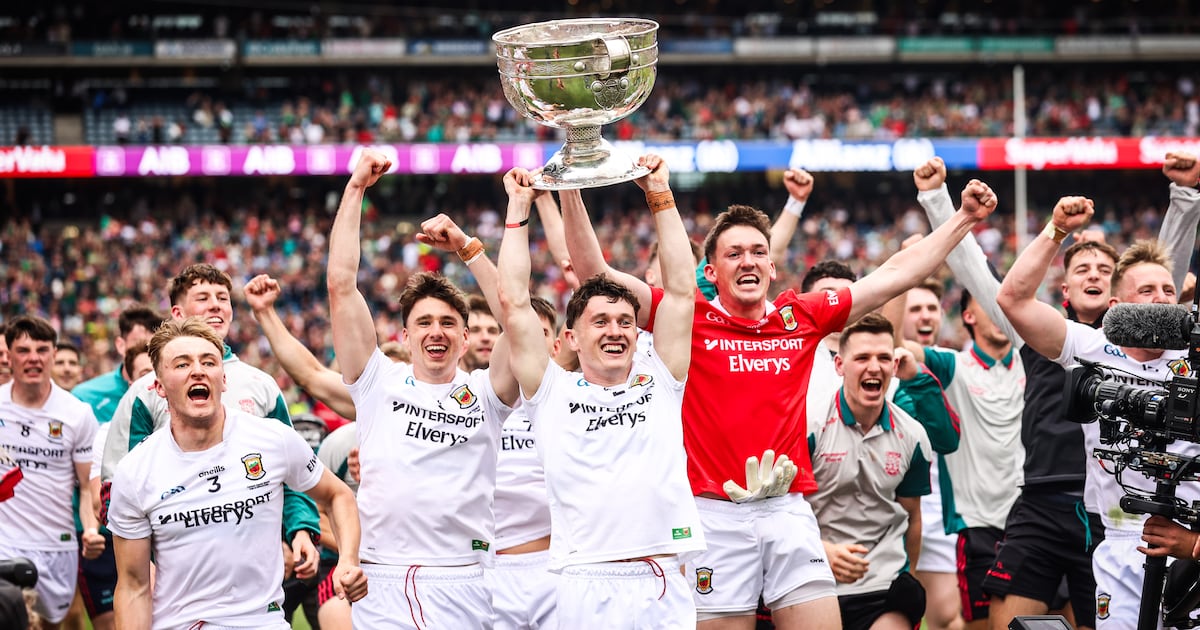
Adding to the surreal nature of the great event in Croke Park on Sunday, July 26th – when at about 5.15pm Mayo’s long search for footballing redemption was eventually appeased with an astonishing All-Ireland victory – was the equally stunning realisation that every last expert in every sporting media outlet got the result wrong. The temptation to gloat was moderated by the further realisation that Mayo pundits and supporters were equally left offside. Even though searching for an All-Ireland triumph over 75 years of sustained adversity had become in recent years part of the very weather of Mayo life, it was clear why the obsession continued to matter so much for so long. What was less predictable was that the reaction when it happened was entirely unpredictable despite the long wait and the cloak of inevitability we had wrapped around it. READ MOREThough Marty Morrissey found appropriately memorable words to mark the occasion, it was his broadcasting colleague Eamonn Fitzmaurice who first sensed that the reaction might be more difficult to explain as he surveyed the remarkable sight of what seemed like a legion of weeping Mayo fans on the Hogan and Cusack stands in Croke Park.Mayo supporter Shane Fitzgerald weeps after his team won the final But how to explain the instinctive and extraordinary profusion of such a curious outbreak of unalloyed joy that extended way beyond the ambit of a limited cadre of traditional Mayo supporters?Yes, of course, there was the sheer relief that after 75 years an embarrassing monkey of almost catatonic failure to get over the line had at last been shelved. Yes, the shedding too of the “curse” that was trotted out to part-explain the failure of Mayo teams to navigate the great persistent psychological barrier, not least in 14 recent All-Ireland finals.Yes, the joy reached out almost instinctively to embrace every supporter of Gaelic football in Ireland and so many others caught up in the slipstream of an overwhelming emotional experience. And, yes, part of that, too, were the almost universal family memories evoked of fathers bringing their children to Mayo matches and the sense of intense loss and palpable regret that, in Morrissey’s words, so many had not lived to witness this day.But how to explain the extraordinary force of such uninhibited and unrestrained joy that poured out of Croke Park into the crevices of almost inexplicable universal interest? “Faith, hope and love, and the greatest of these is love,” one philosopher quoted Corinthians 1, by way of explanation. But in this instance (with due respect to St Paul) this won’t wash because we know from lived experience that we can live without faith, we can even live without love, but we cannot live without hope.And there’s the rub. Mike McCormack explains it simply in his novel Solar Bones: “You have to have faith,” he writes. “That’s what Mayo people do; we journey in hope, true believers.” And faith, too, in its specifically religious dimensions, that enduring reality in Irish life that can be conveniently shuffled sideways as a relic of old decency, out of sight and temporarily out of mind. Mayo fans welcome the team home in Castlebar after their All-Ireland victory. Photograph: James Crombie/INPHO Religious faith whose demise is often exaggerated, that is, until the Mayo manager Andy Moran in the final minutes found himself in quiet panic saying a prayer to his friend, the late John O’Mahony, and happy to publicly reference both the prayer and his own faith on his sleeve. As was the prayer of the thousands of Mayo supporters giving multiple witness to a God not just of surprises but whose presence and in whose need the prayerful entreaties rose in waves from the assembled faithful on the Hogan Stand. In dire straits we are all believers. It’s part of our DNA, that peculiarly Irish faith that remains ever-present and ever-resilient, especially in time of need. And its reach extends to past, present and in hope to the future. Indeed when Ryan O’Donoghue, the beating heart of the Mayo team, on a consequential solo-run, took the game by the scruff of the neck and with team-mates David McBrien and Darragh Beirne crafted the vital goal, my thoughts turned to another O’Donoghue, Sheila (née Carey) from Glencullen Lower in Kiltane parish, Erris. Sheila remembered the appalling experience of the Great Irish Famine as conveyed to her by those involved in the evocative phrase “on our knees”, a depiction that neatly expressed the horrendous suffering of that pivotal event in Irish history and the then only recourse available to the people. Sheila’s son, Hughie O’Donoghue, the celebrated artist, commemorated that Famine and its history in his acclaimed masterpiece, On Our Knees. The Famine and the many trials of our history were part of the story of the Croke Park victory, too, that often unspoken hinterland that was no doubt part of the remembering and the release represented by the now unforgettable image of captain Jack Coyne holding aloft the Sam Maguire trophy amid a vale of happy, happy tears as so many once again fell “on our knees”. Fr Brendan Hoban is a native of Ballycastle, Co Mayo
Opinion: How to explain joy that went beyond traditional supporters when Mayo won All-Ireland?
Full Article
Original Source
Read the full article at Irishtimes →KhanList aggregates and links to publicly available news content. We do not host full articles from third-party sources. Always verify important information with original sources.