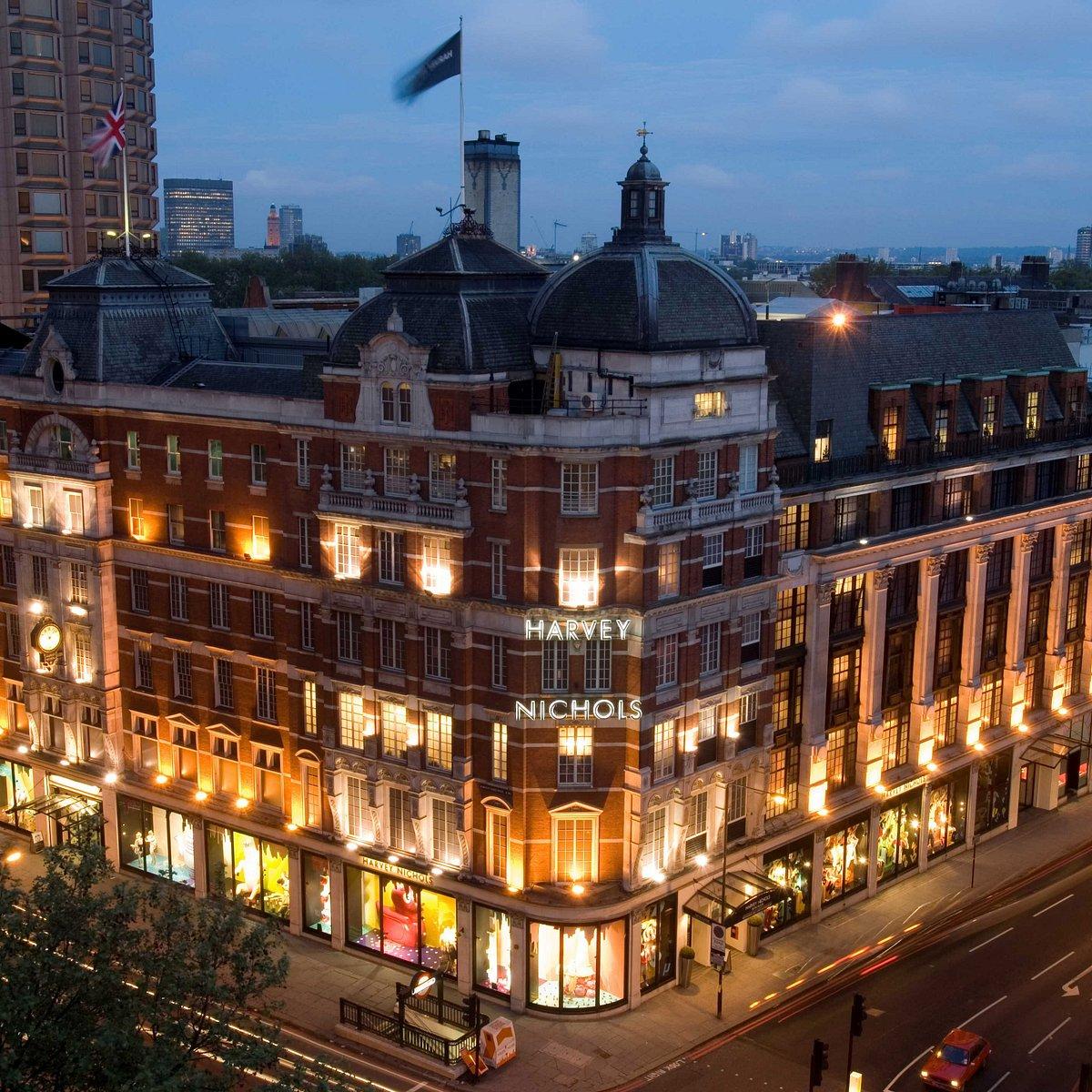
Is there anything more depressing than the news that Frasers and Next are two suitors for one of London’s most era-defining department stores? Harvey Nichols might have defined the 1990s fashion-scene which is being constantly mined for inspiration and cultural flex (see Tate Britain’s upcoming exhibition The 90s: Art and Fashion curated by Edward Enninful) but even that heft of nostalgia can’t save Princess Diana’s once beloved shopping destination. For anyone growing up in that period it was a beacon of cool and aspiration. Much more fun that stuffy old Harrods down the road, Harvey Nicks (creatively led by Mary Portas who supercharged it until 1997) was the only place any self-respecting teen went to hunt down Joseph tops in the sale, moon over Stila lip gloss at the beauty counter and try to get served in the fifth-floor bar (ahem). Then of course there were Edina Monsoon and Patsy Stone — figures of fun for some, iconic examples for others — who immortalised the store in Absolutely Fabulous, cementing its role as fashion’s most brilliant destination.In the 1990s, you couldn’t hear the words ‘fashion’ and ‘London’ without thinking of Harvey NicholsFor that entire decade you couldn’t hear the words “fashion” and “London” without thinking of Harvey Nichols. When I worked on magazines in the Noughties, it still had its cachet, with fashion week after-parties and mischievous launches held on the fifth floor, draped in celebrities of the minute, champagne pouring out. Shifting retail landscapeLamentably, it was barely a year ago that its newly installed chief executive Julia Goddard, former Net-a-Porter buyer Kate Benson (also Goddard’s sister) and ex-Vogue fashion director Kate Phelan declared they were going to “save Harvey Nicks”. There was a renewed buzz and fever around the store (helped by a determined PR campaign), with every fashion editor asking, “Could this eagle soar again?” The ground floor was revamped, a new “destination” jewellery department installed; niche brands held press launches there seemingly as part of a strategy to capitalise on its boutique appeal (it is a minnow at 35,000 sq m compared with Selfridges’ 80,000 and Harrods’ 110,000).Yet, it was always going to be a big ask in a retail landscape which has shifted entirety from that 1990s heyday, where a smart and idiosyncratic buy could tempt in shoppers with the high taste marks of its buyers. These days luxury brands operate as concessions within department stores, having backtracked from the wholesale market. Fledgling and small brands are flailing, it is altogether harder to create a unique and stand-out selection of product when the creativity-squashing algorithm is king. Equally the turmoil of Brexit and double whammy loss of international travel during the pandemic and the removal of tax free shopping for UK tourists have not helped its ambition to stay relevant. Department stores are a downright difficult proposition in the modern age. In the US the Saks and Neiman Marcus saga rolls on, after a brutal Chapter 11 restructuring. Here, you only have to walk along Bond Street to see the cavernous skeleton of Fenwick (which shuttered in 2024 and is currently being turned into an office and retail complex) to see the impact. Selfridges is still fire fighting, with a new ultra-VIP floor, 40 Duke, recently opening to serve its highest net-worth clients, with the hope of coaxing both the aspiring shopper downstairs as well as the 0.1 per cent to stem its own losses. The Mike Ashley effectAt Harvey Nichols, understandably the focus in recent years narrowed to fashion and beauty, knocking off the food market in a bid to concentrate on its core areas. Arguably in taking away its own branded products, the store lost something of its personality and attitude, too. At times decisions felt out of touch. On the fifth floor a pizza restaurant opened, an odd carb-heavy choice in an era when many of its clientele are likely on GLP-1s (the last time I visited I failed to find anything over a size 12). It has for some years struggled to become part of the fashion conversation, an SW1 outlier without the heft of Harrods’ high-rolling Middle Eastern patrons to prop it up.There are the proposed suitors, which feel distinctly uninspiringThen of course there are the proposed suitors, which feel distinctly uninspiring. Next winning the bid perhaps points to the store moving into a more middle ground, filling the void into which House of Fraser and Debenhams collapsed. In a flooded luxury market which only a sliver of Londoners can afford to participate in, perhaps that’s a sensible move.But it is the prospect of Mike Ashley’s Frasers acquisition which plants a feeling of dread in the soul of London’s fashion scene. Not least because Ashley has form in winning whatever business he sets his sights on. It was only at the end of 2023 that Frasers acquired Matchesfashion from its private equity owners. Months later, citing irreconcilable issues, it was put into administration, setting off an earthquake through the London fashion eco-system, bringing down fashion houses and factories with it. It was a particularly ignoble end to a retailer which, like Harvey Nichols, had defined London’s shopping landscape. Who knows what Frasers would turn the Knightsbridge stalwart of some 195 years into. Perhaps amalgamate it with its own multi-brand cross-country retailer Flannels. Whoever ends up as its new proprietor, they face an unenviable task of fronting a turnaround in an inhospitable market, prompting the question, can anyone save Harvey Nicks?Victoria Moss is a freelance writer
OPINION - Harvey Nicks needs saving, but by Next or Frasers? I’m absolutely flabbergasted
Full Article
Original Source
Read the full article at Standard →KhanList aggregates and links to publicly available news content. We do not host full articles from third-party sources. Always verify important information with original sources.