
When I asked my eight-year-old son if he knew of any Nana Patekar movie, he said, 'Golmaal'. It took me a while to recall the scene in one of the films in the 'Golmaal' franchise where a mute Tusshar Kapoor, possessed by a soul, begins speaking in Patekar's distinctive voice. It was a moment of comic absurdity, but it also said something about the actor's cultural reach.Here was an actor whose gravelly baritone, staccato rhythm and intense voice modulation travelled across generations, becoming instantly recognisable even to children who may never have watched his most celebrated performances.For me, however, Nana Patekar will always be Major Chauhan from 'Prahaar' (1991).I remember the intensity with which he portrayed the disciplined army officer, a man who believed that character was forged through hardship and that duty demanded more than mere words. Patekar did not simply play an officer who trained cadets; he embodied a philosophy. His dialogues carried the weight of conviction, delivered with a controlled aggression.He could pause, raise his voice, lower it and then explode into a monologue without losing the audience. His words were not merely meant to be heard. They demanded to be absorbed.That intensity became his signature.In 'Parinda' (1989), he was frighteningly convincing as Anna Seth, a gangster whose violence and unpredictability made him one of the film's most memorable characters. In 'Krantiveer' (1994), he brought a different kind of fury to the screen as Pratap Narayan Tilak, a man whose anger was directed at corruption, injustice and communal divisions. His impassioned speeches became an integral part of the film's identity, particularly the "Hindu Ka Khoon, Musalman Ka Khoon" analogy.Patekar had a rare ability to make a character's anger feel personal. He did not always behave like the conventional Hindi film hero. He was abrasive, uncomfortable and difficult to like. Yet it was almost impossible to look away.His range was evident in films such as 'Khamoshi: The Musical' (1996), where he played Joseph Braganza, the deaf father of the character played by Manisha Koirala. Here, the intensity remained, but it was expressed through restraint, silences and emotional vulnerability.Then came the roles that introduced him to a new generation of moviegoers.As Uday Shetty in 'Welcome' (2007), Patekar turned an underworld don into an unlikely comic icon. The character's exaggerated seriousness and wonderfully timed reactions made him hilarious without diminishing his screen presence. His chemistry with Anil Kapoor's Majnu Bhai became one of the film's biggest attractions.The new-age audience realised that the man who could deliver a blistering monologue in 'Krantiveer' could also make them laugh through a pause, a glare or an exasperated expression. Uday Shetty eventually found a life of his own in internet memes and social media clips.Different generations could claim different versions of Nana Patekar as their own. For some, he was the fierce actor; for others, he was the menacing presence, an emotionally complex father or a gangster whose dreams of becoming an actor provided much of the humour.And all these characters were delivered with one quality that made Nana Patekar unique: Individuality. You cannot imagine another actor doing the film with same intensity, abrupt pauses and a distinct humour.I began thinking about his legacy with a question to my eight-year-old son. His answer took me to 'Golmaal', while my own memory went straight to 'Prahaar'. Between those two films lies the remarkable range of an actor who could speak to vastly different audiences without ever losing his identity.(Amit Chaturvedi is Senior Executive Editor, NDTV)Disclaimer: These are the personal opinions of the author
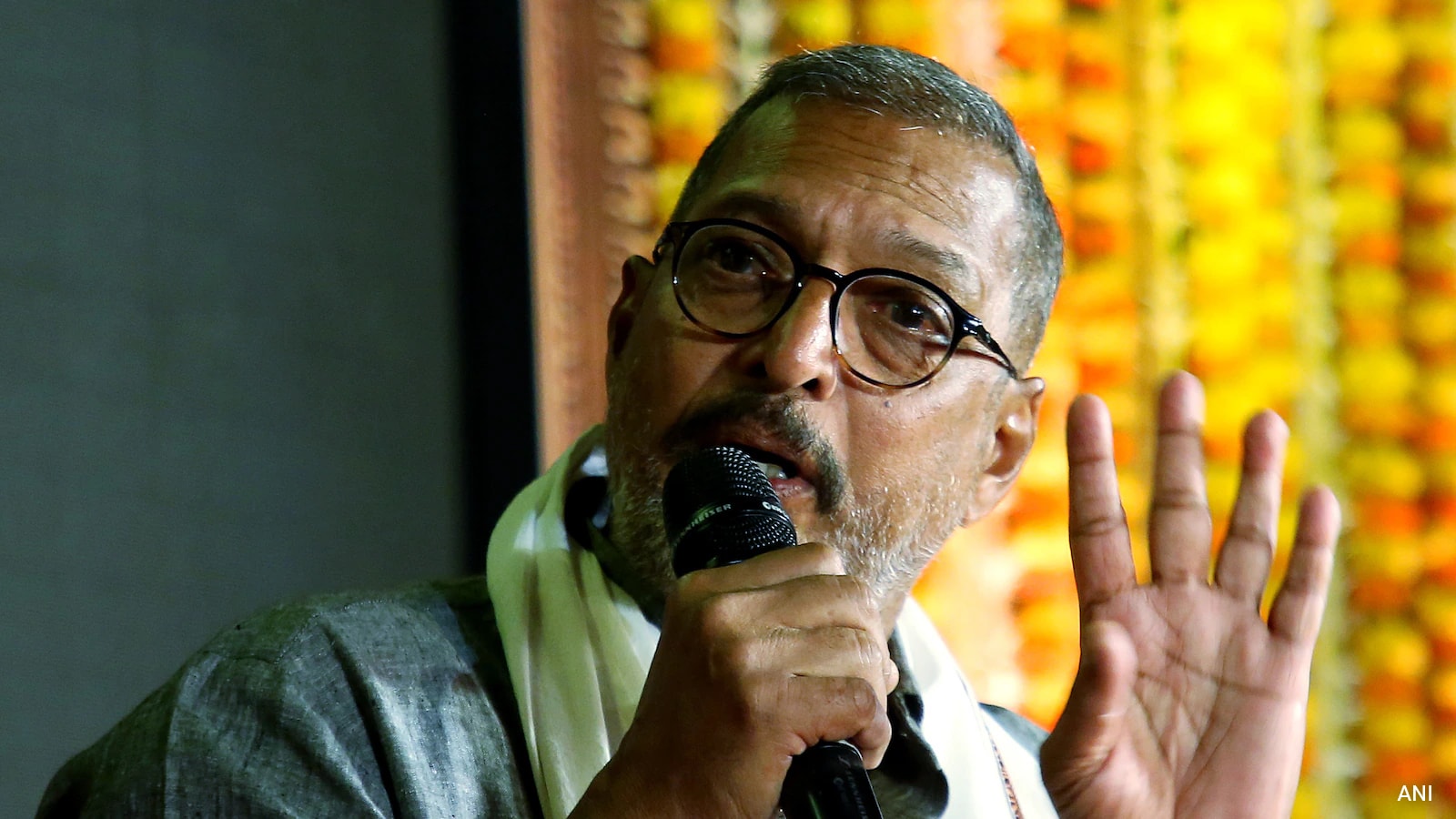
Opinion: Blog | Nana Patekar: The Voice That Spoke To Generations, From 'Prahaar' To 'Golmaal'
Full Article
Original Source
Read the full article at Ndtv →KhanList aggregates and links to publicly available news content. We do not host full articles from third-party sources. Always verify important information with original sources.