
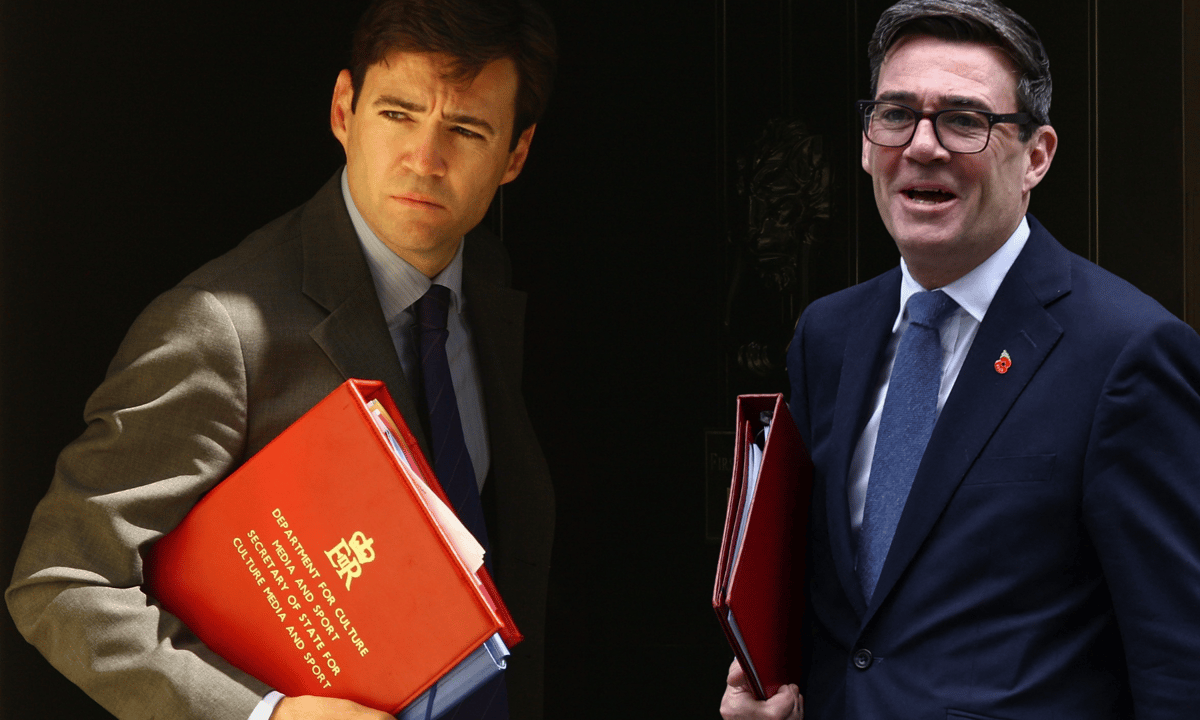
Persevilience (a portmanteau of “perseverance” and “resilience”) is a word which popped into my head when I was writing about mental health. Why? Because it is a word which matters. It matters to our wellbeing, but also to our politics. It matters to how we engage with the world, and how we face up to the various elements that combine to create what we now commonly call a polycrisis. And individuals, above all, asking: am I persevilient? We should ask it of others, too. It is much more than a combination of perseverance and resilience: it is a positive. It is a force, and a mindset, to get good from bad. If Keir Starmer became prime minister by not being the Tories, Andy Burnham became prime minister partly by not being Keir Starmer. So, does Burnham have persevilience? It is early days, so far as his role as our seventh prime minister in just over a decade goes. Burnham’s long-term survival is also necessary to prevent the notion taking hold that a country once admired for its political stability and maturity is becoming ungovernable. As a Labour supporter, let me try to find some reasons to be hopeful. First, he has been around a long time, has bundles of energy, still seems to love a challenge and really likes dealing with people. Strong ingredients for persevilience in politics. Second, he has grown considerably in stature. I have known him since he was a young parliamentary assistant to Labour MP Tessa Jowell in the mid-1990s, from whom he learned the importance of empathy and hard work.There is a thread to his beliefsIt was interesting to note, early in his premiership, how he addressed a series of big issues which have motivated and driven him for many years — the necessity of social care reform, which he first proposed as health secretary in 2009 not long before Labour were kicked out of power; the importance of vocational and technical education; and devolution from Westminster and Whitehall to the cities and regions of the UK. There is a thread to his beliefs. He became an MP himself in 2001, but I would be indulging in post facto historical analysis if I said I had spotted early on, as I had with Blair and Brown, that he was destined for the top. I didn’t. Pain that puts iron in the soulMy earliest diary references to Burnham tend to focus on issues such as him “needing to get some decent suits”, as well as seeming to find it very difficult when under personal attack, and getting down when things didn’t go exactly his way. He has improved on all of those fronts. Third, he has learned from setbacks, which is central to the development of persevilience. He fought and lost two leadership elections, but was honest enough with himself to realise it was partly down to mistakes he made. Some leadership hopefuls give up after one shot, even more after two. He didn’t let the pain of defeat deter him from thinking one day he might win. A young Andy BurnhamPerhaps the biggest single setback came when, as culture secretary, he attended the 20th anniversary memorial for the victims of the Hillsborough stadium tragedy of 1989, in which 97 Liverpool football supporters had died, and was booed and heckled by sections of the crowd at Anfield. “I really felt sorry for him,” I recorded in my diary, “especially as he had pushed so hard for the Hillsborough families.” Burnham is a very emotional man who feels things deeply. He felt that really deeply. But he also reflected that he hadn’t pushed hard enough and, worse, that the state had done everything it could to evade the truth about what had happened, out of basic disrespect for the people of Liverpool and for working-class people. From that moment, starting the very next day when he spoke about what had happened in a Cabinet meeting, he was never going to let up in the fight for truth and justice. I do not think it is an overstatement to say the iron entered his soul, and iron in the soul may well be an essential ingredient of persevilience. I would go further and suggest that moment was the single most important step on his road to the top of British politics. A clarity of visionThe incident crystallised for him the sense of a chasm between Westminster and Whitehall politics and the real needs of working-class people from the places he came from. Burnham later used a regional position to develop a national profile that had largely eluded him as a Cabinet minister. The way Burnham performed as mayor and delivered on the promise of a different way of doing politics, allied to better political and communications skills, was largely responsible for creating the sense of inevitability that he would replace Starmer. That is persevilience. It is brutal, if you are Starmer, but Burnham’s persevilience simply overpowered Starmer’s resilience.Burnham has the same values as he always had....yet in other ways he is not the same personHe never failed to seize an opportunity to highlight the gap between Westminster and the nations and regions, especially during the Covid pandemic, when he became a spokesman for the whole of the North, and the moniker “King of the North” was attached to him. A reputation for blowing in the wind was replaced by the clarity of his main objectives. Burnham has the same values as he always had, and is arguing for the same things he always did. Yet in other ways he is not the same person — he’s tougher, sharper, more focused, more ruthless, still wearing his heart on his sleeve but always in control of his emotions. Whether he is a truly persevilient prime minister depends on how long he lasts, and what he does with that time in power. But as of now, as he settles into the job, the persevilience signs are good.
OPINION - Alastair Campbell: Is Andy Burnham the ‘persevilient’ Prime Minister Britain’s politics needs?
Full Article
Original Source
Read the full article at Standard →KhanList aggregates and links to publicly available news content. We do not host full articles from third-party sources. Always verify important information with original sources.