
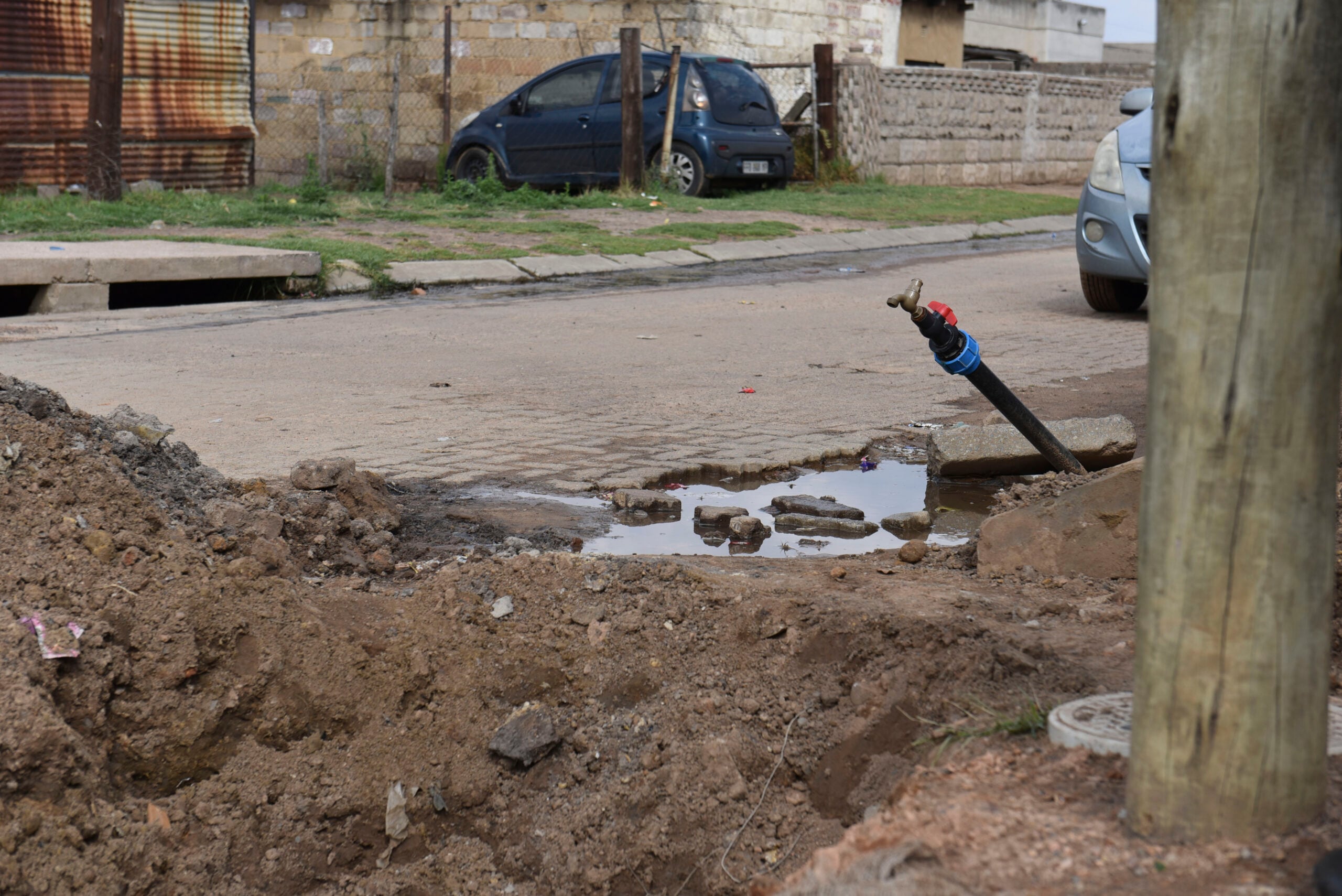
It comes as voters responded to service delivery failures at the ballot box. Despite more than one of every two South African municipalities being in financial distress, according to Ratings Afrika, and service delivery having collapsed in many, half of the government’s interventions to turn the situation around have been delayed. Intervention is also needed to get reforms to the country’s electricity distribution system back on track. Much of this system currently falls under municipal control. This emerges from Operation Vulindlela’s recently released progress report for the second quarter of the financial year, covering the three months to the end of September. Operation Vulindlela is a partnership between National Treasury and The Presidency aimed at reforming the South African economy to enable growth. However, the report focuses largely on milestones achieved over the past three months and provides little detail on measures to accelerate reforms. This comes against the backdrop of the municipal elections on 4 November, which saw dramatic shifts in voter support for political parties. These are widely viewed as an indication that voters have grown tired of poor service delivery and corruption and are looking for political leaders who can turn municipalities around. The number of municipalities in which no party secured an outright majority has increased significantly, meaning more coalition governments are likely. This could bring further instability, despite a promise by the Department of Cooperative Governance and Traditional Affairs (Cogta) to issue guidelines aimed at limiting political instability. Planned legislation to address the problem failed to secure parliamentary approval in time for the elections. The guidelines will therefore not be binding. Four municipal reform initiatives Operation Vulindlela has four municipal reform initiatives on its agenda: 1. Shift to a utility model for water and electricity services to ensure financial and operational sustainability Under this model, revenue generated from the sale of water and electricity may only be used to pay bulk suppliers such as Eskom and water boards, cover distribution costs, and maintain and expand the infrastructure needed to provide these services. These reforms are on track. 2. Standardising and professionalising the appointment of senior officials in local government Operation Vulindlela classifies this initiative as delayed or off track, although work is underway. 3. Reviewing the institutional structure of the municipal system This has been completed, although further work remains. 4. Reviewing the fiscal framework for municipalities, including conditional grants This initiative is also delayed or off track, but work is underway with proposals expected to be made public by December. Source: Operation Vulindlela Phase 2 Progress Report, 2026 Q2 Beyond these delays, Operation Vulindlela identifies “significant challenges” in reforming the electricity distribution industry, which require intervention. Municipalities are responsible for at least 40% of electricity distribution in SA, but Eskom struggles to collect payment from many of them for the bulk electricity it supplies. Municipalities’ outstanding debt to Eskom had reached R122.5 billion by the end of August, according to Dr Kgosientsho Ramokgopa, Minister of Electricity and Energy. Attempts by the government and Eskom to persuade municipalities to allow the utility to take over electricity distribution on their behalf through so-called Distribution Agency Agreements (DAAs) have so far yielded limited results and appear to have stalled. Progress on other reforms On initiatives that are progressing, Operation Vulindlela says the programme to convert metropolitan municipalities’ electricity and water services into utilities is advancing well. These metros will receive allocations in the next financial year based on their progress. “The Cabinet has approved the revised White Paper on Local Government, and the President has signed the Public Service Commission Act. These lay the foundation for comprehensive reform of the local government system,” according to the report. “In addition, the Municipal Financial Management Amendment Bill has been published for public comment, and the review of the Local Government Fiscal Framework is under way to improve the management of local government finances.” The target date for the proposed new municipal financial framework is December. However, the report provides little detail on what Operation Vulindlela intends to do to revive municipal reforms that are delayed or off track. Professor Dirk Kotzé of Unisa’s Department of Political Science says several of the outstanding issues are addressed in the White Paper on Local Government. The review of the fiscal framework is particularly important. He says that after a lengthy period of denial, the government now acknowledges that the 10% of the national budget allocated to municipalities is insufficient. Increasing this allocation would, however, require the minister of finance (Enoch Godongwana) to find funding elsewhere. Kotzé believes provincial government budgets could potentially bear the brunt of cuts to make additional funding available to municipalities. Matthew Cruise, energy analyst at Jaltech, says the electricity distribution industry is in crisis and that reforms can no longer be postponed. The R122.5 billion owed to Eskom by municipalities has to be paid somehow, and the cost is currently being recovered through higher electricity tariffs. “While municipalities struggle with high levels of electricity theft, there is also a problem with some of them receiving payments from consumers but using the money for other purposes instead of paying Eskom as the bulk supplier. Exactly what is happening is very opaque.” Cruise argues that, from Eskom’s perspective, taking over the DAAs may seem like a good solution, particularly given that municipalities generally add a substantial margin to Eskom’s tariffs. “From the municipalities’ perspective, however, this would mean losing a revenue stream, which could affect their status as going concerns and accelerate their collapse.” This, Cruise says, underlines the urgency of reforming electricity distribution. This article was republished from Moneyweb. Read the original here.
Operation Vulindlela’s municipal reforms behind schedule
Full Article
Original Source
Read the full article at Citizen →KhanList aggregates and links to publicly available news content. We do not host full articles from third-party sources. Always verify important information with original sources.