
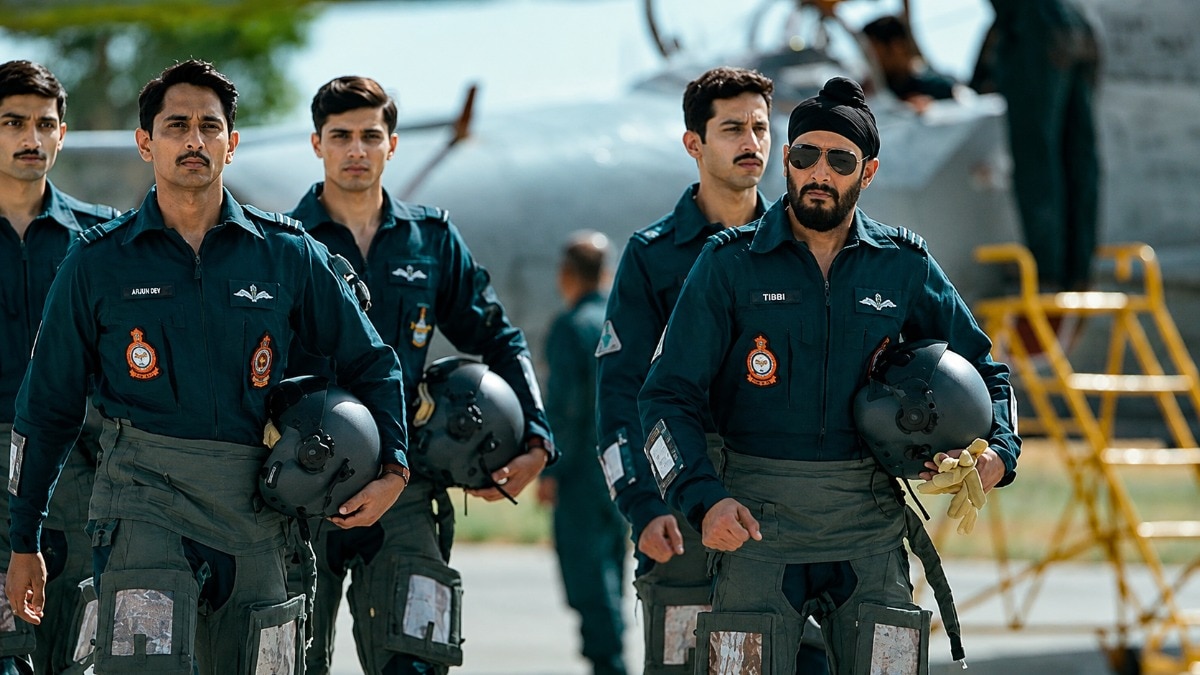
As Operation Safed Sagar: The Untold Story of the Kargil War premieres on Netflix on August 7, the military drama is bringing renewed attention to one of the Indian Air Force's most challenging operations. Set against the backdrop of the 1999 Kargil War, the series follows the Golden Arrows Squadron and the extraordinary mission that supported Indian troops in reclaiming strategic peaks. But how much do you know about the real Operation Safed Sagar that inspired the show?The series is directed by Oni Sen of Asur fame. While it dramatises the lives of the Golden Arrows Squadron and the people behind the mission, it is inspired by one of the Indian Air Force's most significant wartime operations during the Kargil conflict.What was Operation Safed Sagar?Operation Safed Sagar was the codename for the Indian Air Force's air campaign during the 1999 Kargil War. It began on May 26, 1999, with the aim of helping the Indian Army push back Pakistani forces that had occupied strategic mountain peaks along the Line of Control (LoC). It was the first time the IAF conducted offensive air operations at such high altitudes, making it a particularly challenging mission.The IAF had one important restriction: its fighter jets could not cross the LoC. The decision was taken to keep the conflict limited and prevent it from turning into a full-scale war. The IAF's job was to support the Army on the ground. Its aircraft targeted enemy bunkers, gun positions, supply camps and other logistical routes, helping Indian troops recapture the occupied peaks.Why was the mission so challenging?The IAF was operating at altitudes of 14,000 to 18,000 feet, making the mission very different from earlier air operations. The high altitude affected aircraft performance and weapon accuracy. It was also difficult for pilots to spot targets hidden among the snow-covered mountains. The Air Force first spent days carrying out reconnaissance missions to understand the terrain and locate enemy positions. As pilots became more familiar with the area and the intelligence improved, the strikes became more accurate.The cost of the operationThe early days of Operation Safed Sagar were particularly difficult. The IAF lost aircraft and personnel during the campaign, including Squadron Leader Ajay Ahuja, who was shot down while searching for fellow pilot Flight Lieutenant K Nachiketa after his aircraft developed technical problems. Ahuja was posthumously awarded the Vir Chakra for his courage.The Air Force also lost a Mi-17 helicopter and its crew after it was hit by a shoulder-fired missile during an attack. Despite these losses, the operation continued as pilots changed their tactics to deal with the threats.Turning the tideAs the operation went on, the IAF carried out several successful strikes on key Pakistani positions. One of the most important attacks was on the supply base at Muntho Dhalo, which disrupted the movement of supplies to the enemy.The IAF also carried out precision strikes around Tiger Hill and other important positions, helping the Indian Army regain control of the occupied areas.By the time air operations ended on July 26, the IAF had flown around 550 strike missions, 150 reconnaissance sorties, more than 500 escort missions and over 2,100 helicopter sorties for transport and casualty evacuation.The Golden Arrows return to the spotlightNetflix's series, Operation Safed Sagar, focusses on the Golden Arrows Squadron, placing the spotlight on the people behind the mission rather than just the battlefield. Directed by Oni Sen and created by Abhijeet Singh Parmar and Kushal Srivastava, the drama stars Siddharth as Squadron Leader Ajay Ahuja, Jimmy Shergill as Wing Commander PS Dhanoa, alongside Abhay Verma, Mihir Ahuja, Taaruk Raina, Arnav Bhasin, Dia Mirza and Adil Hussain. While the series dramatises real events, Operation Safed Sagar remains one of the Indian Air Force's defining missions. It marked the country's first use of combat air power in such extreme Himalayan conditions and played a crucial role in supporting the Army during the Kargil War. More than two decades later, it continues to stand as a reminder of the courage, precision and sacrifice of the men and women who flew into one of the world's toughest combat environments.- EndsPublished By: shweta keshriPublished On: Aug 7, 2026 07:31 IST
Operation Safed Sagar: The real Indian Air Force mission behind Netflix series
Full Article
Original Source
Read the full article at Indiatoday →KhanList aggregates and links to publicly available news content. We do not host full articles from third-party sources. Always verify important information with original sources.