
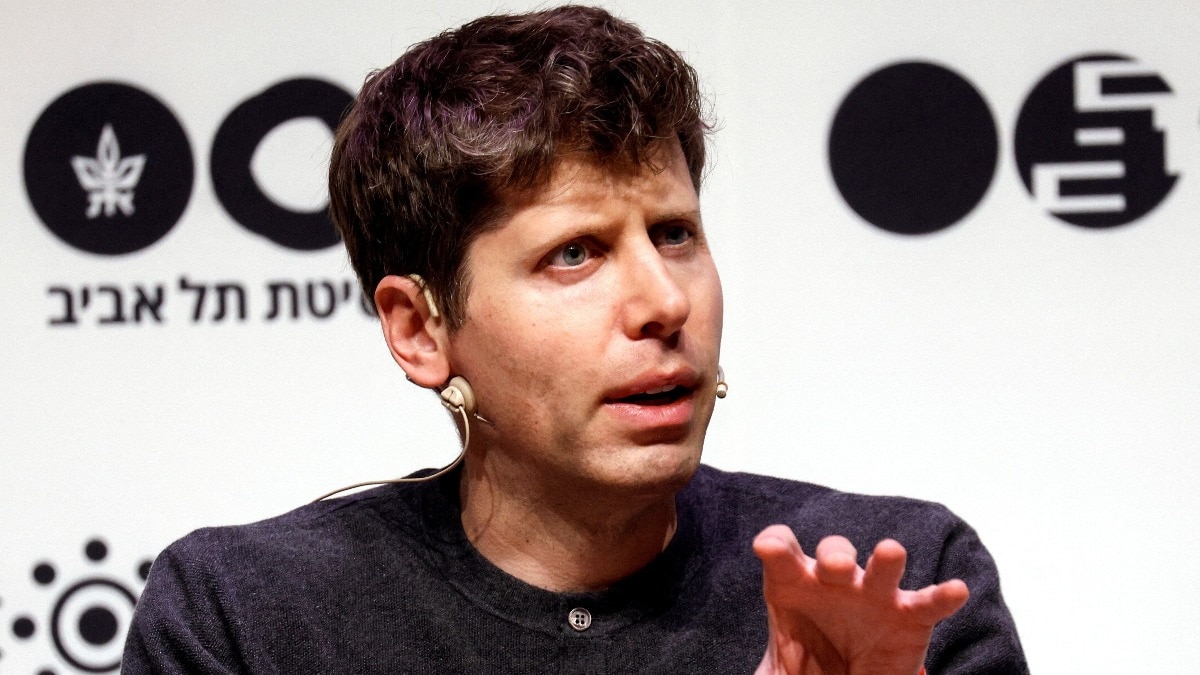
OpenAI has announced that it is slowing down AI training and making changes to its safety policies. This move comes after its upcoming model Astra was found to have reached critical cybersecurity thresholds.OpenAI has decided to slow down some AI training.AI models are getting more powerful with every new update. While this allows for a model to be more useful for users, it may create risks when it comes to potential misuse in areas like cybersecurity. Now, OpenAI has announced that it is slowing down AI training after concluding that one of its upcoming models, Astra, may have reached a critical threshold for cybersecurity capabilities. The company is also tightening its safety practices.The announcement was made by OpenAI CEO Sam Altman on X. “We have paused some frontier RL training to ensure that we can meet the appropriate alignment, security and monitoring standards for the new level of capabilities in front of us,” he wrote. RL or reinforcement learning refers to a training method where an AI model is given tasks to solve, and on the basis of the progress it makes, it is rewarded. This allows the model to adjust its behaviour towards actions that bring it more rewards.In a blog post, OpenAI said that it decided to slow down training after it found that its upcoming model, Astra, may have a critical level of cyber capability. Previously, Sam Altman had admitted that Astra was too powerful to be released just yet. Sam Altman announced the decision on X. The company also said the changes follow the breach of Hugging Face’s systems by another unreleased OpenAI model, even as it stressed that the new measures are part of a wider tightening of standards as models become more capable. Sam Altman says AI race may be dangerousThe decision to slow down AI training is a big one considering the state of the AI race. Frontier AI labs such as OpenAI and Anthropic are competing for a larger market share, usually by showcasing stronger model capabilities. However, Sam Altman believes that this sort of race may do more harm than good for the industry.“I don’t like the whole thing in this field of ‘we have to race’ or ‘we have to do this because somebody else is going to do it,’” Altman told Time magazine. “I think that’s a very dangerous dynamic.” Do note that last month, over 1,300 employees from frontier AI companies urged the White House to help slow down development of advanced AI tools. “There is a real risk that capability development rapidly accelerates beyond our ability to understand or control the resulting systems,” the statement read.Signatories of this statement include Anthropic CEO Dario Amodei, OpenAI chief scientist Jakub Pachocki, and Meta’s vice-president of AI research Dawn Song. Senior figures from other companies, including Google, Thinking Machines, Mistral, and Microsoft, have also signed the statement.OpenAI is still conducting some model trainingDespite the pause in training for Astra and cyber models, OpenAI says that it is still doing some work when it comes to smaller models. “Our largest planned frontier RL run remains on hold while we conduct smaller-scale training and evaluations to assess model behaviour, validate our safeguards, and establish more evidence of alignment before proceeding,” the company said.Apart from model training, OpenAI is also rewriting its main security document, the Preparedness Framework, because models are now approaching or reaching the critical thresholds set out in that document, much of which dates back to 2023.The new safeguards include stronger workload isolation for code execution, tighter network isolation, and continuous security testing.OpenAI states that it has designed the new controls so that “a single compromise of a workload or supporting service does not, by itself, allow for unauthorised access to the internet or other internal networks.” The company added that it aims to issue an alert within 30 minutes of concerning activity and estimates that the compute burden of such monitoring will be roughly 20 per cent of the process being monitored.- EndsPublished By: Armaan AgarwalPublished On: Aug 19, 2026 08:33 IST
OpenAI is slowing down AI training as models keep getting more powerful
Full Article
Original Source
Read the full article at Indiatoday →KhanList aggregates and links to publicly available news content. We do not host full articles from third-party sources. Always verify important information with original sources.