Bloomberg/Getty Images For most of this year, investors couldn't get enough of Anthropic while largely ignoring OpenAI. Now the tide is turning: although Anthropic remains the clear favorite, OpenAI is experiencing a significant surge in demand after it released highly touted new models and saw success with its AI coding agent, Codex."In the last month, there has been a resurgence in interest," said Dave McClure, founder and managing partner at Practical Venture Capital, which buys secondary shares in pre-IPO companies.Since Anthropic and OpenAI have yet to go public, the vast majority of investors buy via secondary markets, where existing stock is sold by employees or early investors. The market is fragmented and illiquid, so quoted valuations are estimates rather than continuous public-market prices."OpenAI was facing a lot of negative stories in the first quarter related to things like slower growth, executives sick or leaving, Anthropic racing past them, and the Elon Musk lawsuit," McClure said. "This resulted in dramatically less demand in the early second quarter for OpenAI secondary."Anthropic still dominates, drawing five buyers for every two seeking OpenAI shares, according to Glen Anderson, CEO of Rainmaker Securities, a merchant bank focused on private stock transactions."A month ago, we were seeing limited demand for OpenAI," he said. "We're still seeing breakneck demand for Anthropic, but now you're seeing OpenAI get bid on a lot more often."OpenAI did not respond to a request for comment. Optimism about new modelsSecondary traders Business Insider spoke with said that OpenAI's newest models and coding agent, Codex, have given buyers a reason to take another look after months in which Anthropic commanded most of the momentum.OpenAI previewed its flagship GPT-5.6 Sol model in June and released it more broadly this month alongside GPT-5.6 Terra and the lower-cost GPT-5.6 Luna. Independent benchmarks have placed GPT-5.6 Sol near the top of the field, though still below Claude's latest Mythos and Fable models."Investors are coming back to OpenAI," said Adam Crawley, cofounder of Augment, an exchange for pre-IPO tech companies.Mark Klein, president and CEO of Neostellar, which provides access to late-stage startups, said he has been encouraged by an OpenAI executive disclosing last week that the company has reached 9 million active users across two of its flagship enterprise platforms: Codex, an autonomous AI agent designed for complex software engineering and coding tasks, and ChatGPT Work, a newly launched cloud-based AI assistant that executes multi-step professional workflows."The pace of that growth is notable because it suggests agentic AI is expanding beyond its initial developer audience and into a much broader range of professional workflows," Klein said. "More broadly, OpenAI appears focused on translating continued model improvements into sustained usage across coding, research, and knowledge work."OpenAI is the cheaper stockUntil this year, Anthropic was the clear bargain, consistently trading at a significant discount to OpenAI. Now that the dynamic has flipped, some traders say it makes sense to hedge their Anthropic positions by purchasing the relatively cheaper OpenAI stock.Anthropic soared to a $1.2 trillion valuation on secondary markets, Business Insider reported last week. OpenAI is now trading at a $933 billion valuation, up 20% over the past three months, according to data from Caplight, a secondary trading platform.Last week, OpenAI CEO Sam Altman took personal responsibility for the company's recent struggles while signaling a major comeback."We did not have our best last 12 months ever, which is mostly my fault, but we are about to have our best 12 months to date," he posted on X.On the same day as Altman's admission, Chinese AI startup Moonshot AI released Kimi K3, a powerful new model that the startup says is the largest open-weight AI system in the world. "There continues to be pressure from other Chinese and Open-source competitors that will likely put pressure on OpenAI growth and margins, so they still have a tough hill to climb," said McClure. Read next I'm a senior correspondent at Business Insider, where I investigate the tech industry with a focus on venture capital and startups.I can frequently be seen on CNN, NBC News, CBS News, and other channels providing analysis on a range of business and economic topics. I also appear at dozens of the biggest events around the world, including the World Economic Forum, HumanX, and Web Summit.Please get in touch if you have a story to tell securely on Signal. Here are some examples of stories I've written:Adam Neumann created a secretive billion-dollar startup to turn apartment living into a utopian fantasy. I was the first reporter to set foot inside.'2024 will be the year of the zombie VC reckoning.' The first wave of walking-dead venture firms is here and it's already causing headaches for tech founders.'Where ambition goes to die': These tech workers flocked to Austin during the pandemic. Now they're desperate to get out.Mira Murati doubled the fundraising target for her new AI startup to $2 billion. It could be the largest seed round in history.EvenUp's valuation soared past $1 billion on the potential of its AI. The startup has relied on humans to do much of the work, former employees say.Half of Sequoia Capital's VC funds since 2018 have posted losses for the University of California's endowmentHow Whitney Wolfe Herd's fateful deal with a Russian mogul deprived early Bumble employees of a stock windfall when she became a billionaireMailchimp employees are furious after the company's founders promised to never sell, withheld equity, and then sold it for $12 billion'My job is not to be the best friend of the CEO': Upfront's Mark Suster prides himself on being hard on founders, but some say his tough-love approach has gone too farExclusive: The University of California has invested billions in venture capital firms since 2000 and it has lost hundreds of millions so far. Here's why.Here is a little more about me: Before I joined Insider, I was a senior reporter at dot.LA and produced two investigative documentaries for public television, one of which won first place in the 2020 Los Angeles Press Club investigation category. The judges called it "in-depth and informative reporting at its best."I spent the 2017-2018 academic year at Columbia Business School as a Knight-Bagehot fellow in economic and business journalism, taking MBA-level courses in corporate finance, financial accounting, and corporate strategy. After that, I oversaw the development of The Journal, a daily podcast produced by The Wall Street Journal and Gimlet Media.Previously, I was a senior reporter and host at KPCC/Southern California Public Radio, where I covered business and economics. I have also written for The New York Times and Columbia Journalism Review and was a reporting intern at The Times.Originally from Seattle, I graduated cum laude from Occidental College in Los Angeles with a degree in politics.In my free time, I love skiing, tennis, and poker (I competed in the 2024 World Series of Poker Main Event but sadly did not win). Startups Tech OpenAI More
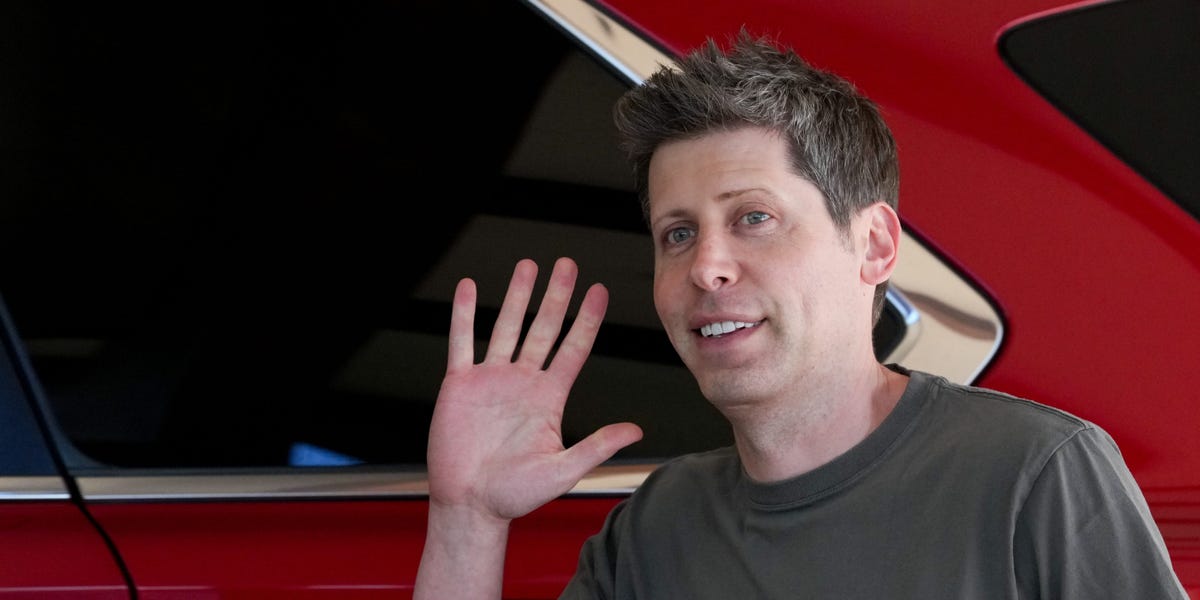
OpenAI has seen a 'resurgence' of interest in secondary markets.
Full Article
Original Source
Read the full article at Businessinsider →KhanList aggregates and links to publicly available news content. We do not host full articles from third-party sources. Always verify important information with original sources.