
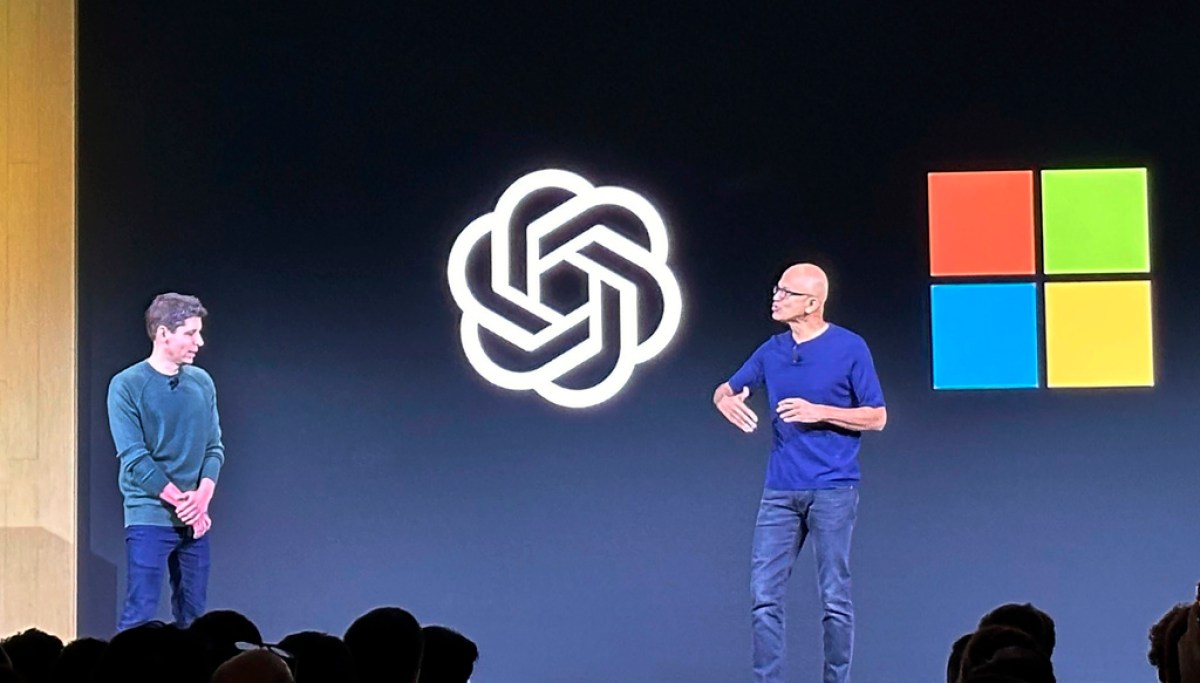
Top executives at OpenAI and Microsoft admitted they knew artificial intelligence poses an “existential threat” to news publications as the New York Times sues the technology companies over copyright infringement.Brent Hecht, Microsoft’s director of applied science, warned about the damaging effects that AI models will have on the internet and the company’s own business.“Our AI content strategy has started a ‘doom loop’ that will hurt the performance of our models and the entire web at the same time,” Hecht wrote in an internal document, according to a largely unredacted court filing unsealed Thursday. “It is highly unusual that an end-product threatens the economic foundations of its essential suppliers, but that is the situation we have created for our LLM business with respect to its ‘content supply chain.'” The New York Times argues chatbots, such as OpenAI’s ChatGPT, should not be able to use its copyrighted content for training because the large language models’ consumption of news articles diverts users from reading their publications.The same point was made by Microsoft CEO Satya Nadella, who said chatbots have “substituted” actual journalism by “giving you the information right there on the website on the AI platform versus needing to go to the underlying source.”Nick Turley, the vice president and head of ChatGPT, similarly said publishers face an “existential threat” from AI chatbots because they “are largely substitutive” and “will get more and more substitutive as they get better.”Hecht called the rising trend of chatbots accessing news articles for training “an astonishing theft of unprecedented proportions,” adding that perhaps it may be the “largest theft of labor in human history.”These past statements from OpenAI and Microsoft leaders will likely bolster the plaintiff’s argument against letting chatbots train on copyrighted works under fair use without permission or payment.The New York Times has a paywall for its articles, but ChatGPT can evade paying for a subscription. OpenAI President Greg Brockman previously bragged about hacking to get behind the news outlet’s paywall in his goal to “scrape” the website, according to the court filing.The document lists custom GPTs that can easily extract the user-requested information from paywalled articles, such as “Bypass Paywall” or “Article Reader.”TRUMP DOJ OFFICIAL DOWNPLAYS ANTITRUST CONCERNS ABOUT COMPANIES COORDINATING AI SAFETY DEVELOPMENTOpenAI does not have a licensing agreement with the New York Times, so the frontier AI lab is accused of severely harming the newspaper’s business model by diverting readers away from its domain. However, OpenAI does have licensing deals with other news publishers.The revelation of AI leaders’ thoughts on the key issues underpinning the legal case comes after the Department of Justice filed a statement of interest supporting the defense made by OpenAI and Microsoft. The DOJ argued, in part, that preventing AI models from training on copyrighted material under a “misunderstanding” of fair use “would thwart such creative and scientific progress while hindering American prosperity and economic mobility.”
OpenAI and Microsoft leaders knew AI may cause ‘doom loop’ hurting entire web
Full Article
Original Source
Read the full article at Washingtonexaminer →KhanList aggregates and links to publicly available news content. We do not host full articles from third-party sources. Always verify important information with original sources.