
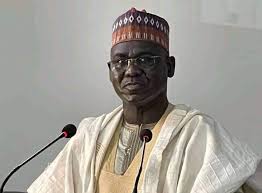
Follow THISDAYLIVE on GoogleAdd us as a preferred source to see more of our stories in Google Follow us on Google Linus Aleke, Abuja An asymmetric warfare veteran and former Chief of Army Staff, Lieutenant General Tukur Yusuf Buratai (rtd), has emphasised the critical role of education in addressing terrorism and insecurity, declaring that “a bullet can kill a terrorist, but only education can kill terrorism”. He maintained that education is a powerful instrument for combating ignorance, poverty, radicalisation and the social conditions that make individuals vulnerable to extremist ideologies. General Buratai stated this while delivering the 14th convocation lecture to the graduating class of 2026 at Nile University of Nigeria, Abuja. According to him, “A bullet can kill a terrorist. Only education can kill terrorism. I stand before you not merely as a former Chief of Army Staff, but as a soldier who has spent a lifetime confronting a proposition that the world has been slow to accept: that the security of a nation is not measured solely by the strength of its armed forces, but by the strength of its classrooms.” In a lecture titled ‘Nexus Between Education and Security: Implications and Lessons for Sub-Saharan Africa,’ the Chairman of the Tukur Buratai Research Centre (TBRC) said: “Let me begin with a confession. When I was invited to deliver this lecture, I asked myself: ‘What does a soldier have to say to a university?’ “I have spent most of my life in barracks, on training grounds and in theatres of war. You have spent yours in lecture halls, libraries and laboratories. We seem to live in different worlds. “But the longer I thought about it, the more I realised that we live in the same world. We fight the same war. Only our weapons are different. Mine was a rifle. Yours is a pen, a computer, an idea. And I have come to tell you today, from the battlefield of the North-east to the classrooms of the Sahel that your weapon is more powerful than mine.” To further buttress his argument that the pen is mightier than the sword, Buratai recounted a memorable experience from the height of the war against Boko Haram. “Let me begin with a story. A story I have never forgotten. In 2016, during the height of the war against Boko Haram, I visited a liberated community in Borno State. The soldiers had done their job. The terrorists had been pushed out. The market was slowly coming back. “A boy, perhaps 12 years old, walked up to me. He was barefoot. His clothes were torn. He looked up at me and said, ‘Soldier, I want to go to school’. “I asked him, ‘Where is your school?’ “He pointed to a heap of burnt rubble. That was his school. Boko Haram had burnt it two years earlier. “Then he said something I have never forgotten. He said ‘If I do not go to school, they will come back for me.’ “He was 12 years old. And he understood what many policymakers in Africa still do not understand: that when a school dies, a terrorist is born. That when a child is denied education, an insurgent gains a recruit. “That boy is the reason this lecture is not about guns. It is about books. I do not know where he is today. I pray he is in school. But there are millions like him across sub-Saharan Africa, in Niger, Mali, Burkina Faso, Chad, Somalia, Mozambique, the Democratic Republic of the Congo (DRC) and Sudan. “Millions of children are asking the same question: ‘Will anyone give me a school, or will the terrorists give me a gun?’ “How we answer that question will determine whether Africa rises or burns in the next thirty years,” he said. Buratai explained that his lecture argues that education and security are not separate domains to be traded off against one another, but two dimensions of a single struggle. “It examines the environment in which this struggle unfolds, the actors who shape it, the reciprocal nexus between learning and violence, the implications for sub-Saharan Africa, and the practical lessons that follow. It draws on published research, official data and the testimony of practitioners, and it concludes with recommendations addressed to policymakers, institutions and the graduating class before whom it is delivered,” the retired Army Chief concluded.
Only Education Can Defeat Terrorism, Says Buratai
Full Article
Original Source
Read the full article at Thisdaylive →KhanList aggregates and links to publicly available news content. We do not host full articles from third-party sources. Always verify important information with original sources.