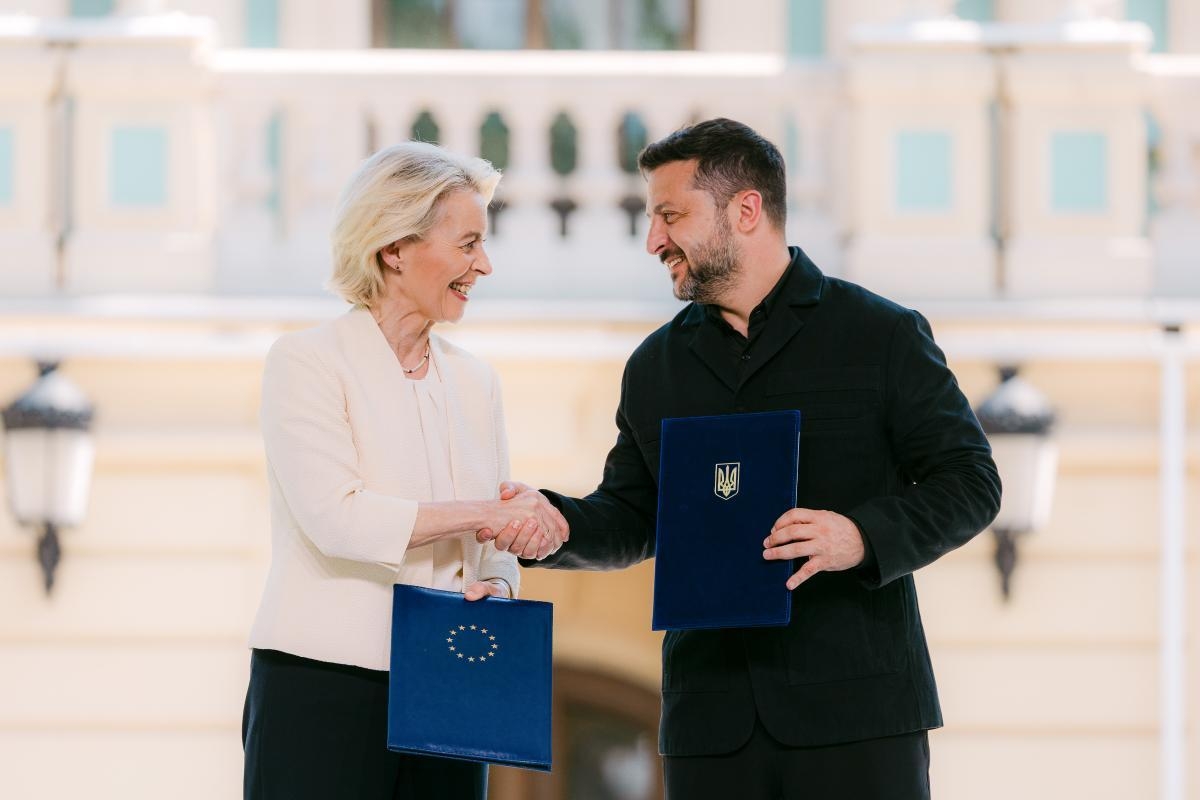
European capitals have become increasingly vocal about the need for Europe to participate in negotiations aimed at ending Russia’s war against Ukraine. This is only natural. Europe’s own security is at stake, and any settlement will shape the continent’s future above all. Yet Moscow consistently rejects Europe’s right to participate as an equal party. The Kremlin prefers to deal either directly with the United States or within formats where Europe’s voice is diluted among many others. It would be a mistake to explain this solely by Russian arrogance. Russia has traditionally recognised only those interlocutors whom it considers capable of influencing the balance of power. As long as Europe remains politically fragmented, constrained by cumbersome decision-making procedures and deprived of a single strategic voice, the Kremlin will continue to dismiss it as an independent geopolitical actor. The real question, therefore, is not who should represent Europe at the negotiating table, but what Europe itself must do to ensure that the Kremlin can no longer ignore it. The starting point is to recognise two obvious realities. First, Russia’s war against Ukraine ceased long ago to be a bilateral conflict. Second, the assumption that it can be ended through territorial compromise is fundamentally flawed. The Russian leadership has never concealed its true objective. Under the guise of “denazification”, Moscow effectively denies Ukraine’s right to exist as an independent state and a distinct nation. This is not a territorial dispute but an attempt to eliminate the political sovereignty of a neighbouring country. That is precisely why the traditional formula of compromise between two parties cannot work in this case. Moreover, ever since his speech at the Munich Security Conference in 2007, Vladimir Putin has repeatedly made clear that his ambitions extend far beyond Ukraine to the West as a whole. While systematically accusing Ukraine and Europe of escalating the conflict, it is Russia itself that escalates every time it concludes that its aggression has not met an adequate response. Russia's positive scenario At the St Petersburg International Economic Forum in 2026, Kremlin ideologues Konstantin Malofeev and Aleksandr Dugin presented a vision of Russia’s future through 2050. And, according to the authors, the document has already been discussed at the Russian General Staff Academy. Its “positive scenario” includes Russia’s use of nuclear weapons, territorial expansion at Ukraine’s expense, the collapse of the European Union and the creation of a Moscow-led “Eurasian macro-region”. This vision contains no model of peaceful coexistence with neighbouring states. It is not a development strategy but a programme of civilisational revanche. There is no place in it for a competitive economy, innovation, political modernisation or improving citizens’ welfare. Instead, the future is defined through external expansion, confrontation with the West and even tighter ideological control at home. The Kremlin’s intentions were further confirmed in March 2026, when the Russian Parliament approved draft legislation submitted by the ministry of defence allowing Russian troops to be deployed abroad “to protect Russian citizens”. Negotiations with an expansionist Russia will have a chance of success only if Moscow faces not a divided Europe but a strong and cohesive security community. Fortunately, the foundations for such a community already exist. Ukraine has become the democratic world’s largest military laboratory. It has accumulated unique experience in modern warfare unmatched by any other European country. Its armed forces have gained practical experience in full-scale war against one of the world’s most powerful militaries, while its defence industry has demonstrated an extraordinary ability to scale up the production of new technologies, particularly unmanned systems. Even senior US military officials openly acknowledge the superiority of Ukraine’s digital battlefield management systems and its integration of drones, intelligence and strike capabilities. EU-Ukraine joint defence structure Meanwhile, Europe possesses precisely what Ukraine lacks: scientific and technological capacity, industrial production capabilities and financial resources. Combining these complementary strengths could create a defence capability far greater than the sum of its parts. Europe does not need to ask to be recognised as a security actor. It needs to become one. The shortest path is to combine Europe’s economic, technological and industrial strength with Ukraine’s battlefield experience, military innovation and resilience. Such a joint defence structure would create a new strategic centre of power on the continent. Europe’s participation in peace negotiations would then cease to be a matter of diplomatic debate and become a political reality that Moscow would have no choice but to recognise. European Commission president Ursula von der Leyen has already launched Ukraine’s full integration into European defence initiatives. Former Nato secretary general Anders Fogh Rasmussen has proposed a broader security partnership involving EU member states, the United Kingdom, Canada, Türkiye and Ukraine. The OSCE Parliamentary Assembly, in its July 2026 resolution, explicitly recognised Ukraine as an indispensable pillar of European and transatlantic security. All this reflects an emerging reality: Ukraine is already part of Europe’s security architecture de facto. The remaining task is to formalise this de jure. There is no need to reform or replace either the EU or Nato. A far more effective solution would be to establish a parallel mobilisation-oriented defence platform with rapid decision-making procedures, no veto power, a common defence strategy, coordinated defence industries and collective responsibility for the security of all participants. It should be compact, agile and capable of acting much faster than existing institutions. Given the political affinity of democratic countries such as Canada, Japan, and Australia with Europe, this platform could unite states not primarily by geography but by shared principles and values. Those principles should include freedom, the rule of international law and the commitment that an attack against one is an attack against all. The logical next step would be a common defence strategy, unified command, coordinated defence production and collective protection of Ukraine’s airspace - and therefore, in practice, Europe’s own airspace. If such a platform is not established this year and Russia is not stopped in Ukraine, the consequences for Europe will extend far beyond Ukraine’s borders. They will become visible as early as the next elections in key European countries, where political forces advocating accommodation with the Kremlin are likely to gain strength. Even without launching a direct military attack, Moscow would gain the ability to shape European decision-making through constant military and nuclear blackmail, steadily advancing its vision of a “Eurasian macro-region”. Why Ukraine is Europe's long-term deterrence Should Ukraine fall, Russia would acquire not only Ukraine’s defence-industrial base but also millions of Ukrainians who could be forcibly mobilised into the Russian army. If Europe fails to help Ukraine prevail by making use of Ukraine’s potential today, that same potential may tomorrow be turned against Europe itself. The choice facing the West is therefore straightforward. It can invest now, while Ukraine’s armed forces remain strong and Russia’s military continues to show signs of exhaustion, in building a common defence system with Ukraine that secures Europe’s sovereignty and long-term deterrence. Or it can pay a vastly higher price later. That is why the most important negotiations Europe needs today are not with Moscow but with Kyiv. Their objective should be the creation of a joint defence platform capable not only of ending Russia’s current aggression but also of preventing future ones. Such a platform would become both the clearest expression of Europe’s strategic agency and the most reliable guarantee of the continent’s security. A durable and lasting peace in Europe is possible. But it will come only after Europe becomes an independent strategic power - capable of defending itself, deterring Russia and negotiating from a position of strength.
Only a joint Ukraine-EU defence force can stop Putin’s imperialist rampage
Full Article
Original Source
Read the full article at Euobserver →KhanList aggregates and links to publicly available news content. We do not host full articles from third-party sources. Always verify important information with original sources.