
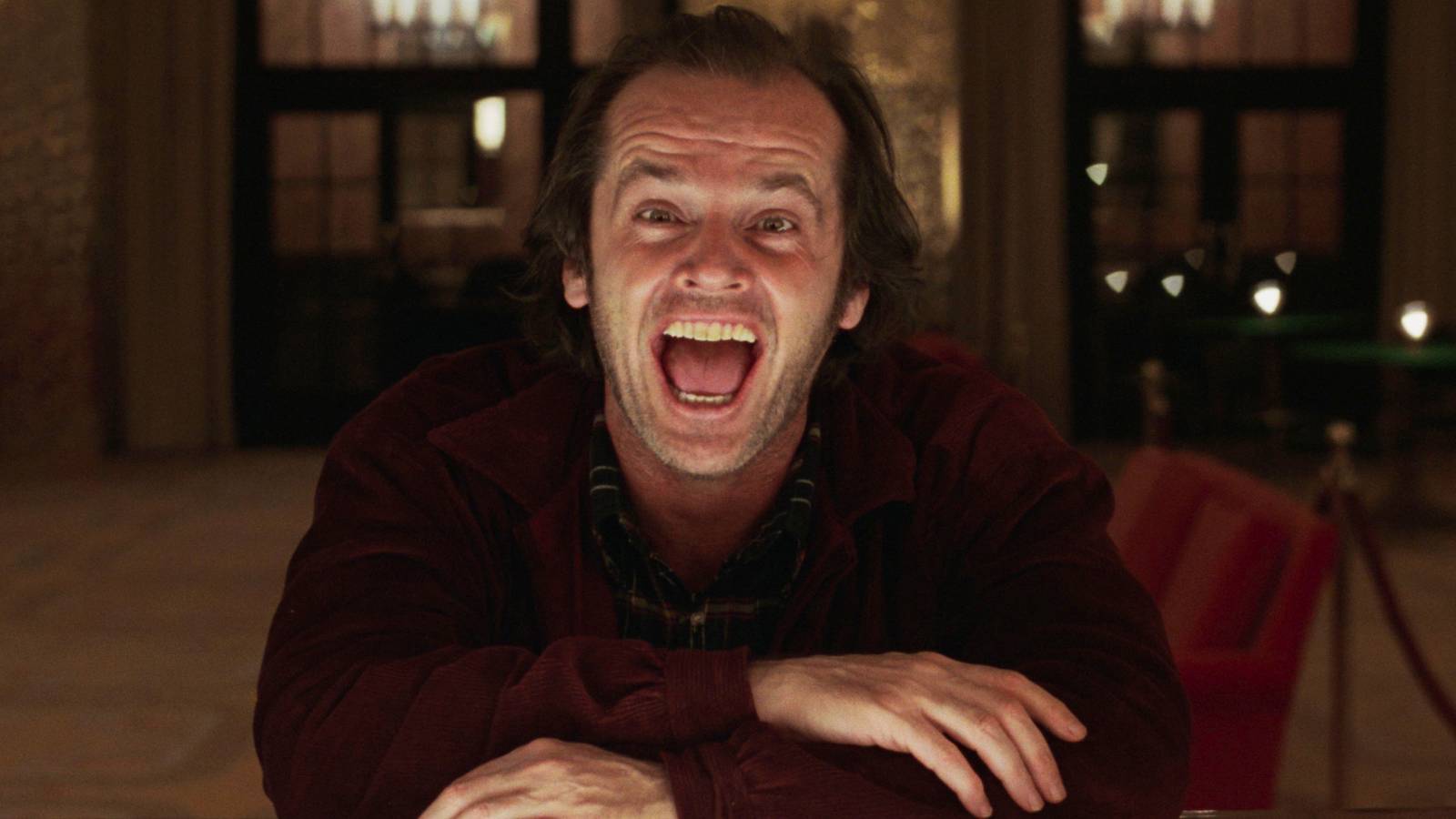
Image via Warner Bros. Pictures Published Oct 8, 2026, 6:17 AM EDT Liam Gaughan is a film and TV writer at Collider. He has been writing film reviews and news coverage for ten years. Between relentlessly adding new titles to his watchlist and attending as many screenings as he can, Liam is always watching new movies and television shows. In addition to reviewing, writing, and commentating on both new and old releases, Liam has interviewed talent such as Mark Wahlberg, Jesse Plemons, Sam Mendes, Billy Eichner, Dylan O'Brien, Luke Wilson, and B.J. Novak. Liam aims to get his spec scripts produced and currently writes short films and stage plays. He lives in Allentown, PA. Sign in to your Collider account Stephen King is not only the master of horror, but the most beloved author in Hollywood because of the sheer number of adaptations of his work that have been made. King writes quickly and comes up with ideas that make for exciting interpretations by engaging filmmakers, mostly because any of his books, novellas, or shorts can be distilled into a simple premise that is easy to market towards an audience. There are certainly a number of terrible King adaptations (including Maximum Overdrive, the only one that he directed), but even the most disappointing have something to recommend about them. King’s name has become a reliable marketing brand that has survived for over 50 years, and today it might actually be as powerful as that of Marvel, DC, or Star Wars. There is no King adaptation that has been discussed more than The Shining, the 1980 classic from Stanley Kubrick that has evolved past its initially polarizing reaction to be praised as one of (if not the single) greatest horror films ever made. The Shining features an all-time villainous turn from Jack Nicholson and an ample amount of subtext that has inspired all sorts of interpretations and conspiracy theories over the years. The most notable aspect of The Shining’s legacy is that it’s one of the few adaptations that King hated and publicly decried; although there are some films that he has praised and other that he has been silent about, The Shining infuriated him because King transformed the character of Jack Torrance from being a sympathetic, tragic figure into an inherently evil one. Despite King’s misgivings, The Shining is now indistinguishable from the version that Kubrick imagined it to be; when Mike Flanagan made the adaptation of the novel’s sequel, Doctor Sleep, he had to merge the influences of both King and Kubrick. The Shining is one of the most celebrated and thoroughly analyzed films of the 20th century, and it speaks to the incredible track record of King adaptations that it is not far and away the best. King’s writing has clearly spoken to certain filmmakers, and The Shining has been outdone only by a select few films that have deeper emotional qualities and come from a more human place. 3 ‘Misery’ (1990) Image via Columbia Pictures Misery is among the most personal novels that King ever wrote because it directly relates to his experience as an author who is dealing with the expectations of a rabid fanbase. King is among the few writers who has dedicated a significant amount of time to explaining what his writing process is like, and Misery makes use of the specifics he has given about the creative process and the notion of “writer’s block". Although the film was meant to be an allusion to the anxieties of fame and the way that it can curb creativity, it has aged into one that perfectly anticipated the nature of toxic fandom in the Internet age. Fans have become so obsessed with specific creators or properties that they feel that they are “owed” something, and can react in extreme ways if their expectations are not met. Anything that would have been deemed to be over-the-top about Misery at the time of its release has become deeply relevant, making it unsurprising that there has never been any attempt to take another stab at this specific material. Although there have been worthy contenders, no other King film has gotten this gnarly. Misery is the first and only one of King’s adaptations to win an Academy Award, as Kathy Bates’ victory in the Best Actress category also marked the rare occasion in which the Oscars have awarded a performance in a horror film. There is a significant amount of bias against genre stories, and the Oscars traditionally have veered away from awarding female performances for characters that are complex, difficult, or straight up villainious. However, the acclaim for Bates was too strong to deny the brilliance of her work, and the film turned her into a star overnight. As terrific as Bates is, James Caan deserves credit for giving a vulnerable and heartbreaking performance, as he was willing to go along with the brutality of the film’s most infamous scene. Although there were several other A-list actors who were considered for the role, including William Hurt, Warren Beatty, Kevin Kline, Gene Hackman, Robert De Niro, and Michael Douglas, Caan was the only one willing to accept the bleakness of the material, and earned a major comeback as the result of its success. 2 ‘Stand by Me’ (1986) Image by Columbia Pictures Stand by Me is the perfect coming-of-age film, and one that has remained timeless all these years later because of how purely it captures the moment of maturation that children go through as they become aware of the darkness in the world. The film is based on King’s short story “The Body,” a relatively simple narrative that isn’t given all that much more expansion in the final product. It’s a thoughtful, patient adventure story that perfectly captures the dynamics between young boys, both in how they converse with one another and why they are drawn to wild adventures. Although it is very much a film about masculinity and what barriers it places on emotion, Stand by Me is a beautifully told story about the compassion that kids show for one another at a young age where they have not learned to be cynical. This is summed up perfectly within the film’s final section, involving a flashforward with Richard Dreyfuss, which can either be seen as emotionally cathartic or utterly devastating, depending on the interpretation. Stand by Me is another entry in the unassailable early canon of Rob Reiner, a filmmaker who managed to make a masterpiece in almost every genre. As a former child actor, Reiner knew how to interact with the young cast and got extraordinary performances out of them, as he was remembered as being a remarkably sensitive and kind-hearted filmmaker. Perhaps the most moving performance in the film is from the late River Phoenix, whose real-life death at far too young of an age would only further color the tragic end to his character. Stand by Me is not only the embodiment of what childhood was like in a specific era, but a film that has served as an inspiration for countless coming-of-age films in the years that have followed. Even Stranger Things’ depiction of a wholesome friendship between middle school friends can be traced back to the perfection of Stand by Me. Collider Exclusive · 8 Questions · 2 Minutes What Is Your Biggest Horror Nightmare? Elm Street · Chucky · Scream · The Conjuring Four horror franchises. Four completely different ways of scaring you. One waits until you fall asleep. One makes sure nobody believes you. One is already in your group of friends. And one is in the house with your family. Answer eight quick questions about how you actually watch horror, and find out which nightmare was built for you. 😴Elm Street(Freddy Krueger) 🧸Chucky(Child's Play) 📞Scream(Ghostface) 🕯️The Conjuring(The Warren Files) FIND YOUR NIGHTMARE → 01 Which horror scene makes you cover your eyes? Four classic images. One of them is worse than the others for you. ASomebody falling asleep when they really should not. BA toy that has moved, and nobody touched it. CA phone ringing in an empty house. DA child talking to somebody who is not there. NEXT QUESTION → 02 You are home alone and you hear a noise. First thought? Everybody has one. It arrives before you have decided anything. AI am exhausted and my mind is playing tricks on me. BSomething in this room is not where I left it. CSomebody is in here with me. DThis house has never felt entirely right. NEXT QUESTION → 03 Which horror movie rule would you break first? Everybody thinks they would survive. Almost nobody actually does. ANever fall asleep. BNever leave it out of your sight. CNever answer the phone. DNever go down to the basement. NEXT QUESTION → 04 Something genuinely frightening happens. What do you do? Not in a film. In your actual living room, tonight. AConvince myself I imagined the whole thing. BTell someone, and brace for them not believing me. CWork out which person I know could be behind it. DGet everybody in the house into one room. NEXT QUESTION → 05 How do you actually watch a horror film? Be honest about this one. Nobody is checking. AFine during. Wide awake at two in the morning. BShouting at the screen that nobody is listening. CCalling the twist out loud before it lands. DThrough my fingers, holding on to something. NEXT QUESTION → 06 Somebody offers you serious money. Which do you still refuse? The amount does not matter. There is one on this list you are not doing. AFall asleep in a room I have never been in before. BKeep an old doll on the shelf facing my bed. CAnswer every unknown number that calls after midnight. DSpend one night alone in a house with a history. NEXT QUESTION → 07 Which feeling stays with you a week after the film? Good horror does not stop when the credits do. ANot wanting to turn the bedroom light off. BNot trusting one particular object in my house. CLooking twice at people I have known for years. DFeeling like something came home with me. NEXT QUESTION → 08 Something wakes you at 3am. What is the worst possibility? Eight questions in, this is the one that decides your nightmare. AThat I am still asleep, and it knows it. BThat the thing nobody believed me about is here. CThat somebody with a key is downstairs. DThat something is in the doorway, watching us sleep. REVEAL MY NIGHTMARE → The Lights Just Went Out Your Nightmare Is…Four franchises, four completely different ways of getting underneath your skin. This is the one built out of your particular fear, why it works so well on you, and what it would leave behind. Elm StreetYour nightmare does not wait outside the door. It waits for you to close your eyes, which you are going to have to do eventually, because nobody has ever won that particular argument. Freddy is horror's cruellest idea: a threat that lives in the one place you cannot guard, cannot lock, and cannot avoid forever. You are the one who is fine during the film and wide awake at two in the morning. Your own head is where this does its damage. These films understood exhaustion as a horror engine. The kids on Elm Street do not lose because they are weak. They lose because they are tired. You can lock every door in the house. You still have to sleep. ChuckyYour nightmare is not really the doll. It is the face of the person you tell, and the way they decide, very kindly, that you have imagined all of it. Chucky works precisely because he is absurd. That is the trap: the more accurately you describe him, the less anybody is going to believe you. You are the one shouting at the screen because the characters are not listening. You know that feeling from real life too. The franchise is at its best when the adults in the room are the real obstacle, and you have met those adults. By the time somebody finally believes you, you will have handled most of it on your own. ScreamYour nightmare has your number, knows your name, and has almost certainly been inside your house before. The worst part is that you already know them. Scream is the only one of these where the killer takes the mask off and turns out to be somebody who was at the party. You are the person who calls the twist out loud before it lands. You watch people the same way you watch films. The franchise made the rules of horror part of the plot, which means the survivors are the ones paying attention. You would be paying attention. Everybody is a suspect, including the person who just offered to walk you home. The ConjuringYour nightmare is not really about you. It is about the people asleep down the hall, and the feeling that whatever is here is not interested in leaving. The Conjuring films are domestic horror. The house, the family, the perfectly ordinary room that quietly stops feeling ordinary. Your instinct is to get everybody into one room. Your fear is protective rather than personal, which is rarer than it sounds. This is the one franchise where belief is the weapon. The people who come through it are the ones who are not alone and refuse to be. Whatever is here did not come for you. It came for the household, and you are the one standing in the hallway. ↻ RETAKE THE QUIZ 1 ‘The Shawshank Redemption’ (1994) Image via Columbia Pictures The Shawshank Redemption is one of the few films ever made that could be described as perfect, even though it wasn’t initially clear what a sizable impact that it had. The Shawshank Redemption was a box office flop that received some Academy Award nominations (even though both Frank Darabont and Tim Robbins were snubbed), but even awards pundits at the time claimed that it was Pulp Fiction that should have won Best Picture over Forrest Gump. The film was eventually able to make its way back into the culture through strong word-of-mouth and a second life on cable, where it became the type of emotionally rewarding experience that audiences turned to in order to take inspiration. As strange as it might sound in the abstract, a drama about a wrongfully imprisoned man might be the single greatest distillation of what hope feels like ever brought to the silver screen. It’s also an unparalleled depiction of friendship, as the dynamic between Andy and Red is what all screen duos strive for. Although Morgan Freeman is a beloved actor who has given countless great performances, his role in The Shawshank Redemption is what he will be best remembered for. The Shawshank Redemption is a remarkable cinematic debut for Darabont, who had previously only dabbled in television films. The only other director who is as good at cracking King’s material is Reiner, who helped guide the creative development of The Shawshank Redemption and produced it through his company Castle Rock (which coincidentally is named after a King reference). Darabont has an understanding of the mix of lyricism and reality that is essential to King’s writing, as it calls for a poetic sense of symbolism alongside grounded characters that have real stakes. The Shawshank Redemption so acutely embodies feelings of guilt, fear, helplessness, and anger that the emotional climaxes it reaches are completely earned, and it never feels as if the story is being manipulative. These would be qualities that Darabont would carry on to the rest of his output as a director, as he also helmed two other great King adaptations with a different prison drama in The Green Mile and one of the 21st century’s most disturbing works of horror with The Mist. Yet, The Shawshank Redemption has entered into an all-time canon of films that are as technically impressive as they are deeply moving. It was for the longest time that film scholars either cited Citizen Kane or The Godfather as the greatest film ever made, but The Shawshank Redemption has become a classic that is worth holding in the same regard.
Only 3 Stephen King Movies Are Better Than 'The Shining'
Full Article
Original Source
Read the full article at Collider →KhanList aggregates and links to publicly available news content. We do not host full articles from third-party sources. Always verify important information with original sources.