
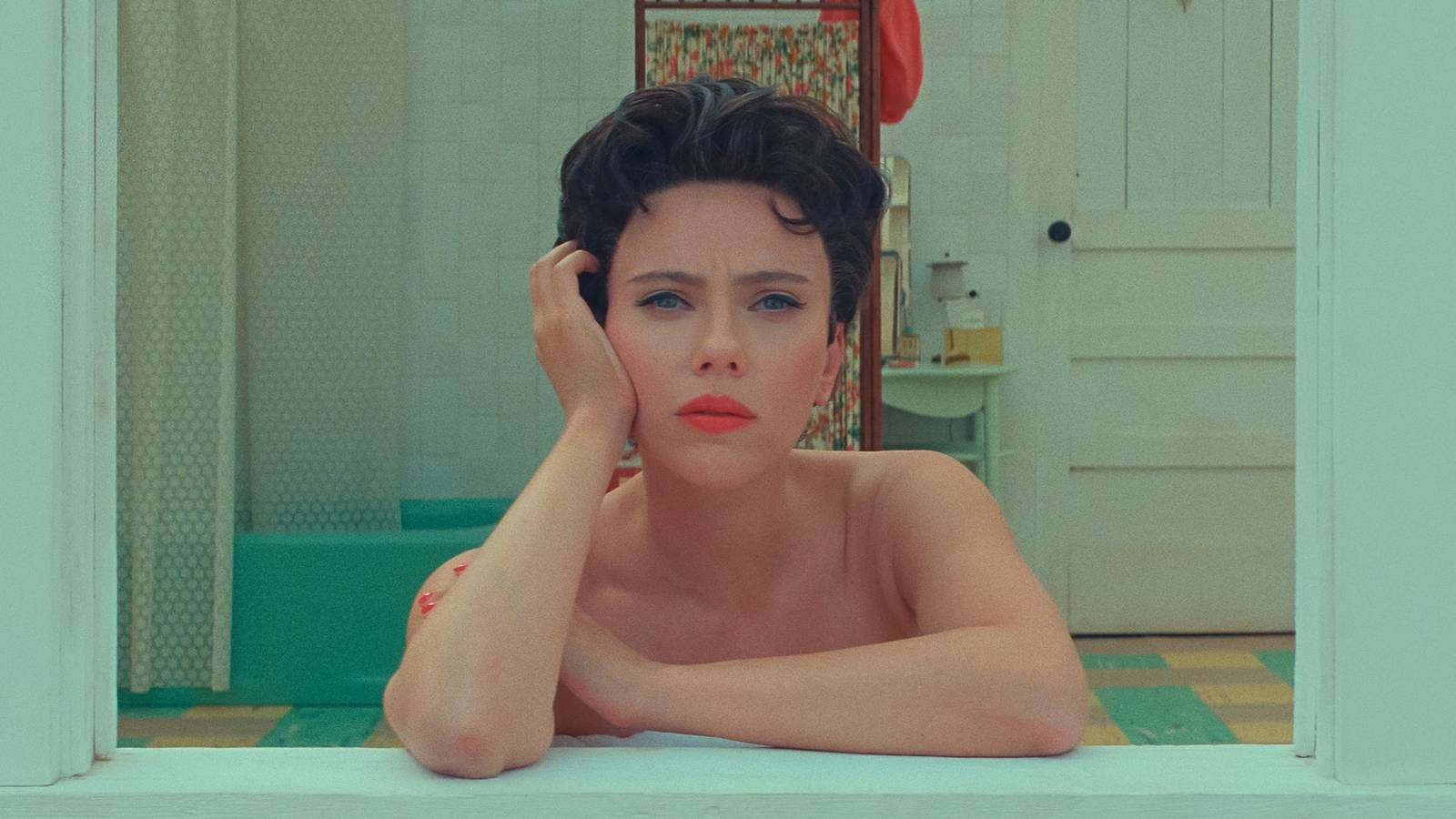
Image via Focus Features / Courtesy Everett Collection Published Sep 12, 2026, 12:36 PM EDT Luc Haasbroek is a writer and videographer from Durban, South Africa. He has been writing professionally about pop culture for eight years. Luc's areas of interest are broad: he's just as passionate about psychology and history as he is about movies and TV. He's especially drawn to the places where these topics overlap. Luc is also an avid producer of video essays and looks forward to expanding his writing career. When not writing, he can be found hiking, playing Dungeons & Dragons, hanging out with his cats, and doing deep dives on whatever topic happens to have captured his interest that week. Sign in to your Collider account We're only just over halfway through, and the 2020s have already been an eventful decade for cinema. The pandemic brought the theatrical industry to its knees and streaming services became more dominant than ever, yet great filmmakers continued to push the medium in bold new directions. Today, after a few years of uncertainty, cinema is thriving more than ever on both the big and small screens. The result has been a stellar collection of modern classics, from intimate dramas about memory and grief to enormous and ambitious historical epics. Each of these movies has earned the label of "masterpiece," and time can only be kinder to their already growing reputation. 'The Father' (2020) Image via Embankment Films "I feel as if I'm losing all my leaves." This psychological drama is one of the most powerful depictions of dementia ever put to screen. An Oscar-winning Anthony Hopkins delivers one of his finest performances (which is truly saying something) as the elderly Anthony, whose mind is slowly slipping away from him. The audience is placed inside his disorientation: we watch as Anthony's apartment subtly changes around him, characters inexplicably appear with different faces, and seemingly settled facts become unreliable. Time loops back on itself, conversations repeat with slight variations, clever editing hammering the stylistic approach home. The directorial choices are visionary across the board. For instance, to replicate the confusion of face blindness and memory gaps, the film swaps actors without warning. Masterclass performances from all involved, including Olivia Colman and Rufus Sewell, do the rest of the heavy lifting. 'The Souvenir Part II' (2021) Image via A24 "Anthony was a junkie." This is the finest film by director Joanna Hogg, a master of restrained dramas. The Souvenir Part II is the rare sequel that not only expands on its predecessor but fundamentally changes how viewers understand it. Following Anthony's (Tom Burke) death at the end of the first movie, it sees Julie (Honor Swinton Byrne) returning to film school and attempting to process a relationship that she increasingly realizes she never completely understood. Her grief gradually becomes inseparable from her development as an artist. Rather than being dry or dour, the story that follows is funny, awkward, painfully intimate, and remarkably perceptive about the creative process. Subtle writing, strong performances, and three-dimensional characters are at a premium here. The Souvenir Part II is deeply autobiographical, too, with Hogg drawing on some of her experiences to create one of the decade's most poignant cinematic self-portraits. 'Sentimental Value' (2025) Image via Neon "Why didn't our childhood ruin you?" Sentimental Value is the latest masterpiece from The Worst Person in the World's Joachim Trier, reuniting the director with star Renate Reinsve. Here, she plays Nora, a successful stage actress who is close to her sister Agnes (Inga Ibsdotter-Lilleås) but estranged from their father Gustav (Stellan Skarsgård), an acclaimed Ingmar Bergman-type filmmaker. It's a rich family drama, a layered story about parents and children, sisters, artists, inherited trauma, and the messy ways people attempt to communicate. Instead of sticking to a linear narrative, Trier structures the 2-hour-and-14-minute runtime like a multi-perspective novel divided into distinct chapters. Even one great character study would have been impressive, but here he presents several. He's assisted by a superb, committed cast that also includes Elle Fanning. Each of the four main players complements the others perfectly, making Sentimental Value way more than the sum of its parts. 'Aftersun' (2022) Image via A24 "I think it's nice that we share the same sky." Charlotte Wells' astonishing, semi-autobiographical feature debut follows 11-year-old Sophie (Frankie Corio) on a Turkish holiday with her young father Calum (Paul Mescal). Their vacation initially appears almost mundane, consisting of swimming, meals, excursions, jokes, arguments, and shaky camcorder footage. Beneath that ordinary surface, however, something is terribly wrong. The adult Sophie is effectively reconstructing a memory, attempting to understand a father whom she loved but could never fully know. This dual perspective infuses everyday, happy vacation moments with an overwhelming, retroactive sense of dread and heartbreak. In the process, Wells demonstrates a remarkable capacity to convey inner experiences cinematically. Her direction here is at times almost impressionistic. Mescal and Corio deserve praise too: the former is brilliantly restrained, while the latter turns in the greatest performance by a child actor in years. 'Drive My Car' (2021) Image via Bitters End "We must keep on living." Based on the fantastic Haruki Murakami short story, Drive My Car introduces us to theater director Yūsuke Kafuku (Hidetoshi Nishijima), reeling from the sudden death of his wife Oto (Reika Kirishima). He's traveling to Hiroshima for a production of Uncle Vanya, and festival rules require him to accept a chauffeur, Misaki (Tōko Miura). Throughout their journeys, the initially distant pair gradually develop an unusual intimacy. Director Ryusuke Hamaguchi doesn't rush his characters (the film is three hours long), instead allowing scenes to breathe and conversations to unfold in real-time. It's a slow-burn, but when the emotional dam finally breaks, the payoff feels earned, and all the more powerful for it. The story's weight and complexity sneaks up on you, making for a quiet, introspective, memorable statement on the limits of knowing another person. 'Killers of the Flower Moon' (2023) Image via Paramount Pictures/Apple TV+ "Can you find the wolves in this picture?" With Killers of the Flower Moon, Martin Scorsese turns the murders of wealthy Osage people in 1920s Oklahoma into something stranger and more unsettling than a conventional historical drama. Leonardo DiCaprio gives one of his most unusual performances here as Ernest Burkhart, a weak, greedy man who somehow appears capable of loving Mollie (Lily Gladstone) even while participating in the conspiracy destroying her Osage family, all of it orchestrated by his uncle, the charismatic, diabolical William Hale (Robert De Niro, at the top of his game). The film has the scale and aesthetic of a Western epic, yet it fundamentally dismantles a lot of American mythology. In the end, Killers of the Flower Moon is simultaneously a revisionist Western, a gangster movie, a love story poisoned by betrayal, and a reckoning with a country's violent history. Collider Exclusive · Oscar Best Picture Quiz Which Oscar Best PictureIs Your Perfect Movie? Parasite · Everything Everywhere · Oppenheimer · Birdman · No Country Five Oscar Best Picture winners. Five completely different visions of what cinema can be — and what it can do to you. One of them is the film that was made for the way your mind works. Ten questions will figure out which one. 🪜Parasite 🌀Everything Everywhere ☢️Oppenheimer 🐦Birdman 🪙No Country for Old Men FIND YOUR FILM → 01 What kind of film experience do you actually want? The best movies don't just entertain — they leave something behind. ASomething that pulls the rug out — that makes me think I'm watching one kind of film and then reveals I'm watching another entirely. BSomething overwhelming — funny, sad, absurd, and genuinely moving, all at once. CSomething grand and weighty — a film that makes me feel the full scale of what I'm watching. DSomething formally daring — a film that pushes what cinema can even do. ESomething lean and relentless — pure tension with no wasted frame. NEXT QUESTION → 02 Which idea grabs you most in a film? Great films are driven by a central obsession. What's yours? AClass, inequality, and what people are willing to do when desperation meets opportunity. BIdentity, family, and the chaos of trying to hold your life together when everything is falling apart. CGenius, moral responsibility, and the catastrophic weight of a decision you can never take back. DEgo, legacy, and the terror of becoming irrelevant while you're still alive to watch it happen. EEvil, chance, and whether moral order actually exists or if we just tell ourselves it does. NEXT QUESTION → 03 How do you like your story told? Form is content. The way a story is shaped changes what it means. AGenre-twisting — I want it to start in one lane and migrate into something completely different. BMaximalist and genre-blending — comedy, action, drama, sci-fi, all in one ride. CEpic and non-linear — cutting between timelines, building a mosaic of cause and consequence. DA single unbroken flow — I want to feel like I'm living it in real time, no cuts to safety. ESpare and precise — every scene doing exactly what it needs to do and nothing more. NEXT QUESTION → 04 What makes a truly great antagonist? The opposition defines the protagonist. What kind of opposition fascinates you? AA system — invisible, structural, and almost impossible to fight because it has no single face. BThe self — the ways we sabotage, abandon, and fail the people we love most. CHistory — the unstoppable momentum of events that no single person can stop or redirect. DThe industry — the machinery of culture that chews up talent and spits out irrelevance. EPure, implacable evil — a force so certain of itself it becomes almost philosophical. NEXT QUESTION → 05 What do you want from a film's ending? The final note is the one that lingers. What do you want it to sound like? AShock and inevitability — a conclusion that recontextualises everything that came before it. BEarned emotion — I want to cry, laugh, and feel genuinely hopeful, even if the world is a mess. CDevastation and grandeur — an ending that makes me sit in silence for a few minutes after. DAmbiguity — something that leaves enough open that I'm still thinking about it days later. EBleakness — an honest refusal to pretend the world is tidier than it actually is. NEXT QUESTION → 06 Which setting pulls you in most? Where a film takes place shapes everything — mood, stakes, what's even possible. AA gleaming modern city with a hidden underside — beauty masking rot, wealth masking desperation. BA collapsing suburban life that opens onto something infinite — the multiverse of a single ordinary person. CThe corridors of power and science at a world-historical turning point — where decisions echo for decades. DThe grimy, alive chaos of New York and Hollywood — fame as both destination and trap. EVast, indifferent landscape — desert and highway where violence arrives without warning or reason. NEXT QUESTION → 07 What cinematic craft impresses you most? Every great film has a signature — a technical or artistic element that makes it unmistakable. AProduction design and mise-en-scène — every frame composed to carry meaning beneath the surface. BEditing and tonal control — the ability to move between registers without losing the audience. CScore and sound design — music that becomes inseparable from the dread and awe of what you're watching. DCinematography as performance — the camera not recording events but participating in them. ESilence and restraint — what's left unsaid and unshown doing more work than any dialogue could. NEXT QUESTION → 08 What kind of main character do you root for? The protagonist is the lens. Who you choose to follow says something about you. ASomeone smart and resourceful who makes increasingly dangerous decisions under pressure. BSomeone overwhelmed and ordinary who turns out to be capable of something extraordinary. CA brilliant, tortured figure whose gifts and flaws are inseparable from each other. DA self-destructive artist whose ego is both their superpower and their undoing. EA quiet, principled person trying to make sense of a world that has stopped making sense. NEXT QUESTION → 09 How do you feel about a film that takes its time? Pace is a choice. Some films sprint; others let tension accumulate slowly, deliberately. AI love a slow build when I know the payoff is going to be seismic — patience for a devastating reveal. BGive me relentless momentum — I want to feel breathless and emotionally spent by the end. CEpic runtime doesn't scare me — if the material demands three hours, give me three hours. DI want it to feel propulsive even when nothing is technically happening — restless energy throughout. EDeliberate and unhurried — I want dread to accumulate in the spaces between the action. NEXT QUESTION → 10 What do you want to feel walking out of the cinema? The best films leave a mark. What kind of mark do you want? AUnsettled — like I've just seen something I can't fully explain but can't stop thinking about. BMoved and energised — like the film reminded me what actually matters and gave me something to hold onto. CHumbled — like I've been in the presence of something genuinely important and overwhelming. DExhilarated — like I've just seen cinema doing something it's never quite done before. EHaunted — like a cold, quiet dread that stays with me for days. REVEAL MY FILM → The Academy Has Decided Your Perfect Film Is…Your answers have pointed to one Oscar Best Picture winner above all others. This is the film that was made for the way your mind works. ParasiteYou are drawn to films that operate on multiple levels simultaneously — that begin in one genre and quietly, brilliantly migrate into another. Bong Joon-ho's Parasite is a film about class, desire, and the architecture of inequality that manages to be darkly funny, deeply suspenseful, and genuinely shocking across a single extraordinary running time. Your instinct is for cinema that hides its true intentions until the moment it's ready to reveal them. Parasite is exactly that — a film that rewards close attention and punishes assumptions, right up to its devastating final image. Everything Everywhere All at OnceYou want it all — and this film gives you all of it. The Daniels' Everything Everywhere All at Once is one of the most maximalist films ever made: action comedy, multiverse sci-fi, family drama, existential crisis, and a genuinely earned emotional core that sneaks up on you amid the chaos. You are someone who responds to ambition, who doesn't want cinema to choose between being entertaining and being meaningful. This film refuses that choice entirely. It is overwhelming by design, and its overwhelming nature is precisely the point — because the feeling of being crushed by infinite possibility is exactly what it's about. OppenheimerYou are drawn to cinema on a grand scale — films that understand history not as a backdrop but as a force, and that place their characters inside that force and watch what happens. Christopher Nolan's Oppenheimer is a film about the terrifying gap between what we can do and what we should do, told with the full weight of one of the most consequential moments in human history behind it. You want your films to feel important without feeling self-important — to earn their ambition through sheer craft and the gravity of their subject. Oppenheimer does exactly that. It is enormous, complicated, and refuses easy comfort. BirdmanYou are drawn to films that foreground their own construction — that make the how of the filmmaking part of the what it's about. Alejandro González Iñárritu's Birdman, shot to appear as a single continuous take, is cinema examining itself through the cracked mirror of a fading actor's ego. You respond to formal daring, to the feeling that a film is doing something that probably shouldn't be possible. Michael Keaton's performance and Emmanuel Lubezki's restless camera create something genuinely unlike anything else — a film that is simultaneously about creativity, relevance, self-destruction, and the impossibility of ever truly knowing if your work means anything at all. No Country for Old MenYou are drawn to cinema that trusts silence, that refuses to explain itself, and that treats dread as a form of meaning. The Coen Brothers' No Country for Old Men is a film about the arrival of a new kind of evil — implacable, arbitrary, and utterly indifferent to the moral frameworks we use to make sense of the world. It is one of the most formally controlled films ever made, and its controlled restraint is what makes it so terrifying. You want your films to haunt you, not comfort you. You are not interested in resolution if resolution would be dishonest. No Country for Old Men is honest in a way that most cinema never dares to be. ↻ RETAKE THE QUIZ 'Asteroid City' (2023) Image via Focus Features "You can't wake up if you don't fall asleep." Yet another pastel gem from Wes Anderson. Asteroid City operates on several levels simultaneously: a TV broadcast documenting the creation of a stage play called Asteroid City, as well as the play itself, a sprawling ensemble piece set in a retro-futuristic version of the American Southwest in the 1950s. The cast is fittingly massive and studded with stars, including Scarlett Johansson, Jason Schwartzman, Tom Hanks, and many more. At first glance, Asteroid City appears to contain everything people imitate when parodying a Wes Anderson movie: immaculate compositions, deadpan performances, stylized dialogue, eccentric children, elaborately constructed sets, and more. Yet underneath that unmistakable style lies one of the director's saddest and most searching stories. Really, Asteroid City is about people attempting to understand experiences for which no satisfying explanation exists. 'One Battle After Another' (2025) Image via Warner Bros. "What time is it?" Paul Thomas Anderson teamed up with Leonardo DiCaprio for this banger. Loosely inspired by Thomas Pynchon's Vineland, One Battle After Another follows former revolutionary Bob Ferguson as the consequences of his radical past return years later, placing his daughter Willa (Chase Infiniti) in danger. Leo is tremendously funny as Bob, while an Oscar-winning Sean Penn turns Colonel Steven J. Lockjaw into a grotesque embodiment of authoritarian obsession. The film is ambitious and symphonic, marshaling an array of tones into a cohesive whole: political thriller, black comedy, action movie, and family drama. At the same time, it's a portrait of a country whose ideological conflicts have become simultaneously frightening and absurd. That message proved divisive, with the movie quickly being dragged into the culture wars, yet none of that ever overshadows its heart: the bond between father and daughter. 'Oppenheimer' (2023) Image via Universal Pictures "Now I am become Death, the destroyer of worlds." Although The Odyssey is grander in terms of visual bravura and production sweep, Oppenheimer is Christopher Nolan's greatest achievement in terms of themes and character. Cillian Murphy delivers an amazing lead performance as J. Robert Oppenheimer, presenting him as brilliant, arrogant, charismatic, self-destructive, and increasingly haunted by the consequences of his achievement. He becomes a great stand-in for humanity as a whole and our uneasy relationship with our most dangerous creations. Nolan's restless editing transforms scientific discovery and political maneuvering into something resembling a thriller, while Ludwig Göransson's score helps maintain an almost relentless sense of momentum. We get temporal trickery, pioneering visual effects, phenomenal sound design, and a chilling message. Oppenheimer frames the creation of the atom bomb not as a historical event that ended a war, but as the beginning of a chain reaction that still threatens the world today. 'The Zone of Interest' (2023) Image via A24 "The life we enjoy is very much worth the sacrifice." There have been plenty of Holocaust films over the decade, yet Jonathan Glazer still found something new and urgent to say with The Zone of Interest. It focuses on Auschwitz commandant Rudolf Höss (Christian Friedel) and his family as they pursue an almost idyllic domestic existence in a house immediately beside the concentration camp. The children play, the adults worry about mundane matters, and beyond the wall, mass murder continues. Glazer never shows that violence directly; instead, it exists primarily through sound: gunshots, screams, machinery, trains, and an ominous industrial rumble that becomes part of the family's everyday environment. The result is a powerful portrait of the banality of evil. By stripping away the cinematic tropes of mustache-twirling villainy, The Zone of Interest exposes a far more terrifying reality: how easily ordinary human beings can compartmentalize atrocity. The Zone of Interest Release Date December 15, 2023 Cast Christian Friedel, Sandra Hüller, Johann Karthaus, Luis Noah Witte, Nele Ahrensmeier, Lilli Falk, Anastazja Drobniak, Cecylia Pekala, Kalman Wilson, Maximilian Beck, Stephanie Petrowitz, Benjamin Utzerath, Thomas Neumann, Klaudiusz Kaufmann, Marie Rosa Tietjen, Jakub Sierenberg, Marek Łukasik, Shenja Lacher, Imogen Kogge, Christine Schröder, Ralph Herforth, Daniel Holzberg, Rainer Haustein, Wolfgang Lampl, Freya Kreutzkam, Leo Meier, Sascha Maaz, Ralf Zillmann Runtime 105 minutes Director Jonathan Glazer Writers Jonathan Glazer
Only 10 Movies From the 2020s Are Actual Masterpieces
Full Article
Original Source
Read the full article at Collider →KhanList aggregates and links to publicly available news content. We do not host full articles from third-party sources. Always verify important information with original sources.