
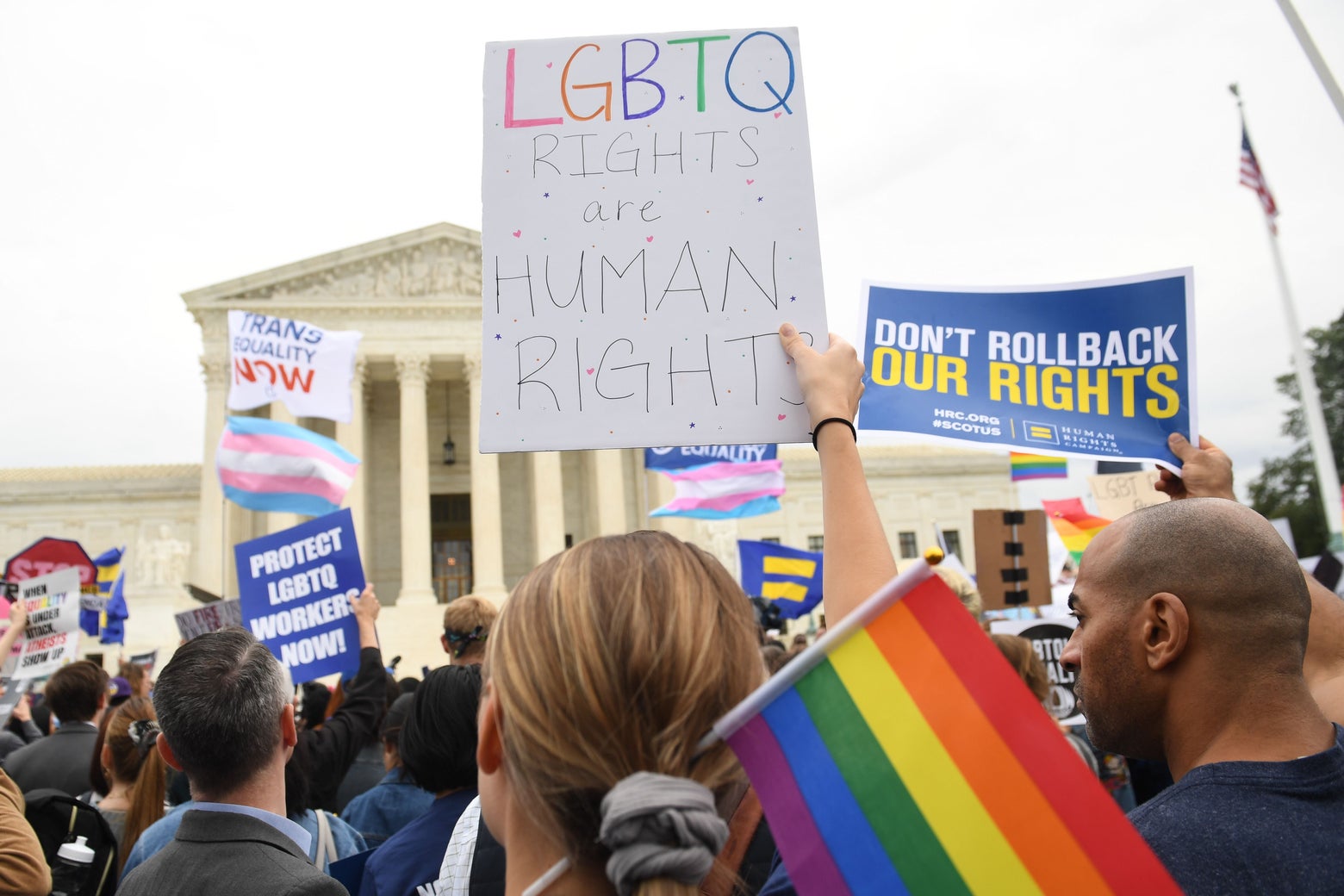
Jurisprudence Demonstrators outside the Supreme Court in 2019. Saul Loeb/AFP via Getty Images. Sign up for Executive Dysfunction, a weekly newsletter that highlights one under-the-radar story about how Trump is changing the law—or how the law is pushing back—and keeps you posted on the latest from Slate’s Jurisprudence team. A new term of the Supreme Court begins this week, and threats to LGBTQ+ people are already on the calendar. Several cases seem likely to build on several consecutive terms in which the court deployed a combination of procedural and substantive strategies to severely undermine the rights of sexual and gender minorities. In just a few years, the court allowed hurtful discrimination and infliction of harm on vulnerable LGBTQ+ individuals, and particularly children and youth, in a series of cases, including 303 Creative v. Elenis, U.S. v. Skrmetti, Mahmoud v. Taylor, Chiles v. Salazar, West Virginia v. B.P.J., and Mirabelli v. Bonta. Each of these conservative victories now supplies ammunition to the new lawsuits already scheduled for argument in the coming months and to those still pending. Two cases that try to legitimize the use of public money and public institutions to promote this anti-LGBTQ+ drive are already scheduled for argument. On Nov. 3, the court will hear St. Mary Catholic Parish v. Roy, brought by the Becket Fund, a conservative religious-rights advocacy group. The religious preschools petitioning the court in this case want access to Colorado’s public preschool funding, but insist they should be allowed to use the money while excluding LGBTQ+ families. Such discrimination is currently forbidden under Colorado’s antidiscrimination laws and in many other states, but the petitioners seek both an exemption and a subsidy. If they win, which seems likely with this court, taxpayers would be required to help finance the exclusion of LGBTQ+ families from basic state services. Then, on Dec. 7, the court is scheduled to hear arguments in International Partners for Ethical Care, Inc. v. Ferguson, a case handled by another conservative religious legal advocacy group, First Liberty Institute, collaborating with Schaerr Jaffe, a law firm central to the conservative movement’s anti-LGBTQ+ legal strategies. In the name of parental rights, which the current court has applied unevenly only to parents hostile to LGBTQ+ life while denying them from parents who support their LGBTQ+ children, this litigation challenges Washington state’s statutory protections of access to safe state-licensed youth shelters and subsidized mental healthcare counseling. The petition ostensibly focuses on the procedural issue of the parents’ standing to sue. But for LGBTQ+ minors experiencing family rejection on religious grounds, the stakes are painfully concrete. Shelter and counseling can offer a lifeline to those vulnerable adolescents. If the court allows parental objection to prevent access to this state-sponsored help, minors can find themselves twice abandoned: first by their families and then by the state. Other threats may move even faster than the argument calendar. In Trump v. Kingdom, the administration has asked the court, on the emergency docket, to lift an injunction currently preventing it from implementing policies that seek to deprive trans prisoners of much-needed healthcare and social accommodations. An emergency order could come soon, changing these prisoners’ lives before most people even learn the case exists. Meanwhile, more attacks initiated by conservative advocacy groups and the Department of Justice are waiting in the wings and could be added to the court’s docket by any four of its six conservative members. Currently pending, for example, is the petition for certiorari in Polk v. Montgomery County Public Schools, a case led by the largest conservative advocacy group, Alliance Defending Freedom. Polk follows the pattern of using public resources to assault sexual and gender minorities. It asks the court to exempt public school teachers from policies designed to protect trans students, allowing those teachers to invoke religious beliefs or speech rights to justify misgendering their students. A win for the petitioners would turn public schools into unsafe spaces for LGBTQ+ youth. Similarly, the pending petition in Trump v. Thakur, led by the DOJ, seeks the court’s approval to withhold federal research funding for scientific studies that the government considers supportive of diversity, equity, and inclusion goals, including protections for LGBTQ+ people. The administration particularly pursues greater latitude to avoid funding studies that buttress what the government calls “gender ideology.” This battle, and the chilling effect it creates, directly put LGBTQ+ health and well-being at risk. Taken together, the cases the court already agreed to hear and those it still may take up invite the conservative members of the court to continue undermining the LGBTQ+ rights that survived the previous few terms. Across those cases, a troubling pattern emerges—a wish to direct public money at institutions that exclude, coupled with a shrinking of protections in institutions that are supposed to serve everyone. The most recent legal attacks on the LGBTQ+ community and particularly on its transgender members are relentless and come from multiple directions: the White House, the Justice Department, and conservative legal organizations. If the recent terms are a prologue, the coming term is bleak. It threatens to leave LGBTQ+ people—particularly the young ones—with fewer places to learn without stigma, seek care, find shelter, or turn for support. Anyone who cares should start watching carefully, noticing which cases the court takes, what the justices say at argument, and what they do through less visible emergency orders. By the time the major opinions are released at the end of the term, it might be too late to sound the alarm. Jurisprudence Supreme Court Transgender Judiciary LGBTQ+
One Vulnerable Group Is Again in the Supreme Court’s Crosshairs More Than Others
Full Article
Original Source
Read the full article at Slate →KhanList aggregates and links to publicly available news content. We do not host full articles from third-party sources. Always verify important information with original sources.