
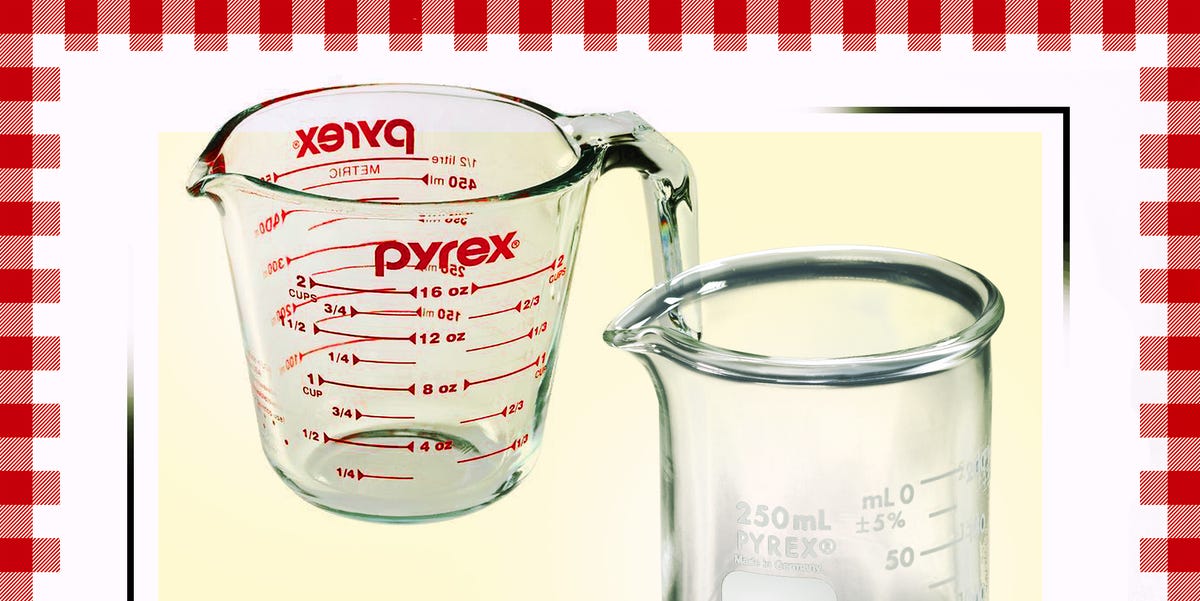
5 min readHere’s what you’ll learn when you read this story:How to know what kind of glass baking dish or measuring cup you’re usingWhat makes borosilicate glass different from soda lime glass, and why your Pyrex might not do well under extreme temperature changes.How to use your glass cookware safely no matter what kind you haveI clearly remember the very last time I used one of my reliable old pyrex baking dishes, and it makes me blush. I was making a chicken recipe but had forgotten to add enough liquid to the pan. In the interest of saving time, I took the hot pan out of the oven, opened a carton of chicken stock from the fridge, and tipped a little in. That’s when my pyrex baking dish shattered into three or four large glass shards, mingled with the now ruined chicken. It broke apart the moment the cold stock touched the hot glass.Though I was shocked, I realized what my mistake was—the glass couldn’t bear the sudden temperature change. But it made me wonder: wasn’t pyrex designed specifically to hold its structural integrity under just these kinds of temperature fluctuations? When I started searching, I found that people have been complaining about their pyrex cookware exploding for years. Perhaps they just weren’t reading the instructions. Then, I stumbled across a different reason for my destroyed dinner: there’s pyrex, and then there’s PYREX.The first experiment to use PYREX for cooking took place more than a century ago, in the kitchen of Corning Glass Works physicist Jesse T. Littleton, whose wife used a sawn-off glass battery jar to bake in the oven. It was made of borosilicate and that was the key. Used today in cookware and lab equipment such as beakers, Corning’s “Nonex” glass was invented for hot, burning-oil railway lanterns that needed to stay intact when exposed to cold weather. Calling it fire-glass, the company later named it PYREX®, a play on the word “pyro,” meaning “fire” in Greek, and “ex,” from the label that identified its earlier product.Since then, PYREX has withstood the intense temperatures and harsh chemical onslaughts of laboratory work. It works well for temperatures of up to 425 degrees Fahrenheit in household kitchens.The secret to the original PYREX’s heat resilience is its borosilicate composition, a glass made of silica and boron trioxide. Glass expands when it’s hot and contracts while cooling. Heat causes its atoms to vibrate and move apart, weakening the glass. However, boron atoms don’t vibrate or separate as much as other elements, making the overall glass more stable.Corning IncorporatedPYREX labware is made of borosilicate glass to withstand high heat and tough chemicals.Around the 1950s, Corning also began making PYREX bakeware out of tempered soda lime glass, according to Smithsonian magazine. In 1998, Corning sold its consumer product operations to Borden, later renamed World Kitchen, then Corelle Brands. Corelle continued to produce the tempered soda lime bakeware in America—this is called “pyrex,” all lowercase. These days, Corning only makes PYREX borosilicate labware products, such as beakers, for scientific use. In Europe, the brand International Cookware still makes borosilicate cookware.✅ To have a more accurate idea of what you're buying, here’s a good rule of thumb: “Pyrex” is a brand name with clear distinctions depending on how it’s written. Only cookware marked “PYREX”—all uppercase—is likely made of borosilicate glass. However, most of this is made in Europe; lowercase pyrex brand cookware made in the U.S. has been tempered soda lime for decades. It’s still possible to locate some Pyrex brand borosilicate cookware in the U.S., but it’s harder to find. If you see the label “pyrex,” it definitely means the glass is made of tempered soda lime.Despite its deep roots in American kitchens, home cooks have been complaining about pyrex shattering in the oven or during rapid temperature changes since the early 2000s. In 2010, the nonprofit organization Consumer Reports released a warning following a yearlong investigation of pyrex shattering incidents. “When we examined 163 incidents in detail, we discovered at least 42 reports of injuries. While hundreds of millions of dishes are used safely each year, we believe the situation is serious enough that we have asked the Consumer Product Safety Commission to investigate,” according to the report.During testing, soda lime glass shattered at lower temperatures than “more expensive” borosilicate Pyrex bakeware, the report continued. Consumer Reports found that the iconic glass bakeware produced in America today is of soda lime, while the European-made products investigators tested were borosilicate.Consumers also complained that the manufacturer’s instructions were confusing. Consumer Reports found that the small print on the back of products containing the necessary precautions is “easy to miss.”When it comes to oven-safe practices for your pyrex, take these precautions by America’s Test Kitchen: Place a dish hot from the oven onto a dry cloth to avoid contact with anything cool.Never add liquid to hot glassware.Never expose pyrex to direct heat, such as the broiler.Never transfer a dish directly from the freezer to the oven, or vice versa. Let it sit at room temperature for 30 minutes first.Borosilicate glass can withstand up to three times as much thermal shock as soda lime silicate. “When glass bakeware does shatter, consumers report, it can break into sharp shards that go flying, raising the risks of injuries. This contrasts with claims from one of the manufacturers that its glass bakeware breaks into ‘relatively small pieces generally lacking sharp edges,’” according to the report.Soda lime glass is made of about 60 to 75 percent silica, 12 to 18 percent soda, and 5 to 12 percent lime. Heat-treated and then rapidly cooled on its exterior, the outside of tempered soda lime glass solidifies more quickly than the center. While cooling, the inside pulls at the stiffer exterior layer, creating tension that makes the whole piece more durable. If it does break, tempered glass forms rounded, cube-shaped chunks, instead of the sharp shards of untempered soda lime glass—think about the last time you dropped a drinking glass.Untempered soda lime glass is used for items that aren’t supposed to be heated, such as drinking glasses and windows. It isn’t safe for either the oven or the microwave oven.So look for a European provenance, or simply “borosilicate” in the description before you buy your next glass baking dish. I know I will, because I’m pretty sure I’ve only ever owned the soda lime version.Before joining Popular Mechanics in 2022, Manasee Wagh worked as a science journalist, a newspaper reporter, a technical writer, and an engineer. She has a bachelor's degree in computer engineering and a master’s degree in journalism. Her favorite stories are about the discoveries that unearth even deeper mysteries, and she enjoys helping people understand the science behind the remarkable world we live in. She lives in the Northeast with her two favorite people and one curious, feisty feline, but always seeks to combine her love of food, nature, and travel into memorable journeys away from home.
One Small Kitchen Mistake Shattered My Baking Dish. Let This Essential Tip Save Your Next Holiday Dinner.
Full Article
Original Source
Read the full article at Popularmechanics →KhanList aggregates and links to publicly available news content. We do not host full articles from third-party sources. Always verify important information with original sources.