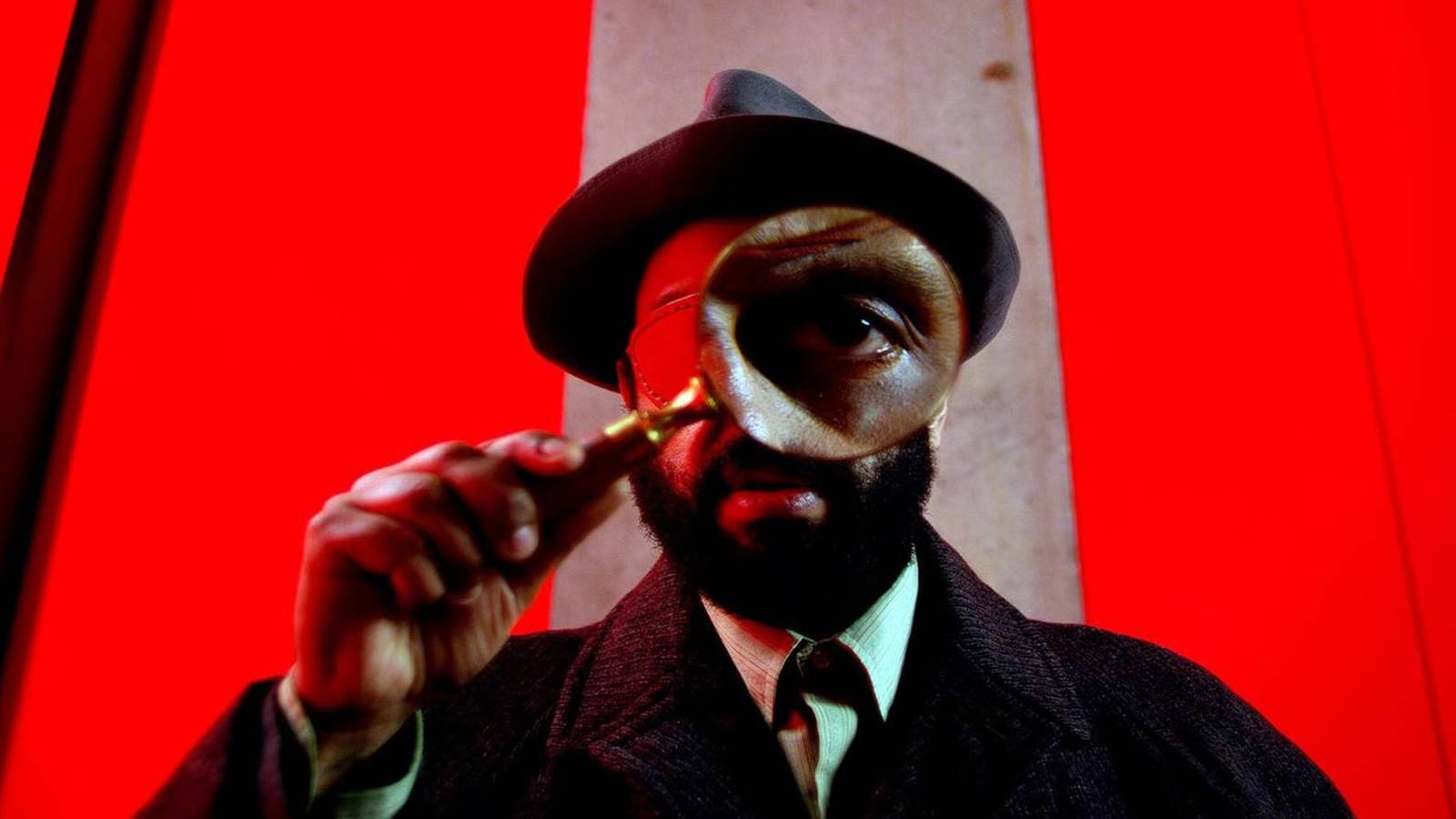
Image via Channel 4 Published Aug 7, 2026, 2:02 PM EDT Currently a features writer at Collider, Elisa Guimarães is an arts and entertainment journalist and a critic with over a decade of experience. Passionate about movies and TV shows as a whole, she started her career when she was still in college, writing for a local newspaper after a brief stint in film school. However, her love for all things media-related can be dated back to her childhood, as she was raised in a family of librarians and cinephiles. She adores coming of age stories, true crime, teen dramas, science fiction, horror, and some other things as well. Elisa is also a published author of short stories in Portuguese, as well as a translator and a master in linguistics. As of 2023, she's in the process of working towards her PhD. Sign in to your Collider account It's always a bummer when a show we really love gets canceled. It is perhaps even more upsetting when it's a show that could have changed the entire way we look at television that gets the ax. In 2013, British network Channel 4 seemed to have hit the jackpot with a little series called Utopia. Well, artistically speaking, that is. Utopia never quite got the recognition it deserved from audiences, and ended up getting chopped down in 2014 after its second season. All it takes is a second looking at the show's striking visuals to realize that this was a mistake. Utopia is nothing short of a tour de force, not only for how its crew conceives its images, but also for how showrunner Dennis Kelly builds the suspense that makes the series tick, revealing the basics right away while still keeping us at the edge of our seats. But, sadly, numbers speak: despite its loyal fanbase, the show didn't garner enough viewers to keep on going. Regardless, more than ten years after its release, it still deserves to be celebrated. Utopia also has a very complicated legacy, and Kelly has even told NME that he wouldn't have written the show today. Based on several conspiracy theories surrounding biological warfare and vaccines, the series follows a group of comic book enthusiasts who are brought together after stumbling upon a volume that might reveal a nefarious plan for humanity. The impact of the story is undeniable as it plays with our most basic fears and instincts when it comes to science we don't quite understand. But in a post-COVID world, where harmful conspiracy theories and vaccine misinformation run rampant, the show loses a little bit of its charm. Alas, it was never Kelly's job to predict the future, and how we’ve transformed once-eerie stories into something more is the kind of evolution most television aficionados could only dream of. The Conspiracy Theories Are Actually Real in 'Utopia' The basic premise of the show follows a bored IT guy Ian (Nathan Stewart-Jarrett), aspiring academic Becky (Alexandra Roach), conspiracy monger Wilson Wilson (Adeel Akhtar, and yes, that's his character's name), and neglected 11-year-old Grant (Oliver Woollford), who are all fans of an obscure graphic novel titled The Utopia Experiments. Written by a certain Mark Dane, a former scientist later diagnosed with schizophrenia, the comic book speaks of a world plagued by famine and disease in which conspiracies are everywhere — a world very similar to the one in which the show takes place. Collider Exclusive · Sci-Fi Survival Quiz Which Sci-Fi World Would You Survive? The Matrix · Mad Max · Blade Runner · Dune · Star Wars Five universes. Five completely different ways the future went wrong — or sideways, or up in flames. Only one of them is the world your instincts were built for. Eight questions will figure out which dystopia, galaxy, or desert wasteland you'd actually make it out of alive. 💊The Matrix 🔥Mad Max 🌧️Blade Runner 🏜️Dune 🚀Star Wars TEST YOUR SURVIVAL → 01 You sense something is deeply wrong with the world around you. What do you do? The first instinct is often the truest one. APull on every thread until I understand the system — then figure out how to break it. BStop asking questions and start stockpiling — food, fuel, weapons. Questions don't keep you alive. CKeep my head down, observe carefully, and trust no one until I know who's pulling the strings. DStudy the patterns. Every system has a rhythm — learn it, and you learn how to survive it. EFind the people fighting back and join them. You can't fix a broken galaxy alone. NEXT QUESTION → 02 In a world of scarcity, what resource do you guard most fiercely? What we protect reveals what we believe survival actually requires. AKnowledge. If you understand the system, you don't need resources — you can generate them. BFuel. Everything else — movement, power, escape — runs on it. CTrust. In a world of fakes and informants, a truly reliable ally is rarer than any commodity. DWater. And after water, information — the two things empires are truly built on. EShips and credits. The galaxy is big — you survive it by being able to move through it freely. NEXT QUESTION → 03 What kind of threat keeps you up at night? Fear is useful data — if you're honest about what you're actually afraid of. AThat reality itself is a lie — that everything I experience has been constructed to keep me compliant. BA raid. No warning, no mercy — just the roar of engines and then nothing left. CBeing identified. Once someone with power decides you're a problem, you're already out of time. DBeing outmanoeuvred — losing a political game I didn't even know I was playing. EThe Empire tightening its grip until there's nowhere left to run. NEXT QUESTION → 04 How do you deal with authority you don't trust? Every dystopia has a power structure. Your approach to it determines everything. ASubvert it from the inside — learn its rules well enough to weaponise them against it. BIgnore it and stay out of its reach. The further from any power structure, the better. CAppear to comply while doing exactly what I need to do. Visibility is the enemy. DManoeuvre within it carefully. You can't beat a system you refuse to understand. EResist openly when I have to. Some things are worth the risk of being seen. NEXT QUESTION → 05 Which environment could you actually endure long-term? Survival isn't just tactical — it's physical, psychological, and very much about where you are. AUnderground bunkers and server rooms — cramped, artificial, but with access to everything that matters. BOpen wasteland — brutal sun, no shelter, constant movement. At least the threat is honest. CA dense, rain-soaked city where you can disappear into the crowd and nobody asks questions. DMerciless desert — extreme heat, no water, and something enormous living beneath the sand. EThe fringe — backwater planets and busy spaceports where the Empire's attention rarely reaches. NEXT QUESTION → 06 Who do you want in your corner when things fall apart? The company you keep is the clearest signal of who you actually are. AA tight crew of believers who've seen behind the curtain and have nothing left to lose. BOne or two people I'd trust with my life. Any more than that and someone talks. CNobody, ideally. Alliances are liabilities. I work alone unless I have no choice. DA community bound by shared hardship and mutual survival — people who need each other to last. EA ragtag team with wildly different skills and total commitment when it counts. NEXT QUESTION → 07 Where do you draw the line — if you draw one at all? Every survivor eventually faces a moment that tests what they're actually made of. AI won't harm the innocent — even the ones who'd report me without hesitation. BI do what I have to to protect the people I've chosen. Everything else is negotiable. CThe line shifts depending on who's asking and what's at stake. DI draw a long-term line — nothing that compromises my people's future, even if it'd help now. ESome lines, once crossed, can't be uncrossed. I know which ones they are. NEXT QUESTION → 08 What would actually make survival worth it? Staying alive is one thing. Having a reason to is another. AWaking others up — dismantling the illusion so no one else has to live inside it. BFinding somewhere — or someone — worth protecting. A reason to keep moving. CAnswers. Understanding what I am, what any of this means, before time runs out. DLegacy — shaping the future in a way that outlasts me by generations. EFreedom — for myself, for others, for every world still living under someone else's boot. REVEAL MY WORLD → Your Fate Has Been Calculated You'd Survive In…Your answers point to the world your instincts were built for. This is the universe your temperament, your survival instincts, and your particular brand of stubbornness were made for. The MatrixYou took the red pill a long time ago — probably before anyone offered it to you. You're a systems thinker who can't help but notice the seams in things. You're drawn to understanding how the system works before figuring out how to break it. You'd find the Resistance, or it would find you — your instinct for spotting constructed realities is the machines' worst nightmare. You function best when you have access to information and the freedom to act on it. The Matrix built an airtight prison. You'd be the one probing the walls for the door. Mad MaxThe wasteland doesn't reward the clever or the well-connected — it rewards those who are hard to kill and harder to break. That's you. You don't need comfort, community, or a cause larger than the next horizon. You need a vehicle, a clear threat, and enough fuel to outrun it — and you're good at all three. You are unsentimental enough to survive that world, and decent enough — just barely — to be something more than another raider. In the wasteland, that distinction is everything. Blade RunnerYou'd survive here because you know how to exist in moral grey areas without losing yourself completely. You read people accurately, keep your circle small, and ask the questions others prefer not to answer. In a city where humanity is a legal designation rather than a feeling, you hold onto something that keeps you functional. You're not a hero. But you're not lost, either. In Blade Runner's world, that distinction is everything. DuneArrakis is the most hostile environment in the known universe — and you are precisely the kind of person it rewards. Patience, discipline, and political awareness are your core strengths — and on Arrakis, they're survival tools. You understand that the long game matters more than any single victory. Others come to Dune and are consumed by it. You'd learn its logic and earn its respect. In time, you wouldn't just survive Arrakis — you'd begin to reshape it. Star WarsThe galaxy far, far away is vast, loud, and in a constant state of violent political upheaval — and you wouldn't have it any other way. You find meaning in being part of something larger than yourself — a cause, a crew, a rebellion. You'd gravitate toward the Rebellion, or the fringes, or whatever pocket of the galaxy still believes the Empire's grip can be broken. You fight — not because you have to, but because standing aside isn't something you're capable of. In Star Wars, that willingness is what makes all the difference. ↻ RETAKE THE QUIZ After a fellow member of an online Utopia Experiments forum comes forth with a second volume to the story, Ian, Becky, Wilson Wilson, and Grant are all forced to disappear, or else they'll fall prey to a mysterious supra-governmental agency that has terrifying plans for the planet. In parallel with Becky, Ian, Wilson Wilson, and Grant's story is that of a civil servant named Michael Dugdale (Paul Higgins). A member of the Department of Health, Dugdale is being blackmailed into getting the minister to buy an iffy vaccine for a fictional disease that has been spreading like wildfire, the Russian flu. All of these characters are constantly under threat from a pair of torturers/killers, Arby (Neil Maskell) and Lee (Paul Ready), who are after the second volume of The Utopia Experiments and a woman called Jessica Hyde (Fiona O'Shaughnessy). ‘Utopia’ Pairs Brutal Violence With Unforgettable Performances Image via Channel 4 The first season of Utopia has the tough job of bringing all of these characters together, and it does so with ease, weaving a web of lies and intrigue that keeps us glued to the screen. To top it all off, the show also has some of the most impressive visuals in recent television history. Its opening scenes deliver the most stunning depictions of violence, with its comic book colors and its derelict landscapes made even more impressive by the soundtrack crafted by Cristobal Tapia De Veer. The show is certainly not for the faint of heart, but if you can stand some pretty graphic depictions of torture and violence, you're good to go. The performances in Utopia are similarly enthralling. Maskell and Ready's Arby and Lee are particularly captivating in how terrifying they can be, and they make sure the words "Where is Jessica Hyde?" will never again leave your brain. Akhtar's Wilson Wilson is also an extremely charming character, and there is also something to be said about O'Shaughnessy's Jessica Hyde, a cold-hearted tough cookie who has been fighting for her own survival ever since she was four. While her arc with Becky and Ian could use a little updating, she is still the tour de force this kind of story needs. 'Utopia's Season 2 Run Ends on a Cliffhanger The first season of Utopia is a neatly wrapped piece of candy. Its conclusion, while open, can very much be understood as an ending for the entire story. The same cannot be said for Utopia Season 2, which, despite being the weakest of the pair, is still very much worth a watch. In the show's second season, the author of The Utopia Experiments enters the game, played by none other than Emperor Palpatine himself, Ian McDiarmid. And if Season 1 has our protagonists as merely pawns in a game that is way too big for any person to understand, let alone stop, Season 2 makes them into more conventional heroes. There's nothing wrong with that, of course, but Dennis Kelly never got to finish this second story, leaving fans with an unfinished puzzle and unanswered questions. Utopia got a new shot at telling its story in 2020. David Fincher and Gillian Flynn teamed up for a U.S. remake of the series, starring John Cusack and Sasha Lane. The show, which is available to stream on Prime Video, barely registered with viewers. The remake has a 50% score on Rotten Tomatoes against the original Utopia's 100%, and it got canned after its first season. Besides quality issues, one has to admit that 2020 is not 2013, and as we mentioned earlier in this piece, a story about conspiracies involving fake diseases and vaccines doesn't hit the same way in our post-pandemic world. Still, the original Utopia holds up pretty well. All you have to do is put your 2010s goggles on and enjoy the show. Release Date 2013 - 2014-00-00 Network Channel 4 Directors Sam Donovan, Alex Garcia Lopez Writers John Donnelly
One of Television’s Most Disturbing Sci-Fi Thrillers Deserved a Third Season
Full Article
Original Source
Read the full article at Collider →KhanList aggregates and links to publicly available news content. We do not host full articles from third-party sources. Always verify important information with original sources.