
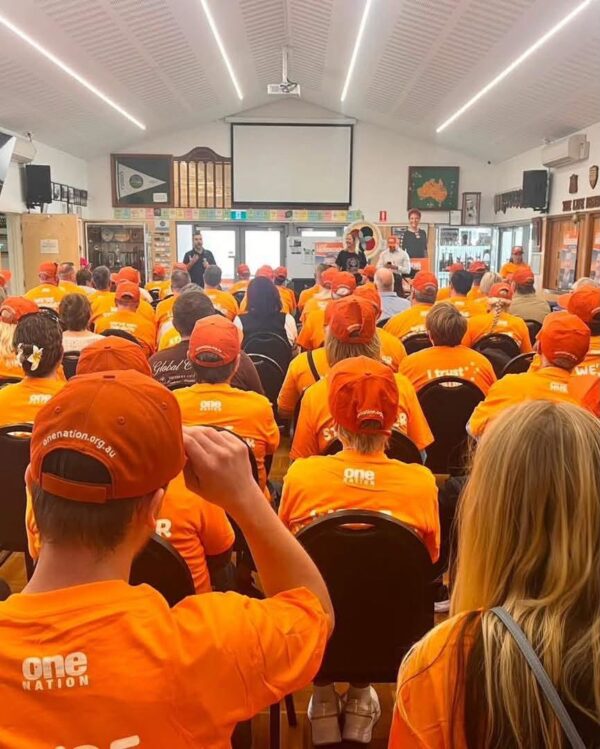
Oceania | Politics | Oceania With a below replacement-level birth rate and a booming elder population, One Nation’s anti-immigration stance, combined with its critique of superannuation, is a toxic combo. A major structural issue facing most Western and East Asian countries at present is their below replacement-level birth rates. This has the potential to create an unfavorable dependency ratio – the problem of aging societies with a large cohort of retirees, but not enough workers to pay for pensions, healthcare, and other essential services. Yet simultaneously, many Western countries are experiencing an insurgence of populist, and often extremist, parties hostile to the one mechanism available to alleviate this problem: immigration. In Australia, this year has seen the rise of One Nation – previously a small fringe anti-immigrant party – now consistently polling in the mid-high 20 percent range. One Nation often matches the governing Labor Party’s poll numbers, and is polling far ahead of Australia’s other traditional major political force, the permanent coalition between the Liberal and National parties. One Nation’s reason for existence is to undermine Australia’s migration program – which it sees as a threat to their idea of the Australian nation. Yet as the party has ascended in the polls it has needed to branch out into other populist causes and conspiratorial theories to promote. One issue the party has landed on is Australia’s retirement savings scheme – known as superannuation. Australia’s superannuation scheme was made compulsory in its modern form by the Keating government in 1992, requiring employers to contribute a portion of workers’ wages into privately managed retirement funds. The contribution rate has gradually risen to 12 percent – paid on top of wages – and has created one of the world’s largest pools of retirement savings. It is accessible at 60 years old. The basic idea is simple: Australians build up their own nest egg during their working lives, reducing their reliance on the government-funded Age Pension in retirement. Superannuation is ranked one of the world’s leading retirement schemes. However, there’s always been a strain of suspicion toward superannuation within the Liberal Party. This stems in part from politics – the scheme was introduced by the Labor Party, after all – and in part from the perception of the scheme as paternalistic and undermining the personal responsibility to save for yourself. But within a consumerist culture, turbo-charged by the ease of online shopping and the relentless product promotion of online influencers, it is arguable that the scheme has saved a great many Australians from difficult retirements. Personal responsibility is important, but there also needs to be a recognition that we are an easily tempted species and sometimes we need some guardrails for our own good. One Nation’s opposition to superannuation appeals directly to these critiques. As a populist party, it simply says: “You can have more money in your pocket today and the government is keeping it from you.” It may appeal to those suffering current cost of living pressures and who are distrustful of government initiatives, but it plays a dangerous game with Australia’s structural realities. Alongside the party’s suspicion of immigration, is a dual assault on the future sustainability of the Australian state. Given Australia’s birth rate of 1.48 births per woman, the Treasury estimates that a migration intake of at least 235,000 people a year is required to off-set the worst effects of an aging society. This, of course, isn’t perfect, as the median age of a migrant to Australia is 37. This is around 20 less years paying tax than someone who enters the workforce in their mid-to-late teens. But, given the realities of low birth rates, it is the best solution available. Despite some internal confusion, the figure One Nation has consistently cited as their policy is 130,000 people per year – although they channel forces that even find this number unacceptably high. This combination with a populace who had greater access to their retirement savings prior to retirement would create an enormous government pension outlay without the tax base to cover it. Rather than seek ways to off-set a poor dependency ratio, One Nation’s policies are now trying to accelerate it. This is, of course, the nature of the party. Populist parties don’t have a long-term comprehension of the economic sustainability of the country. They fixate on immediate grievances and emotional responses. The implications and consequences of their ideas are not well thought out. This should present an opportunity for the Liberal Party to regain the ground they’ve lost to One Nation this year. Although there are elements within the party likewise suspicious of superannuation, the Liberals’ traditional selling point has been responsible economic stewardship of the country. The problem the party faces, however, is that administrative sobriety isn’t very attractive at the moment. The people want more and they want it now, even if it may lead to them having far less as they age.
One Nation’s Dual Assault on Australia’s Structural Realities
Full Article
Original Source
Read the full article at Thediplomat →KhanList aggregates and links to publicly available news content. We do not host full articles from third-party sources. Always verify important information with original sources.