
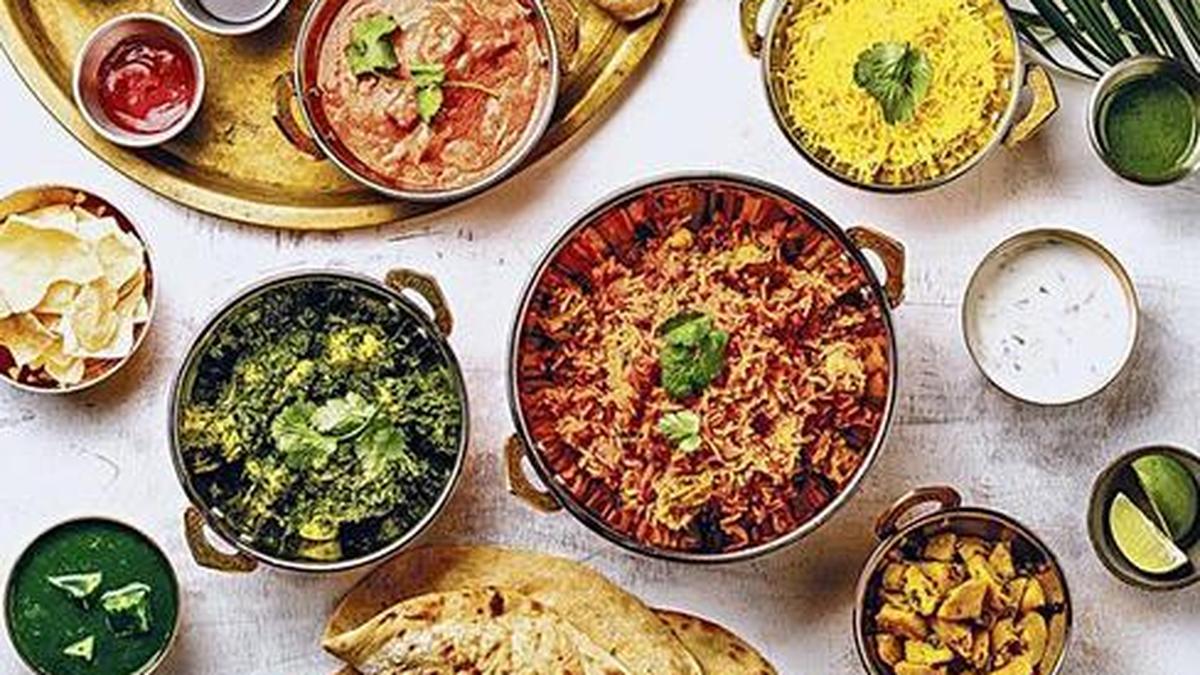
The rich cultural and culinary diversity of India reflects the country’s many traditions, tastes and regional identities. Photo: Special Arrangement A recent change in the Food Safety and Standards Authority of India (FSSAI) regulation related to the moisture content of papad – the modest yet, broadly pan-Indian food item – has created a curious situation of undermining the culinary autonomy of Kerala. The FSSAI’s new rules mandate that moisture should not exceed 15% of the total mass of papad. The authority’s intentions are pure. A higher moisture content can lead to hygiene issues or even health issues. Lower moisture content leads to longer shelf life, and less chance of contamination.The rule of law is based on standardisation of measurements, regulations, and definitions. It is also quite a legitimate argument to be made that the entire country should have the same law or the same rules – one country, one rule. Intentions are always pure. Like that of the Election Commission of India that is trying to “purify” the voter list, nothing less.The papadam exceptionalism of KeralamThose who have experienced a Malayali meal would know that papadam, as they are called in Malayalam, is different from other papads. Keralam’s papadam preparation retains more than 15-16% moisture, and this moisture content is what gives the State’s papad its particular flavour, texture, and, most importantly, the air bubbles that get formed inside when it is fried. Papad that you see in the northern part of India, or even in Tamil Nadu, does not have air bubbles when it is fried. That is because it is deep-dried before it is fried, before it is packaged and sold. Its moisture content is significantly less, around 10-12%, which gives it a longer shelf life. Now to create a national standard, the FSSAI decided that 15% should be the upper limit for moisture, which leaves the higher moisture content of Kerala papad in a fix.Common citizens are not to be left behind in perpetuating a monolithic, homogeneous image of the nation and its food culture. An ill-informed, ignorant, racist vlogger from Uttar Pradesh launched a tirade against Malayalis and the State of Keralam after his recent visit to Kashi Art Cafe in Fort Kochi, where he was aghast at the sight of beef dishes, the Muslim presence, and the art installations which offended his silly sensibilities. He was offended that beef could be served in a cafe, which he thought was named after the ancient city of Kashi. Little did he know that the cafe is not named after the north Indian Kashi, considered holy by Hindus, but is a Japanese word kashi (菓子), which translates into sweets or confectionery.The cafe was founded by Anoop Skaria and his wife Dorrie Younger as a cafe and art gallery to serve and support the art community. The cafe’s current owner is Edgar Pinto, and the manager is Jude Vipin. Since 1997, the cafe has been integral to the art landscape of Fort Kochi and has hosted exhibitions during the inaugural Kochi-Muziris Biennale in 2012. The cafe, along with carabeef (buffalo meat), serves pork, duck, lamb, chicken, and fish dishes, which are widely consumed across Keralam. While a lot of people in India consider eating beef taboo, in most parts of peninsular India and north-eastern India, it is eaten by all communities. And those who consider eating beef unacceptable have no problem associating with beef eaters when they go to the West and East, including Japan, incidentally.The art installation in question that offended the ignoramus, featuring Mahatma Gandhi and Muhammad Ali Jinnah, is by Riyas Komu and titled ‘Blood Brothers: Two Fathers from Gujarat’. It features alternating aluminium figures of Gandhiji and Jinnah, a powerful reminder of shared history and the tragedy of Partition. Little did he know that it is not Muslims, but Latin Catholics who are the predominant denomination, with 45% of the population, in the Ernakulam parliamentary constituency under which Fort Kochi falls.The Keralam State has now registered a case against the vlogger under Sections 353(2) and 192 of the Bharatiya Nyaya Sanhita, covering the circulation of false information with the intent to promote enmity, hatred, or ill will between religious groups, and provocation to cause a riot.Around all this, the newly sworn-in Governor of Kerala, Rajendra Mathur issued a directive to the staff at Lok Bhavan that no non-vegetarian food should be prepared or served inside the kitchen. Given the uproar the directive created, Lok Bhavan later clarified that it pertained to the kitchen for the Governor and his family, and not to the separate kitchen for the staff and dignitaries.Papads come in different sizes, shapes, and tastes. So do people. India is too large and diverse for any particular model to be shoved down the throats of people. Published - October 26, 2026 05:41 pm IST
One nation, one papad: The pursuit of food uniformity threatens India’s peace and progress
Full Article
Original Source
Read the full article at Thehindu →KhanList aggregates and links to publicly available news content. We do not host full articles from third-party sources. Always verify important information with original sources.