
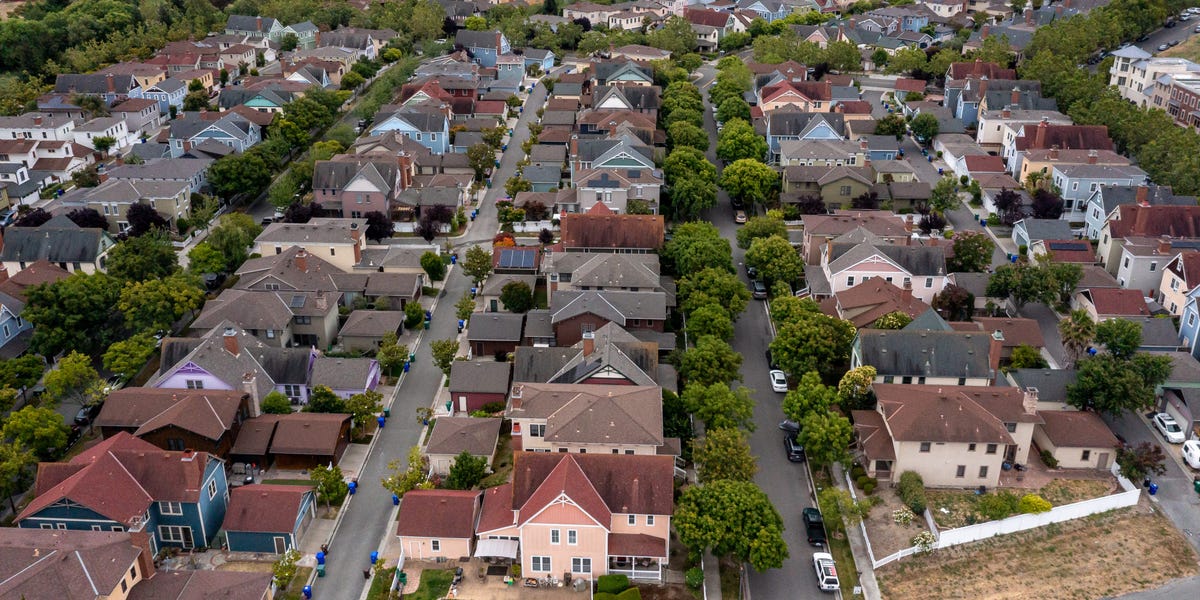
One map shows where US renters are feeling the most squeezed In August 2026, rent accounted for more than 30% of Americans' average weekly earnings in 31 states. David Paul Morris/Bloomberg via Getty Images In more than half of US states, rent is gobbling up over a third of Americans' wallets — one of the mounting bills stretching household budgets thin.The Urban Institute, a nonprofit think tank, published The American Affordability Tracker in late October, a tool with data on Americans' finances and how they have changed in recent years. And for those Americans who don't own their homes, rent is one of the biggest stressors.In 31 states, average monthly rent took up more than 30% of Americans' average weekly earnings in August 2026.North Dakota had the smallest rent-to-earnings ratio, at 21.17%, while in Hawaii and New York, rent accounted for around 50% of average earnings — indicating households in these states could be more cost-burdened than in other parts of the country.Yonah Freemark, a researcher at the Urban Institute, said the issue of affordability boils down to the question: "Are you actually able to afford the typical daily needs you have?""People feel like they can't afford their daily life, and it's everything that they're experiencing, not just one thing," he said.Uncertainty is heightened among younger Americans who, amid high prices and the evolution of AI, can't imagine what their lives might look like in five years, he said. Business Insider has covered Americans' cost-of-living issues across the country — especially the burden of rising rent prices. With inflation, rents, and mortgage rates high, prices can feel insurmountable.One metric Freemark pointed to in the tracker was real average weekly earnings, which are adjusted for inflation. In August 2021, the national average earnings stood at around $1,310; as of August 2026, it stood at around $1,300. Workers lost a lot of ground during the large post-pandemic inflationary spike, and the rise in energy prices due to the war in Iran has led to wage growth lagging inflation for much of this year."When people feel like, actually, their income is not giving them the ability to access the same things that it gave them five years ago, people are going to say: 'Something is wrong with this country, and we need to find a way out' " he said. "People feel like things are supposed to be getting better, not worse." The fact that rent is eating up incomes in places like Hawaii, New York and California was expected, Freemark said. These states usually lag in housing construction and are typically places with high demand. When supply does not keep up, prices go up, Freemark said."The challenges that New York, and probably Hawaii and California, face have been historical. We've known about them for many decades, but they have not really been resolved at all," he said.The tracker said that childcare and housing prices have risen faster than earnings over the past decade, tightening family wallets. Still, the tracker said that since January 2025, earnings have grown faster than rents in all but the following eight states: Connecticut, Hawaii, Massachusetts, Michigan, New Hampshire, Rhode Island, Wisconsin, and Wyoming. He said this could be due to construction projects from the early 2020s coming online, increasing supply and helping bring costs down."That said, I do want to emphasize that it really depends on where you are in the country," Freemark said.The tracker also said affordability pressures have spread "beyond traditionally high-cost areas," including smaller cities like Rochester, New York, and Louisville, Kentucky. Freemark said this could also be because of higher transportation costs across the country, attributed to the Iran war—especially in areas where public transportation is not as accessible. The average price of a gallon of gasoline was $4.48 nationwide on September 21, 2026, up 46.9% compared to $3.05 on January 6, 2025, the tracker said."If you live in Wyoming, if you live in Kansas, you're deeply reliant on a car, and you have to drive a lot of miles to get to the places you got to go," he said. "When your gas prices go up, when your car insurance prices go up, you are going to see that affect your daily life."Polling indicates that affordability was one of the biggest issues driving the Democrats' rout in last week's midterm elections. Freemark said policies need to be passed to expand homeownership opportunities and reduce other rising costs. He said those policies could include state governments offering lower-interest-rate loans or assistance with initial down payments to help people get into a home in the first place. He said one way to deal with high gas prices is to allow people to work remotely, which helps lower commuting costs."Having the election does not solve the affordability crisis at all—people tomorrow have just the same affordability problems that they had yesterday," he said. "What's going to be needed is some major policy changes, some changes to the job market. Otherwise, a lot of the struggle and a lot of the fear that people have are going to be continued." Read next Business Insider tells the innovative stories you want to know Business Insider tells the innovative stories you want to know Business Insider tells the innovative stories you want to know Business Insider tells the innovative stories you want to know Martina is an economy fellow at Business Insider. She reports for Cost of the City, a series exploring how New Yorkers afford life in one of the country’s most expensive cities and the financial and personal trade-offs they make to stay. She also contributes to Business Insider’s Cost of Living video series.She studied journalism and international relations at Boston University. Housing Affordability Housing
One map shows where US renters are feeling the most squeezed
Full Article
Original Source
Read the full article at Businessinsider →KhanList aggregates and links to publicly available news content. We do not host full articles from third-party sources. Always verify important information with original sources.