
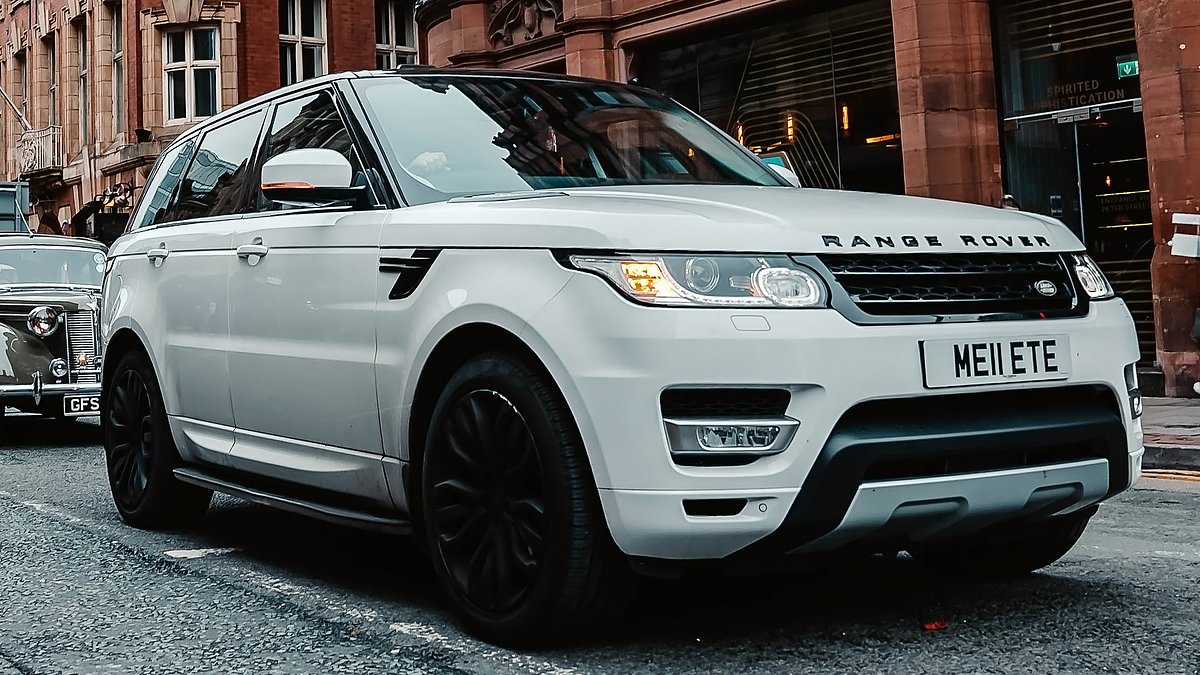
One in three Britons would choose an SUV over any other type of vehicle if money were no object, despite almost half believing they are more likely to cause serious injuries to pedestrians and other vulnerable road users in a collision.New car sales figures show that seven of the UK's ten best-selling models are SUVs.A decade ago, only two SUVs featured in the nation's best-sellers list. Twenty years ago, there were none.National Accident Helpline says Britain is experiencing a contradiction between the growing popularity of SUVs and concerns about public safety.While drivers increasingly view these larger vehicles as desirable, research suggests many are also worried about the impact their growing dominance could have on pedestrians, cyclists and children.It is the latest in a series of reports raising concerns about the increasing demand for SUVs, which now account for more than half of all new-car model options available in UK showrooms. A third of drivers would choose an SUV over any other vehicle. money no object. But half of the motorists polled said they think these larger motors are a greater risk to vulnerable road users A poll of 1,000 UK motorists found that a third would choose an SUV over any other type of vehicle if cost was not a consideration, making it the nation's most desirable car category ahead of traditional status symbols such as convertibles and coupes.In some parts of the country, SUVs are already the dominant vehicle type.National Accident Helpline claims SUVs have overtaken hatchbacks as the most common vehicle category in Greater London, where 31 per cent of respondents own an SUV compared with 21 per cent who drive a traditional hatchback.Women appeared particularly attracted to SUVs.More than a third (36 per cent) of female drivers surveyed said they would choose an SUV if money were no object, compared with 30 per cent of men.Join the discussionShould SUV owners be held responsible for the increased risks to pedestrians and children on our roads?What's your view?When asked why SUVs have become so popular, respondents overwhelmingly pointed to practicality and family-friendly features.The most common reason cited was their suitability for family life (43 per cent), followed by a higher driving position (38 per cent), comfort (37 per cent) and greater interior space (34 per cent).Three in ten respondents also highlighted the vehicles' status-symbol appeal as a major factor behind their popularity.A recent study by vehicle sales platform CarGurus found there are now 193 SUV and crossover variants, conventional hatchbacks with raised ride heights, available across the UK's 35 most popular car brands.That represents 52 per cent of all new-car model options currently on sale.The figure is up 543 per cent compared with 2000, when just 35 SUV variants were available.Official registration data also shows SUVs have become the UK's most popular vehicle segment, overtaking superminis and accounting for more than a third of all new-car sales. SMMT data shows that seven of the ten best-selling models in 2026 are SUV or crossover vehicles with higher front ends that do more damage to pedestrians in crashes The boom in SUV demand has not gone unnoticed by industry and safety experts.Matthew Avery, director of strategic development at crash-testing body Euro NCAP, said many motorists are attracted by the perception that larger vehicles offer greater protection.'Drivers feel safer because they're sitting higher up and believe a bigger, stronger car protects them.'That's not always necessarily the case, but that's how motorists feel and they like that style of car. There's more intrinsic value and a greater sense of affluence in a vehicle like that.'Looking at buying trends, one of the best-selling cars at the moment is the Chinese SUV, the Jaecoo 7, or the 'Temu Range Rover' as some people call it. 'That's the style of vehicle people want. It's got that rugged look to it.' SUV overload: Half of new cars in showrooms are jacked-up motors as drivers are being pushed into bigger vehiclesSUVs are dividing driversOne of the most striking findings from the research is the apparent contradiction in how motorists view SUV safety.Three in five respondents believe larger vehicles are safer for drivers and passengers than standard-sized cars. However, almost half (45 per cent) also believe they pose a greater danger to pedestrians, cyclists and other vulnerable road users.Avery said: 'Actually, the motivation for buying a safe car is normally selfish. It's about self-protection. 'It also depends on your demographic. If you've got a family, you want to protect your family.'The findings suggest many motorists see SUVs as offering greater protection to those inside the vehicle while potentially increasing risks for those outside it.More concerningly, fewer than half of respondents said they would reconsider buying a vehicle if they discovered it posed a greater danger to pedestrians.Are SUVs more dangerous? Numerous studies have highlighted concerns about the risks associated with higher-riding SUVs, particularly for children.Eloise Sacares, senior vehicle policy researcher at think-tank Transport & Environment, said visibility, especially of children and other vulnerable road users, is one of the organisation's biggest concerns.'A VW Golf can easily see a child who's around four years old, but a Land Rover Defender can't,' she said.'The average height of a 4.5-year-old child is 1.1 metres and the driving position of a Land Rover Defender means the driver can't see beyond that height.'The biggest vehicles, such as the RAM TRX, can't see a nine-year-old child, who is around 1.36 metres tall.' Analysis carried out by Loughborough University on behalf of T&E found that the Land Rover Defender's high bonnet can obstruct a driver's view of children up to around 4.5 years old T&E has also published data suggesting SUVs significantly increases the death rate when pedestrians are struck as they are more likely to be pulled under a moving vehicleA recent report by the organisation found that, under current trends, 40 per cent more child pedestrians could be killed annually in collisions by 2040.Sacares added: 'If you also think about adults with disabilities that mean they are at a lower height, such as people with dwarfism, and wheelchair users, then that's posing a real danger to a lot of road users.'Data published by the VIAS Institute also found that the risk of a fatal injury for a pedestrian or cyclist struck by a vehicle with a bonnet 10cm higher than average increases by 30 per cent.However, car manufacturers have pushed back against some of these concerns.When This is Money put questions to JLR about the impact of the Land Rover Defender's high bonnet, a spokesman said: 'JLR is committed to the highest safety standards and our vehicles are made with the strictest adherence to safety requirements.'We continually invest in safety and advanced technology features which include pedestrian detection, 3D surround camera systems and autonomous emergency braking (AEB).'But drivers are still worried about the impact of these higher-riding vehicles. In a separate survey by road safety charity IAM RoadSmart this year, one in five of the 1,048 motorists polled said they would support a ban on SUVs entering city centres because of the perceived risks they pose to vulnerable road users.Transport & Environment has also warned that the growing popularity of larger SUVs could effectively wipe out 10 per cent of kerbside parking spaces in UK towns and cities by 2040.The group claims this would equate to the loss of around 100,000 roadside bays in London alone. London could lose 100,000 on-street parking spaces within 15 years if new vehicle sizes continue to grow at the same trajectory, T&E warnsThe human cost of increased road-traffic accidentsNational Accident Helpline says it has assessed 7,736 enquiries relating to road traffic accidents since 2025, with more than 2,500 submitted in the first half of 2026 alone.Pedestrian and cyclist claims account for almost a quarter of all road traffic accident enquiries processed by the organisation.John Kushnick, legal director at National Accident Helpline, said: 'The increasing popularity of SUVs on UK roads raises important questions about how vehicle size, visibility and pedestrian safety interact on increasingly busy roads.'The rise of 'Chelsea tractor' culture is especially concerning as these taller vehicles become more popular with suburban drivers, who are more likely to be travelling through school zones and family-oriented neighbourhoods where children are present.'The blind spots created by SUVs with higher bonnets and larger A-pillars put the most vulnerable road users at greater risk. Coupled with taller bonnet leading edges, these features can make SUVs increasingly dangerous for pedestrians.' CARS & MOTORING: ON TEST
One in three drivers want an SUV despite half believing they pose a greater risk to pedestrians
Full Article
Original Source
Read the full article at Dailymail →KhanList aggregates and links to publicly available news content. We do not host full articles from third-party sources. Always verify important information with original sources.