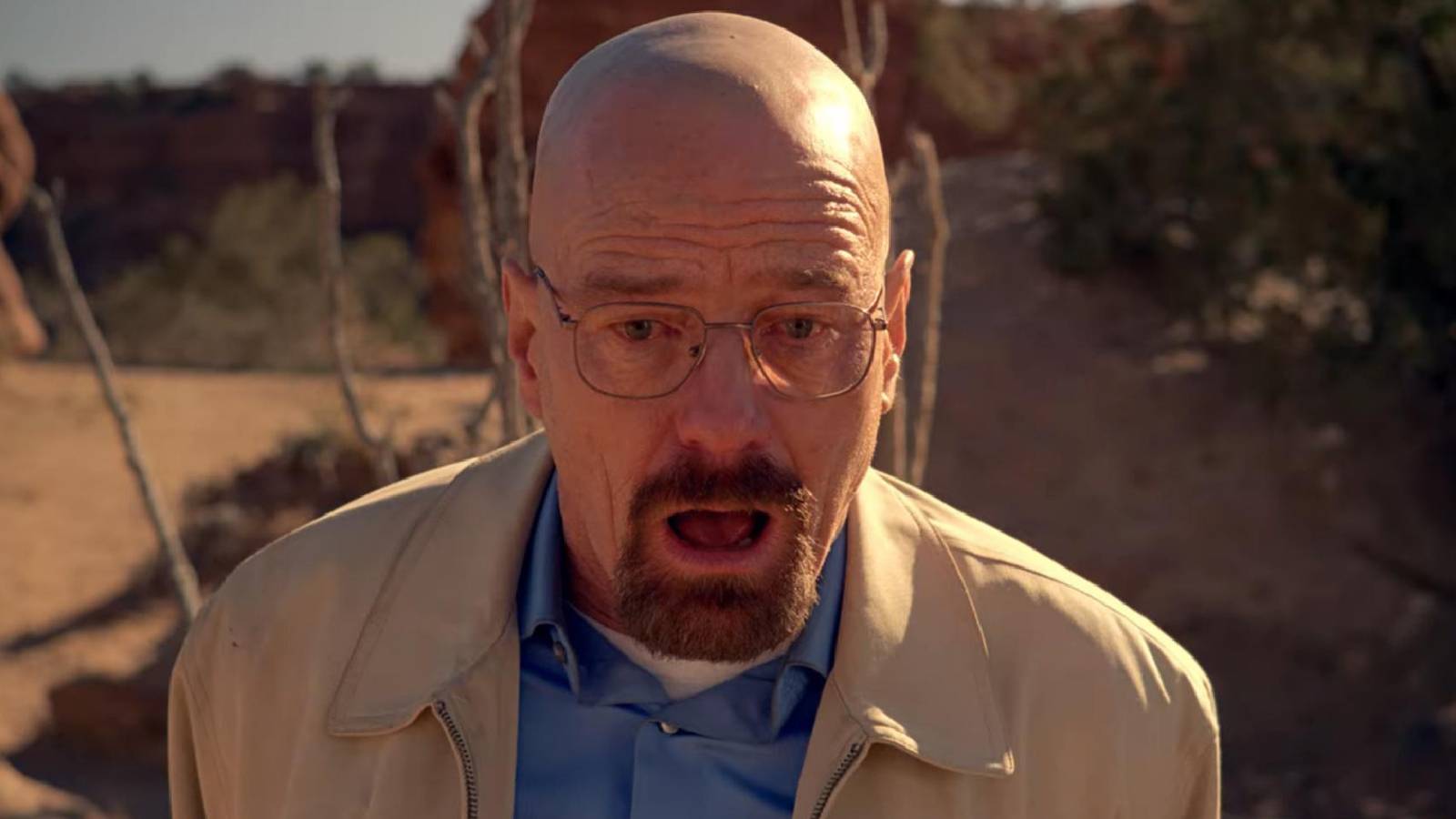
Image via AMC Published Jul 31, 2026, 5:24 PM EDT Aled Owen is a writer and filmmaker born in Carmarthen, Wales. He acted onstage from a young age and even won third place in 2012's Britain's Got Talent as part of Only Boys Aloud, a traditional Welsh male voice choir. Since then, Aled studied at the Carmarthen School of Art and later at the Northern Film School, Leeds Beckett University. There, he graduated with a BA and First Class Honors in Filmmaking, having specialized in Screenwriting. Sign in to your Collider account Vince Gilligan struck gold with Breaking Bad, the story of Walter White (Bryan Cranston) that he pitched as taking Mr. Chips and turning him into Scarface. By the show's second season, Walt's descent into villainy is in full flow, inadvertently causing the deaths of hundreds, and advertently causing a few more. Season 2 also expands the world of Albuquerque's seedy underbelly by introducing several new characters who eventually become key players in Breaking Bad. Namely, Mike (Jonathan Banks), Gus (Giancarlo Esposito), and the sleazy criminal lawyer Saul Goodman (Bob Odenkirk), who made his debut appearance in an episode titled "Better Call Saul" written by Peter Gould. Cut to six years later, Better Call Saul hit our screens as the prequel spin-off story of Jimmy McGill, a down-on-his-luck lawyer looking to make a name for himself but fighting the urge to use his talents as a con-man. Although the writers toyed with the idea of Better Call Saul being a half-hour sitcom in which Saul represents various interesting characters, the show itself ended up becoming a similar format to its predecessor. Naturally, the story of how the downtrodden Jimmy McGill became the Saul Goodman we know from Breaking Bad (something that took a full four seasons to officially happen) mirrors the story of Walter White's transition into Heisenberg. For this reason among others, comparisons between the two shows were inevitable, with Better Call Saul excellently surviving the enormous pressure, delivering an arguably superior product to the original. How then was Better Call Saul able to give Jimmy a finale that redeemed his character despite the six seasons working to demoralize and harden the Albuquerque lawyer? What made him so different from Walt, that their respective descents into large-scale criminality could warrant two very different fates for their protagonists? It boils down to a few factors. Jimmy McGill Accepted the Punishment Walter White Never Could The respective stories of Jimmy McGill becoming Saul Goodman and Walter White becoming Heisenberg are naturally similar in many ways, but one key difference is the way in which these stories ended, and thus, what Vince Gilligan and Peter Gould chose to say about the different kinds of men they were. While Walt, in his cruel and prideful downfall, was sentenced by the writers to both death and illegal infamy, Better Call Saul saw Jimmy turn down a cushy seven-year stint in a white-collar establishment due to a guilty conscience. It could be argued that Walt also experienced a guilty conscience in the finale of Breaking Bad, in his decisions to save Jesse (Aaron Paul) and, more effectively, admit to Skyler (Anna Gunn) that he did it all for himself, not the family. However, Walt had more to gain from this return to Albuquerque, specifically tying up all his loose ends, defeating his enemies, and ensuring his money would be given to his family. Jimmy's conscience, on the other hand, is personified purely by his beloved Kim Wexler (Rhea Seehorn). Collider Exclusive · Universe Personality Quiz Which Iconic Universe Do You Belong in the Most? Star Wars · Lord of the Rings · Harry Potter · Game of Thrones · Star Trek Five legendary universes. Five completely different visions of what the world could be — or already was. One of them is the world your instincts, your values, and your particular way of existing were built for. Eight questions will tell you which one. 🚀Star Wars 💍Lord of the Rings 🧙Harry Potter 👑Game of Thrones 🖖Star Trek FIND YOUR UNIVERSE → 01 What gives your life its deepest sense of meaning? Every universe is built around a different answer to this question. ABeing part of something larger than myself — a cause, a rebellion, a fight for freedom that outlasts me. BThe journey itself — the places I'll go, the companions beside me, the world I'll discover on the way. CLearning — unlocking what I'm capable of, understanding the world's hidden mechanics, growing into something more. DLegacy — the name I leave behind, the power I build, the mark I make before the world moves on without me. EUnderstanding — exploring what exists beyond the horizon and asking what it means to be alive in a universe this vast. NEXT QUESTION → 02 Which kind of world do you most want to inhabit? The environment shapes who you become. Choose carefully. AA galaxy of planets, each with its own culture — connected by conflict, trade, and the Force. BAncient lands of breathtaking beauty, deep history, and a creeping darkness at the edges. CA world hidden inside our own — full of wonder, community, and magic waiting to be learned. DA brutal, beautiful continent where power is everything and every alliance is a calculation. EA future where humanity has reached the stars — and must decide what kind of species it wants to be. NEXT QUESTION → 03 How do you prefer your conflicts resolved? The shape of a world's conflicts tells you everything about its soul. AThrough sacrifice and courage — someone has to make the impossible choice so others don't have to. BThrough fellowship — the impossible becomes possible when the right people walk the same road. CThrough growth — confronting what you fear, understanding what you lack, and becoming equal to the challenge. DThrough strategy — outthinking, outmaneuvering, positioning yourself so the outcome was never in doubt. EThrough dialogue — finding the third option, the peaceful resolution, the answer that doesn't require a body count. NEXT QUESTION → 04 Who do you want beside you when things get difficult? Your ideal companions reveal the world you were made for. AA small crew — a pilot, a rogue, a warrior — each broken in their own way, unbeatable together. BA fellowship of different kinds of people, bound by purpose and deepened by the long road. CFriends who grew up alongside me — who knew me before I knew myself, and stayed anyway. DAllies whose loyalty I've earned — and tested — and whose ambitions align with mine, for now. EA crew of brilliant, curious, principled people from every corner of known space. NEXT QUESTION → 05 What is your relationship with power? How you seek, wield, or resist power is the map of who you are. AI want to use it to protect — and I'm terrified of what I might become if I'm not careful. BI distrust it. The most important power in this story is the courage to give it up. CI want to earn it — through knowledge, through effort, through becoming someone worthy of it. DI want to wield it. Preferably before someone else decides to wield it against me. EI want to understand it — its structures, its limits, its ethical dimensions. Power without accountability is the real threat. NEXT QUESTION → 06 How does your universe treat good and evil? A world's moral architecture tells you more about it than any map. AThere is a dark side and a light side — and the choice between them is always present, always personal. BEvil is real and ancient and patient — and goodness, however small, is the only thing that can undo it. CGood and evil are real, but they live inside people — and people are complicated, always capable of both. DGood and evil are mostly a matter of perspective and proximity. Power is the only honest currency. EEvil is usually the result of ignorance, fear, or broken systems — and understanding it is the first step to solving it. NEXT QUESTION → 07 What role would you naturally fall into? Every universe has archetypes. Which one fits you without trying? AThe reluctant hero — ordinary origins, extraordinary moment, changed forever by the choice to act. BThe unlikely carrier — the one nobody expected to matter most, quietly bearing the weight of everything. CThe student — not yet who I'll become, learning through every mistake, growing into something the world needs. DThe player — sharp enough to see the game for what it is, ambitious enough to try to win it. EThe explorer — drawn to the unknown, driven by curiosity, most alive when standing somewhere no one has stood before. NEXT QUESTION → 08 What do you ultimately believe about the future? The answer to this is the clearest window into which universe already lives inside you. AThat hope is real — that even in the darkest galaxy, a new hope is always possible. CThat even the smallest person can change the course of the future, if they have the courage to try. CThat love and friendship and doing what's right will matter in the end, even when everything says otherwise. DThat the wheel keeps turning — that power shifts, winters end, and what endures is those willing to fight for it. EThat humanity — or whatever we become — is capable of extraordinary things, if we choose to be. REVEAL MY UNIVERSE → Your Universe Has Been Chosen You Belong In…Your answers point to the iconic universe your values, your instincts, and your particular way of seeing the world were built for. This is where you would find your people — and your purpose. Star WarsYou believe in the cause — in the idea that freedom is worth fighting for even when the odds are impossible and the empire is vast. You are drawn to the moral clarity of a universe where hope itself is a form of resistance. You'd find your people in the Rebellion — a ragtag coalition of true believers held together by conviction more than resources. Star Wars is fundamentally a story about ordinary people choosing to matter in an extraordinary conflict — and that is exactly your kind of story. The Force may or may not be with you. But the will to use it for something larger than yourself certainly is. Lord of the RingsYou understand, in the deepest part of yourself, that the journey matters as much as the destination — and that the world's beauty is worth protecting even at great cost. Middle-earth is a world of ancient wonder, deep friendship, and a darkness that only retreats when enough small acts of courage accumulate. You would thrive here because you value the fellowship more than the glory — the road more than the arrival. Tolkien's universe rewards patience, loyalty, and the willingness to carry something heavy across a very long distance. Those are not burdens to you. They are simply how you move through the world. Harry PotterYou believe that love, loyalty, and doing what's right are not naive sentiments — they are the most powerful forces in any world, magical or otherwise. The Wizarding World is a place of wonder hidden in plain sight, where learning is transformative and the bonds you form at school follow you into every battle. You would flourish here because you take both the magic and the friendships seriously — and you understand that one without the other is incomplete. Harry Potter's universe ultimately rewards those who choose to stand for something even when standing is terrifying. That choice — made quietly, without guarantee — is something you understand completely. Game of ThronesYou see the world clearly — its power structures, its hypocrisies, its brutal arithmetic — and you are not paralysed by that clarity. You use it. Westeros is a world that rewards intelligence, adaptability, and the willingness to understand that every alliance is also a negotiation. You would survive here — possibly thrive here — because you don't confuse the world as it is with the world as you'd like it to be. Game of Thrones is a story about what happens when the idealists and the realists collide. You are sharp enough to know which one lasts longer. Winter always comes. You are already prepared. Star TrekYou believe the future is worth building — that curiosity, cooperation, and the expansion of understanding are not just ideals but the most practical path forward for any civilisation. Star Trek is a universe where the questions matter as much as the answers, and where encountering something utterly alien is cause for wonder rather than fear. You would belong here because you are fundamentally optimistic about what intelligence and decency can achieve — while being honest about how hard that achievement is. The Federation is the universe's most ambitious thought experiment: what if we actually got better? You don't just hope that's possible. You think it's the only thing worth working toward. ↻ RETAKE THE QUIZ One of the genius creative decisions from the very first frames of Better Call Saul was the choice to include a dual-timeline, making it about Jimmy's life after the events of Breaking Bad as well as before. His story in Omaha under the false identity of Gene highlights that the events of Breaking Bad (and thus Jimmy's association with Walter White) are the character's biggest low point, making Walt the face of Jimmy's rock bottom. Not only does this establish Walt as a worse person through this lens, but it also establishes the events after Jimmy became Saul (and legally represented Walt) as his bridge too far, allowing for his redemption to take place as a victim of Heisenberg's villainy. Jimmy, of course, accepts the blame for his own part in these crimes, but this is brought on by his relationship with Kim, for whom he would rather suffer in an unpleasant prison for 80-plus years than to see her be punished due to his influence. Compare this complete 180-degree turn to Walt ordering the Neo-Nazis to kill Jesse towards the end of Breaking Bad, someone Walt often saw as being like a son. Jimmy Could Walk Away From Saul, but Walt Couldn’t Escape Heisenberg As much as their worlds and ensemble characters would have you believe that Jimmy and Walt are cut from the same cloth, ultimately they couldn't be further from it. When Walt finds himself in over his head with Tuco (Raymond Cruz), he decides to adopt the persona of Heisenberg, a bald tough guy named after the famous German physicist. From this point onwards, the line between Walt and Heisenberg begins to blur, eventually making one indistinguishable from the other, and the original Walter White is dead. Jimmy, however, has always approached his pseudonyms as characters and nothing more — Saul, Gene, Viktor, Jeffrey Steele, even Kevin Costner (a brilliant payoff to a throwaway joke from Breaking Bad). When Walt is killed and captured at the end of his story, the crimes of Walt and Heisenberg are the same. With Jimmy, however, he takes the opportunity to disown the Saul Goodman moniker, no longer hiding behind the facade, and accepts his comeuppance head-on as Jimmy McGill. This proves that the cold, money-hungry Saul was in fact a protective shell for Jimmy all along, and that adopting the Saul character never truly killed the sentimental and sympathetic Jimmy that was always inside. Walter White Had Better Choices Than Jimmy McGill Image via AMC When we meet Walter in Breaking Bad, he is a victim of the world around him, whose talents have been overlooked. We meet Jimmy in much the same way; however, unlike Walt, Slippin' Jimmy's talents are almost exclusively illegal. That is the curse of Jimmy McGill. His skill set tempts him to commit crimes, conflicting him morally, while Walt's chemistry talents could be used for several things. What began as a desperate cash-grab for the cancer-diagnosed Walt soon became an empire he ran purely for the joy of it. Ultimately, while their dilemmas are similar, their redeemability boils down to their choices. Walt's colleague-turned-rivals Gretchen and Elliott Schwartz (Jessica Hecht and Adam Godley) remain civil despite Walt's decision to leave the company, and even offer to financially support him. Despite this, Walt still sees them as his enemies. Jimmy's brother Chuck (Michael McKean), meanwhile, actively conspires against his brother succeeding in the field of law, despite Jimmy's unrequited love and care for Chuck. How the two men respond to these opposite circumstances reveals a lot about the men they are at heart. While Walt begins his story as a victim of circumstance, Jimmy remains one for the entire story, even after Chuck's demise. In the two respective finales, these pivotal relationships return to bookend the stories. For Jimmy, it's a regret that despite Chuck's monstrous unfairness towards him, Jimmy still feels like he could have done more to help Chuck. Walt, on the other hand, visits Gretchen and Elliot with a death threat, scaring them into handling his money for his own family's gain. These men could not be further from each other. What dies in Walt is what lives in Jimmy — his conscience — and while Jimmy needs the character of cold-hearted Saul Goodman in order to hide his true feelings from the cutthroat criminal world, Walt's Heisenberg moniker only works to reveal Walt's true self. If Breaking Bad is the story of Mr. Chips becoming Scarface, Better Call Saul is the story of Mr. Chips pretending to be Scarface before admitting to the world that he was always just Mr. Chips.
One ‘Breaking Bad’ Character Proved He Was Better Than Walter White
Full Article
Original Source
Read the full article at Collider →KhanList aggregates and links to publicly available news content. We do not host full articles from third-party sources. Always verify important information with original sources.