
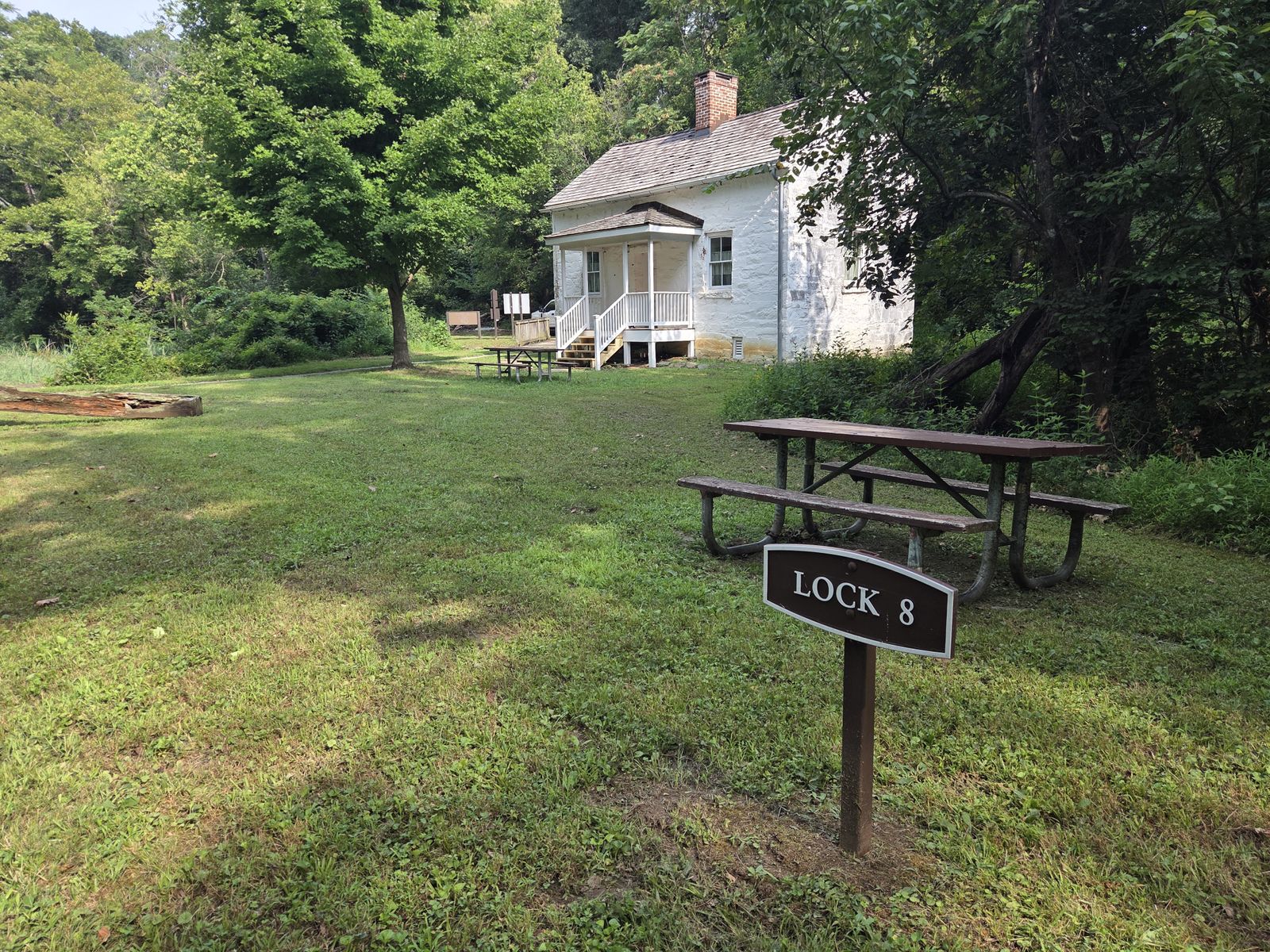
From the 1830s to the 1920s, Lockhouse 8 provided living quarters for the generations of lockkeepers who helped keep boats moving along canal, a critical route from the Atlantic Ocean to the American interior November 23, 2026 8:15 a.m. After undergoing renovations, Lockhouse 8 is now welcoming overnight visitors. C&O Canal Trust From the 1830s to the 1920s, Lockhouse 8 provided living quarters for the generations of lockkeepers who helped kept boats moving along the Chesapeake and Ohio Canal, which ran between Washington, D.C. and Cumberland, Maryland. Now, after undergoing renovations, the 196-year-old home is welcoming overnight guests, giving visitors to C&O Canal National Historical Park a unique way to experience the region’s history. Lockhouse 8 is the newest addition to the Canal Quarters Program. Since 2007, the nonprofit C&O Canal Trust and the National Park Service have been partnering to breathe new life into many of the historic lockhouses located along the canal. Lockhouse 22 became the first to welcome overnight guests, in 2010. Since then, the program has grown to eight lockhouses, each with its own time period and interpretive theme. Lockhouse 22, for instance, is set in the 1830s and ‘40s, during the early phases of canal construction, while Lockhouse 10 explores the New Deal era of the 1930s, when workers with the Civilian Conservation Corps repaired the canal. “Staying overnight in a lockhouse provides a unique opportunity to immerse yourself in these stories,” Arden Shaer, associate director of the Canal Quarters Program, tells BBC Travel’s Chelsey Stone. Guests can reserve a lockhouse for up to three nights in a row, with nightly rates ranging from $75 to $175. The entire registration fee goes toward maintenance and restoration work, as well as educational experiences, so “when you stay here, you’re actually helping to preserve the house,” Tymber Compher, a spokeswoman for the C&O Canal Trust, tells WJLA’s Adam Longo. Each lockhouse can accommodate up to eight overnight guests, but visitors must supply their own linens. They have varying levels of amenities, with some offering modern niceties like indoor plumbing, while others have only outhouses. “It’s a unique experience,” Compher tells WJLA. “It’s not like staying in an Airbnb or commercialized hotel.” Today, the park hosts demonstrations showing how mules pulled boats through the canal. NPS Photo / E. Cowan The canal’s history dates back more than 200 years. After the War of 1812, the nation’s postwar priorities shifted to economic growth, westward expansion and improved transportation. One ambitious proposal called for the construction of a canal that would connect the Potomac River with the Ohio River Valley, creating a direct water route between the East Coast and the country’s growing western territories. To bring the idea to life, Maryland, Virginia and Pennsylvania chartered the Chesapeake and Ohio Canal Company. Construction began on July 4, 1828, but the project proved far more challenging than anticipated, with difficult terrain, scarce building materials and a lack of large-scale contractors slowing progress. Did you know? A rival railroad On the same day that President John Quincy Adams broke ground on the canal, work started on the Baltimore and Ohio Railroad. Its first stone was laid by Charles Carroll, the last surviving signer of the Declaration of Independence. The success of the railroad would eventually contribute to the canal's obsolescence. When completed in 1850, the 184.5-mile canal stretched from Georgetown in Washington, D.C., to Cumberland, Maryland, providing a vital transportation route for coal, lumber, agricultural products and other goods. (Funding issues, legal disputes and rough terrain prevented it from reaching the Ohio River.) Boats traveled through 74 locks that raised and lowered them through the canal’s 605-foot elevation change, while mules walking along the adjacent towpath pulled the vessels through the narrow waterway. Lockkeepers and their families lived in 57 lockhouses situated along the canal, often awakening as early as 2 a.m. “to the sound of the boatman’s horn or cry of ‘Hey-y-y-y lock,’” Stone writes for BBC Travel. Today, only 26 lockhouses remain. The newly opened Lockhouse 8 is a 725-square-foot home located in the “Seven Locks” section of the park near Cabin John, Maryland, about ten miles from the heart of Washington, D.C. Over the years when the canal was in operation, Lockhouse 8 housed nine lockkeepers as they helped boats navigate the busy stretch near Georgetown. At the canal’s peak, that meant manning the eighth lock for more than 500 boats per day. After the canal stopped operating in 1924, the family of the last lockkeeper, Charles Spong, continued to live in Lockhouse 8 until the 1950s. And after President Dwight D. Eisenhower established the Chesapeake and Ohio Canal National Monument in 1961, it briefly housed a park ranger and his family. Then, Lockhouse 8 sat empty for decades. From the early 2000s until 2019, it served as a nature center. It lay dormant again until 2025, when the C&O Canal Trust and National Park Service decided to rehabilitate it for the Canal Quarters Program. Renovations took place over four months in the spring and early summer of 2026, with crews gutting the interior so they could fix the home’s joists and floors and stabilize its joist pockets, lintels and foundation. Once the repairs were complete, the trust got to work implementing the interpretive plan, which has the home set in the 1960s, during the period when it housed a park ranger. They added a mix of mid-century and turn-of-the-century furniture, since park rangers were expected to furnish their own housing, as well as photographs, literature, games and infographics designed to help visitors understand this chapter of the canal’s story. As an added bonus, the home provides easy access to the surrounding 19,586 acres of natural and historic sites that are protected within the national historic park. The Potomac River and the historic towpath, which is now a car-free recreational trail, are just steps away. “You can literally wake up, walk outside and be in a national park,” Compher tells WTOP’s John Domen. You Might Also Like Get the latest stories in your inbox every weekday. More about: America's Waterways American History History Maryland National Parks Outdoor Travel Transportation Travel Water Water Transportation
Once Called Home by Lockkeepers and Park Rangers, This 200-Year-Old House Along the Historic Chesapeake and Ohio Canal Is Now Opening Its Doors to Overnight Guests
Full Article
Original Source
Read the full article at Smithsonianmag →KhanList aggregates and links to publicly available news content. We do not host full articles from third-party sources. Always verify important information with original sources.