
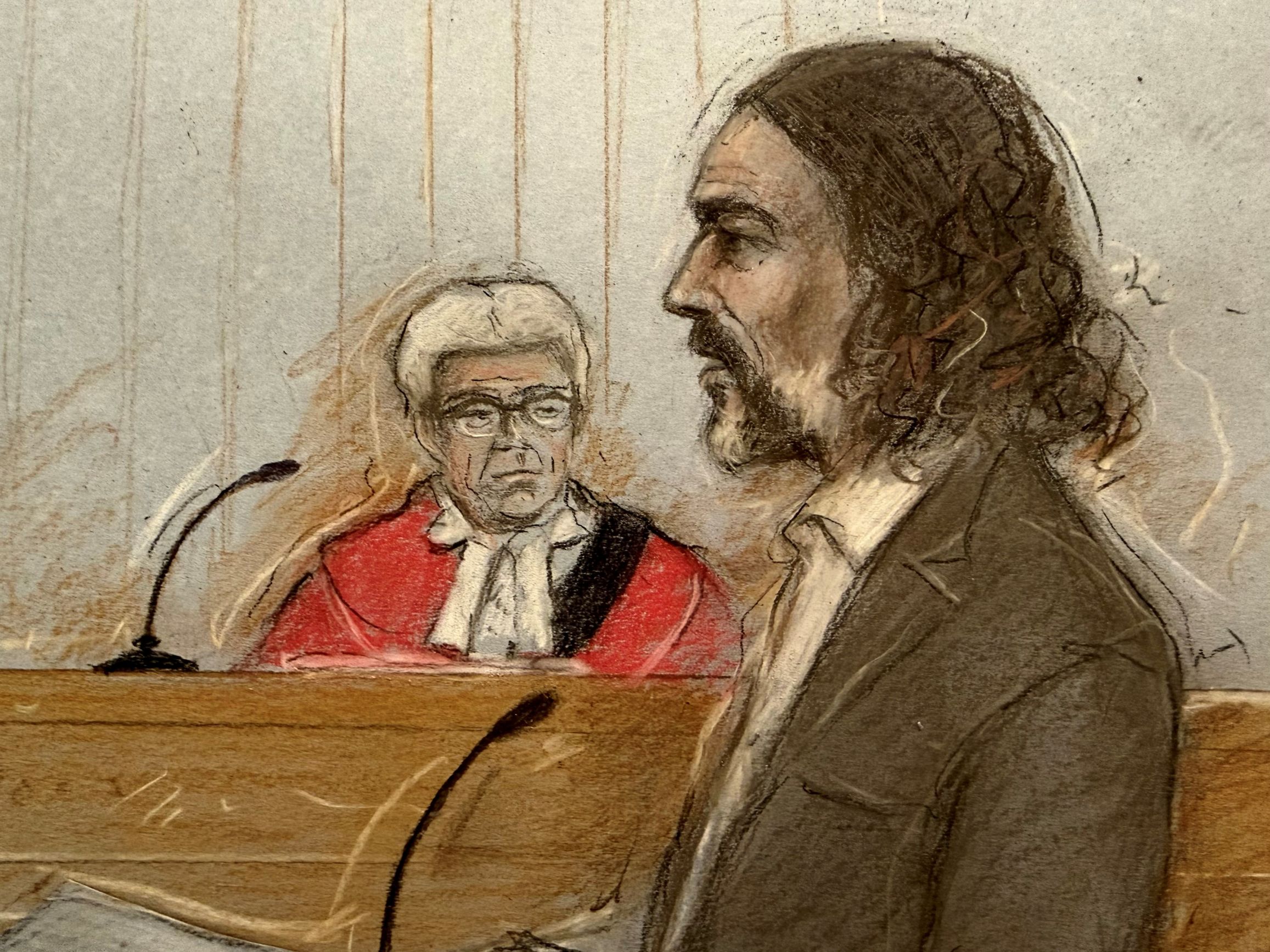
The comedian-turned-podcaster acknowledged using his fame to gain sexual access to women, but insisted the encounters were consensual.MANCHESTER, England (CN) — Russell Brand denied raping or sexually assaulting six women as he testified in his own defense Wednesday, acknowledging he had used his fame to gain sexual access to women but insisting the encounters were consensual.Brand, 51, spent about four hours in the witness box at Southwark Crown Court in London.He faces three counts of rape, three counts of sexual assault and one count of attempted indecent assault over events from 1999 to 2009.He has pleaded not guilty to all charges.Brand described the impact of a 2023 Channel 4 documentary containing accusations against him as “devastating,” telling jurors his life had been consumed by the case and said he had been unable to persuade anyone to testify in his support.His testimony covered encounters with the six women, with prosecutor Riel Karmy-Jones challenging his recollections and questioning whether he had constructed his account around evidence he had since reviewed.Brand disputes women’s accountsBrand testified about meeting the first complainant at a fringe event during the Labour Party conference in Bournemouth in 1999.She told the court Brand pushed her onto a hotel bed and raped her after she returned from the bathroom to find him partly undressed.Brand said they had sex using a condom and he believed she had consented. He said he did not remember undressing in front of her and denied pushing her onto the bed or raping her.Asked how he knew she had consented, Brand said he spoke during sex to seek her “approval.” He described consent as “fundamental, essential and necessary, and in many ways more important than sex itself.”Brand said he had no recollection of meeting a second complainant, an MTV worker who said he grabbed her arm and tried to drag her into a men’s toilet in 2001.On Tuesday, the judge reduced the charge relating to that encounter from indecent assault to attempted indecent assault, ruling there was insufficient evidence to support the original charge.Regarding a third complainant, Brand said he remembered entering a toilet with her at a Soho bar in 2004 to “fool around” but denied grabbing her breasts or orally raping her. She told the court he groped her before forcing her into a toilet and sexually assaulting her.Brand also denied sexually assaulting a radio worker at Choice FM in the mid-2000s, saying he could not remember the encounter. The woman said he pinned her against a wall and groped her at the radio station.A fifth complainant said Brand anally raped her at his home in 2009 after they had consensual vaginal sex. Brand denied forcing her or continuing after she withdrew consent, saying he believed she had agreed to the sexual activity.Karmy-Jones challenged differences between Brand’s police interviews and his testimony, suggesting he had built his account around evidence he had since seen.Brand denied making up details but acknowledged his recollection had become more specific after reviewing witness statements.The judge questioned Brand about whether he had asked the woman if she wanted to have anal sex. Brand acknowledged he had not included such a question in his prepared account to police, saying he had not considered sexual talk in those terms.Brand also denied sexually assaulting a sixth woman while working on a Channel 4 project in 2009. She told the court his colleagues said he would continue working only if she gave him a massage, after which he put his head in her lap with his face near her genitals. Brand said he could not remember asking for a massage and denied assaulting her.Reflecting on his past behavior, Brand acknowledged he had used fame selfishly to facilitate sexual access to women.He said he now recognized his conduct had been wrong.During cross-examination, he also accepted that sex had been more than a hobby for him in his younger years, though he denied the prosecution’s account of the encounters.Brand maintained his innocence and denied the final complainant’s account.The judge told jurors he expected them to begin deliberating on their verdicts next Tuesday.Brand’s podcasts raise legal questionsBrand has continued recording and releasing podcasts during the trial, including commentary on media coverage of his arrival at court.John McGarry, a senior lecturer in law at Leeds Law School at Leeds Beckett University, said the broadcasts could raise legal concerns but were not necessarily unlawful.“Such commentary is not in itself unlawful and, legally speaking, Mr Brand’s comments seem quite innocuous. However, anyone publishing comments on a live trial needs to be careful that what they say does not amount to a contempt of court.”McGarry said the threshold under British law is deliberately high, balancing the need to protect fair trials with freedom of expression.Even defendants discussing their own cases through podcasts have considerable scope to speak publicly, he said, provided their comments do not threaten the fairness of proceedings.Courthouse News reporter James Francis Whitehead is based in England.Subscribe to our free newslettersOur weekly newsletter Closing Arguments offers the latest about ongoing trials, major litigation and rulings in courthouses around the U.S. and the world, while the monthly Under the Lights dishes the legal dirt from Hollywood, sports, Big Tech and the arts.Additional Reads
On witness stand, Russell Brand denies sex assault against six women
Full Article
Original Source
Read the full article at Courthousenews →KhanList aggregates and links to publicly available news content. We do not host full articles from third-party sources. Always verify important information with original sources.